
In Treating Measles Infection, NV-387 Showed Strong Antiviral Activity, and Significantly, Protected Lungs from Damage, Describes NanoViricides

 Vietnamese coffee farmers ride China's durian wave

 Venezuela says retains 'sovereignty' in US oil deal

 NASA's Roman telescope set to launch on cosmic mapping mission

 Data center backlash scrambles US midterm politics

 Emotional Federer inducted into tennis Hall of Fame

 Hovland takes solo lead as McIlroy surges at Tour Championship

 Djokovic 'prepared' for US Open bid for history

 Atletico down Sevilla to go top of La Liga

 US deports right-wing provocateur Milo Yiannopoulos

 Niger junta says it is back in control after soldiers' mutiny

 Erasmus calls Rennie barbs over Springbok scrumming 'nonsense'

 Lawrence's fifty leaves Pakistan facing record chase to level England series
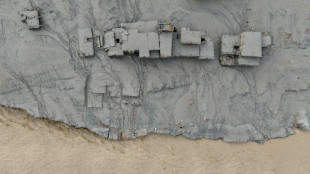
 Netanyahu condemns settler attack in flashpoint West Bank village

 Munoz saves Iraola in Liverpool draw, big-spending Spurs lose again

 Newcastle condemn dismal Spurs to second successive defeat

 Five college football games that could shape the 2026 season

 New finds strengthen case for Bethsaida at Sea of Galilee site

 Felony assaults on older New Yorkers rise sharply, police data show

 Three Texas Tech softball players hurt in jet ski collision

 Tambaram civic groups seek action on eight long-pending issues

 Chennai councillors unite across parties to demand ward development funds

 Court orders JIPMER assessment of Durai Dayanidhi before money-laundering trial

 Family searches for Boston engineer missing after Nepal-Tibet floods

 Dolly Parton’s Imagination Library leaves global children’s reading legacy

 Police appeal for footage after life-threatening Stratford assault

SHELTON, CONNECTICUT / ACCESS Newswire / October 22, 2025 / NanoViricides, Inc., a publicly traded company (NYSE Amer:NNVC) (the "Company"), announced that its clinical lead drug NV-387 has shown strong activity against the Measles virus in cell culture studies as well as in a humanized animal model. Additionally, NV-387 treatment led to protection of lungs which is very important for keeping severely ill patients alive in late-stage viral infections. Currently, there is no approved drug for treating Measles.
Firstly, NV-387 was found to have direct antiviral effects against Measles virus in standard cell culture-based testing that measured increase in the extent of surviving infected cells upon treatment with the drug (i.e. "CPE" or Cytopathic Effects Assay).
Additionally, in a lethal Measles infection humanized animal model, NV-387 treatment led to a substantial increase in the number of survival days, to 17 days in NV-387-treated animals, from only 7.4 days in untreated animals, an increase of 130%, in a lethal lung infection of humanized mice by Measles virus1, as previously reported.
The increased survival correlated with several improvements in the animal health indicating control of viral infection:
Slow disease progression, and mild to moderate levels of lung damage as observed in microscopic histopathology.
Protection of lungs was also evident from the significant reduction in the level of lung plaques (damage to lung tissue) compared to untreated cases.
Reduction in the level of lung-damaging lymphocytes and neutrophils attracted into the lungs (i.e. infiltration).
These observations indicated that NV-387 treatment led to beneficial effects that protected lungs as well as reduced overall systemic infection.
We have thus found that NV-387 has dual benefits of (i) directly reducing the virus itself, together with (ii) protecting systemic cellular damage, and in particular, protecting lungs from viral damage as well as self-inflicted damage from killer cells.
These benefits make NV-387 an unusual and highly desirable antiviral drug.
NV-387 has completed Phase I clinical trial in healthy subjects with no reportable adverse events, and was found to be safe and well tolerated. In IND-enabling studies, NV-387 was found to be extremely safe and well tolerated in animal models. NV-387 was found to be non-immunogenic, non-allergenic, non-mutagenic, and non-genotoxic.
NV-387 acts by a unique mechanism of action that we call "Re-Infection Inhibition". NV-387 is designed as a mimic of heparan-sulfate proteoglycan (HSPG) structures that are used by over 90% of human pathogenic viruses as "attachment receptor(s)", in order to congregate close to cells before being able to bind to the virus's direct receptors on cells (called the "cognate receptors") and fusing into the cell. NV-387 "looks like" a cell to the virus, displaying copious amounts of the fragments that mimic HSPG on the nanoviricide micelle surface. This fools the virus into binding to the NV-387, whereupon the shape-shifting NV-387 engulfs the virus, causes lipid-lipid fusion with the virus surface, destroying its ability to infect cells.
NV-387 is available as Oral Gummies, which dissolve slowly in the mouth; and do not require swallowing. Swallowing can be difficult for a patient in presence of a rash.
With Measles outbreaks spreading all across the country, the USA is expected to lose the Measles elimination status, and the virus would be considered endemic thereafter as it was before 2000. Vaccination against Measles is effective, but there are limitations to its public health potential. Measles is extremely contagious, and more than 95% population needs to be vaccinated to eliminate the disease. To complicate the matters, persons with weakened or otherwise affected immune systems do not benefit from vaccination because their immune system cannot mount response to the challenge.
Further, it has become clear in recent years that the Measles virus is drifting from the current vaccine strain (circa 1968) over the last fifty-plus years, and there is some evidence that some variants may have arisen that have greater resistance to the vaccine than in the past.
Thus a drug for combating this emerging infectious disease of Measles is important. As a Company, we note that regulatory development of a drug specific for Measles is not cost-effective, and we will continue to seek non-dilutive grants and contracts support for further development of NV-387 as a treatment for Measles.
NV-387 can be readily developed for Measles through FDA licensure, because it is a multi-purpose, broad-spectrum antiviral. NV-387 is being developed to treat several different viral infections acquired by the respiratory route.
NanoViricides is working on regulatory development of NV-387 as a treatment for viral infections that include RSV, Influenza, Bird Flu H5N1, Coronaviruses, COVID-19, as well as the epidemic-threatening virus causing MPox and the bio-terrorism threat virus of Smallpox.
NanoViricides, Inc. (the "Company") (www.nanoviricides.com) is a publicly traded (NYSE-American, stock symbol NNVC) clinical stage company that is creating special purpose nanomaterials for antiviral therapy. The Company's novel nanoviricide™ class of drug candidates and the nanoviricide™ technology are based on intellectual property, technology and proprietary know-how of TheraCour Pharma, Inc. The Company has a Memorandum of Understanding with TheraCour for the development of drugs based on these technologies for all antiviral infections. The MoU does not include cancer and similar diseases that may have viral origin but require different kinds of treatments.
The Company has obtained broad, exclusive, sub-licensable, field licenses to drugs developed in several licensed fields from TheraCour Pharma, Inc. The Company's business model is based on licensing technology from TheraCour Pharma Inc. for specific application verticals of specific viruses, as established at its foundation in 2005.
Our lead drug candidate is NV-387, a broad-spectrum antiviral drug that we plan to develop as a treatment of RSV, COVID, Long COVID, Influenza, and other respiratory viral infections, as well as MPOX/Smallpox infections. Our other advanced drug candidate is NV-HHV-1 for the treatment of Shingles. The Company cannot project an exact date for filing an IND for any of its drugs because of dependence on a number of external collaborators and consultants. The Company is currently focused on advancing NV-387 into Phase II human clinical trials.
The Company is also developing drugs against a number of viral diseases including oral and genital Herpes, viral diseases of the eye including EKC and herpes keratitis, H1N1 swine flu, H5N1 bird flu, seasonal Influenza, HIV, Hepatitis C, Rabies, Dengue fever, and Ebola virus, among others. NanoViricides' platform technology and programs are based on the TheraCour® nanomedicine technology of TheraCour, which TheraCour licenses from AllExcel. NanoViricides holds a worldwide exclusive perpetual license to this technology for several drugs with specific targeting mechanisms in perpetuity for the treatment of the following human viral diseases: Human Immunodeficiency Virus (HIV/AIDS), Hepatitis B Virus (HBV), Hepatitis C Virus (HCV), Rabies, Herpes Simplex Virus (HSV-1 and HSV-2), Varicella-Zoster Virus (VZV), Influenza and Asian Bird Flu Virus, Dengue viruses, Japanese Encephalitis virus, West Nile Virus, Ebola/Marburg viruses, and certain Coronaviruses. The Company intends to obtain a license for RSV, Poxviruses, and/or Enteroviruses if the initial research is successful. As is customary, the Company must state the risk factor that the path to typical drug development of any pharmaceutical product is extremely lengthy and requires substantial capital. As with any drug development efforts by any company, there can be no assurance at this time that any of the Company's pharmaceutical candidates would show sufficient effectiveness and safety for human clinical development. Further, there can be no assurance at this time that successful results against coronavirus in our lab will lead to successful clinical trials or a successful pharmaceutical product.
This press release contains forward-looking statements that reflect the Company's current expectation regarding future events. Actual events could differ materially and substantially from those projected herein and depend on a number of factors. Certain statements in this release, and other written or oral statements made by NanoViricides, Inc. are "forward-looking statements" within the meaning of Section 27A of the Securities Act of 1933 and Section 21E of the Securities Exchange Act of 1934. You should not place undue reliance on forward-looking statements since they involve known and unknown risks, uncertainties and other factors which are, in some cases, beyond the Company's control and which could, and likely will, materially affect actual results, levels of activity, performance or achievements. The Company assumes no obligation to publicly update or revise these forward-looking statements for any reason, or to update the reasons actual results could differ materially from those anticipated in these forward-looking statements, even if new information becomes available in the future. Important factors that could cause actual results to differ materially from the company's expectations include, but are not limited to, those factors that are disclosed under the heading "Risk Factors" and elsewhere in documents filed by the company from time to time with the United States Securities and Exchange Commission and other regulatory authorities. Although it is not possible to predict or identify all such factors, they may include the following: demonstration and proof of principle in preclinical trials that a nanoviricide is safe and effective; successful development of our product candidates; our ability to seek and obtain regulatory approvals, including with respect to the indications we are seeking; the successful commercialization of our product candidates; and market acceptance of our products.
The phrases "safety", "effectiveness" and equivalent phrases as used in this press release refer to research findings including clinical trials as the customary research usage and do not indicate evaluation of safety or effectiveness by the US FDA.
FDA refers to US Food and Drug Administration. IND application refers to "Investigational New Drug" application. cGMP refers to current Good Manufacturing Practices. CMC refers to "Chemistry, Manufacture, and Controls". CHMP refers to the Committee for Medicinal Products for Human Use, which is the European Medicines Agency's (EMA) committee responsible for human medicines. API stands for "Active Pharmaceutical Ingredient". WHO is the World Health Organization. R&D refers to Research and Development.
Contact:
NanoViricides, Inc.
[email protected]
Public Relations Contact:
[email protected]
1Humanized mice were required for the animal model because Measles virus only infects humans, and specifically uses hSLAM as the cognate receptor for cell entry, while using the ubiquitous HSPG for congregation next to cells. The mice had human hSLAM (aka hCD150) gene knocked-in, and also had their interferon responses deleted (hSLAM+k.i., IfnAR-/- transgenic mice on C57BL/6 Background). NV-387 mimics the portions on HSPG that viruses bind to, including the Measles virus, and thereby is designed to attack and engulf the virus particle via lipid-lipid mixing and destroying the virus particle's ability to infect cells.
SOURCE: NanoViricides, Inc.
View the original press release on ACCESS Newswire
P.A.Mendoza--AT