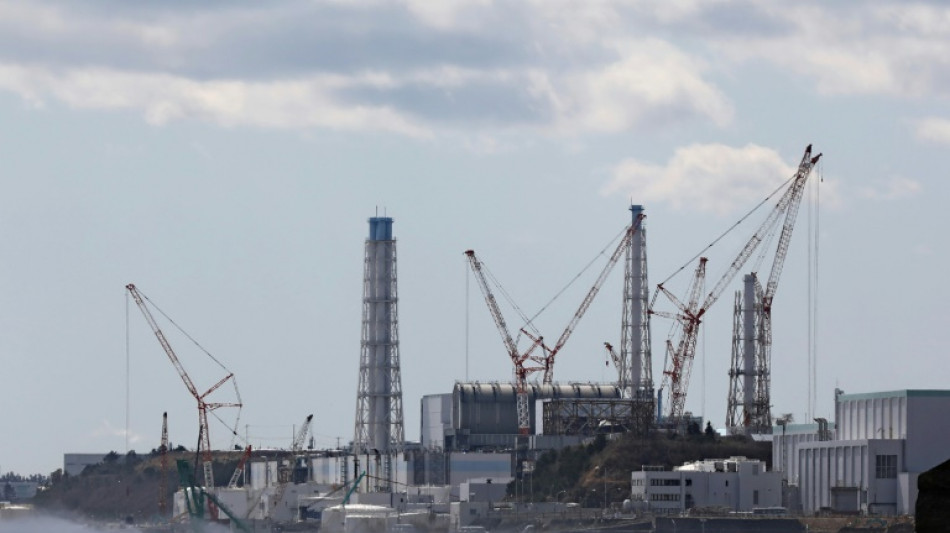
Former bosses of Fukushima operator ordered to pay $97 billion damages / Photo: STR - JIJI PRESS/AFP/File

 Zach Hickerson Recounts Hayden Panettiere's Final Moments in New Interview

 Luxembourg Housing Petition Passes Threshold for Parliamentary Consideration

 Raheem Sterling Receives Suspended Sentence After Lamborghini Crash

 Audience to Choose the Set List at Luxembourg's First FAMIL Jukebox Night

 Luxembourg Pay Rise Delayed as Regional and World Headlines Develop

 Chennai Urbanist Sashna Develops 'Anniki' Card Game to Gamify Tamil Nadu History

 Transport Minister Defends Land Seizure Powers for Toronto-Quebec City High-Speed Rail

 UAE Weather Forecast: Scattered Showers and Fog Expected as Temperatures Drop
A Tokyo court Wednesday ordered former executives from the operator of the devastated Fukushima nuclear plant to pay 13.32 trillion yen ($97 billion) for failing to prevent the disaster, plaintiffs said.
Four ex-bosses from the Tokyo Electric Power Company (TEPCO) were ordered to pay the damages in a suit brought by shareholders over the nuclear disaster triggered by a massive tsunami in 2011.
Plaintiffs emerged from the Tokyo court holding banners reading "shareholders win" and "responsibility recognised".
Lawyers for the plaintiffs hailed the ruling, and said they believed it to be the largest amount of compensation ever awarded in a civil lawsuit in Japan.
"Nuclear power plants can cause irreparable damage to human lives and the environment," the plaintiffs said in a separate statement after the ruling.
"Executives for firms that operate such nuclear plants bear enormous responsibility, which cannot compare with that of other companies."
The shareholders argued that the disaster could have been prevented if TEPCO bosses had listened to research and carried out preventative measures like placing an emergency power source on higher ground.
Defendants said the studies they were not credible and the risks unpredictable.
But the court ruled nuclear plant operators have "an obligation to prevent severe accidents based on the latest scientific and expert engineering knowledge", and the executives failed to heed credible warnings.
- 'Historic' -
In a statement read to AFP by a TEPCO spokesman, the firm declined to comment on the ruling, saying only: "We again express our heartfelt apology to people in Fukushima and members of society broadly for causing trouble and worry" with the disaster.
The damages are intended to cover the costs to TEPCO for dismantling the reactors, compensating affected residents, and cleaning up contamination.
The lawsuit is designed so the money will go to TEPCO itself, which the plaintiffs own partially as shareholders.
Hiroyuki Kawai, a lawyer representing the plaintiffs, called the decision "historic".
"We realise that 13 trillion yen is well beyond their capacity to pay," he told reporters, adding that the plaintiffs expect the men to pay as much as their assets allow.
There was no immediate word on whether the executives would appeal, though the plantiffs' legal team insisted "if they have heart to feel regret... they should deeply apologise to residents and follow the judgement without appealing".
The size of the award is enormous.
As a point of comparison, in 2015 British oil giant BP was ordered to pay $20.8 billion for the Gulf of Mexico oil spill in what was described at the time as the highest fine ever imposed on a company in US history.
- 'Retirement years in misery' -
Three of the Fukushima Daiichi nuclear plant's six reactors were operating when a massive undersea quake triggered a devastating tsunami on March 11, 2011.
They went into meltdown after their cooling systems failed when waves flooded backup generators, leading to the worst nuclear disaster since Chernobyl.
Around 12 percent of the Fukushima region was once declared unsafe but no-go zones now cover around two percent, although populations in many towns remain far lower than before.
TEPCO has been pursued in the courts by survivors of the disaster as well as shareholders, and six plaintiffs this year took the firm to court over claims they developed thyroid cancer because of radiation exposure.
In 2019, a court acquitted three former TEPCO officials in the only criminal trial to stem from the disaster.
They were among the four men ordered to pay damages in Wednesday's ruling: former chairman Tsunehisa Katsumata, former vice presidents Sakae Muto and Ichiro Takekuro and former president Masataka Shimizu.
The men had faced up to five years in prison if convicted of professional negligence resulting in death and injury, but that court ruled that they could not have predicted the scale of the tsunami that triggered the disaster.
Kawai said when the shareholder suit was filed in 2012 that senior managers at TEPCO must be made to pay.
"You may have to sell your house. You may have to spend your retirement years in misery," he said then.
"In Japan, nothing can be resolved and no progress can be made without assigning personal responsibility."
TEPCO is currently engaged in a decades-long effort to decommission the plant, a costly and difficult process.
No one was killed in the nuclear meltdown, but the tsunami left 18,500 dead or missing.
M.Robinson--AT


