
Middle East Media Research Institute (MEMRI) Publishes New Report On How India-UK Free Trade Agreement Offers Crucial Lessons For Stalled India-US Trade Talks Amidst New US Tariffs

 Trump says US reviewing position on Falkland Islands

 Saka strikes as flawless Arsenal punish troubled Villa

 Oil prices surge on renewed fighting in US-Iran war

 Cycling superstar Pogacar has surgery after Vuelta crash
 Man City agree deal for Everton's Ndiaye

 Apple CEO Tim Cook gives nod to founder Steve Jobs in final memo

 Russian finance minister makes unexpected appearance at G20
 Happy to be back in NY, Sabalenka advances
 Naomi Watts to receive lifetime award at top Spain film fest

 Jury hears closing arguments in Tupac Shakur murder trial

 Pakistan sack coach, send seven players home after England defeats

 New storms threaten Grand Canyon flood search, 2 bodies recovered
 France takes aim at ultra-fast fashion with new levy

 Tribunal says India cannot withdraw from water treaty with Pakistan

 John Galliano pulls US exhibition after antisemitism backlash

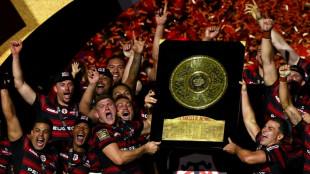 French Top 14 boss offers 'no guarantees' for first Club World Cup
 Munoz reunites with Glasner after joining Forest from Palace
 Liverpool sign Barcola from PSG for £124 million

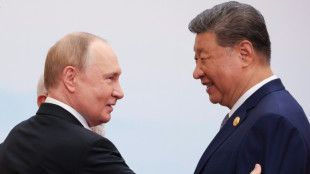 Putin, Xi hold talks in Kyrgyzstan as regional summit begins

 ChatGPT becomes first AI chatbot to face tougher EU rules

 Man City sign Palmeiras winger Allan on five-year deal
 More flooding feared at Grand Canyon after storm leaves 15 missing

 RedHill Divests Talicia® to Apotex for $18 Million Cash Upfront Plus Milestones to Fuel Strategic Growth Opportunities

 MEXC Data: BTC Breaks $80,000, Major-Asset Spot Trading Volume Surges 300%
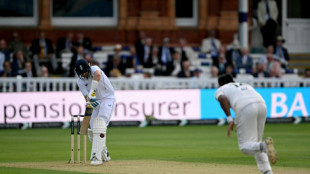
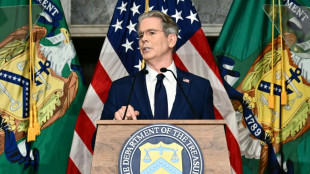 G20 finance talks open as US seeks to ramp up pressure on Iran

WASHINGTON, DC / ACCESS Newswire / August 1, 2025 / The Middle East Media Research Institute (MEMRI) has published a new report: "What Washington Can Learn From The India-UK Free Trade Agreement." As the United States implements new tariffs on India, including a 25% levy effective August 7, the recently concluded Free Trade Agreement (FTA) between India and the United Kingdom stands as a stark example of successful diplomatic and economic engagement, offering valuable insights for the perpetually stalled trade negotiations between India and the US.
The India-UK FTA, signed in July 2025 after three years of complex but ultimately fruitful discussions, is more than a trade pact; it's a testament to mutual understanding, strategic alignment, and a shared vision for inclusive growth. The agreement provides zero-duty access for 99% of Indian exports, streamlines professional mobility, and addresses social security contributions, aiming to double bilateral trade to USD 120 billion by 2030.
In sharp contrast, trade negotiations between India and the US remain ensnared in fundamental disagreements. While issues such as agricultural subsidies, digital trade, and Special and Differential Treatment at the WTO are long-standing, the core problem lies in a persistent perception gap. The US often views India's policies, like MSP-based procurement and digital sovereignty measures, as protectionist, while India sees them as essential for social equity and economic resilience in a country where MSMEs form the backbone of employment and agriculture remains vulnerable.
The US administration, in its pursuit of reciprocal concessions, often overlooks India's structural realities. It perceives India's rise as a zero-sum game, fearing that every gain for India comes at the expense of American manufacturing. This mindset not only stifles progress but risks alienating a partner whose strategic alignment with the US is otherwise robust.
The divergence in perception has created a negotiation environment fraught with suspicion and rigidity. The US views India's economic rise as a signal that it should relinquish its developmental privileges, while India sees itself as a developing economy with legitimate needs for policy space and protective measures.
The success of the India-UK FTA offers a crucial blueprint. Britain engaged with India on equal terms, acknowledging its sensitivities and aspirations. The US has a critical opportunity to reframe its engagement with India, moving beyond a transactional lens to embrace a more nuanced, empathetic posture. Recognizing India's developmental safeguards not as obstructionism but as principled stands rooted in lived realities is paramount.
"Trade, at its best, is not a contest of concessions but a choreography of shared growth," the MEMRI analyst concluded. The India-US negotiations, if they are to succeed, must rediscover this spirit. The US must move beyond the arithmetic of tariffs and embrace the algebra of trust to become a beacon of 21st-century economic diplomacy.
ABOUT MEMRI
Exploring the Middle East and South Asia through their media, MEMRI bridges the language gap between the West and the Middle East and South Asia, providing timely translations of Arabic, Farsi, Urdu-Pashtu, Dari, Turkish, Russian, and Chinese media, as well as original analysis of political, ideological, intellectual, social, cultural, and religious trends.
Founded in February 1998 to inform the debate over U.S. policy in the Middle East, MEMRI is an independent, nonpartisan, nonprofit 501(c)3 organization. MEMRI's main office is in Washington, DC, with branch offices in various world capitals. MEMRI research is translated into English, French, Polish, Japanese, Spanish, and Hebrew.
MEMRI - Middle East Media Research Institute: www.memri.org
MEMRI TV - www.memri.org/tv
Jihad & Terrorism Threat Monitor (JTTM) - www.memri.org/jttm
Cyber & Jihad Lab (CJL) - www.memri.org/cjlab
MEMRI Twitter: https://twitter.com/memrireports/
MEMRI YouTube: https://www.youtube.com/channel/UC59Cpk70K2TwdmApJOTuW9g/videos
MEMRI Instagram: https://www.instagram.com/memrireports/
Contact Information:
MEMRI
[email protected]
202-955-9070
www.memri.org
SOURCE: Middle East Media Research Institute
View the original press release on ACCESS Newswire
A.Ruiz--AT