
Measles Cases Increasing Worldwide, Need the New NV-387 Broad-Spectrum Antiviral to Combat, Says NanoViricides

 US regulator, 22 states accuse Amazon of 'manipulating' ad auctions: lawsuit

 TRON Founder Justin Sun Shares Outlook on Bitcoin, Stablecoins and Global Finance at Bitcoin Asia 2026

 Tributes to 'eternal' Messi on Argentina retirement

 Arteta hails Arsenal's 'finishers' after Saka kills off Villa

 Yamal, Raphinha bag braces as Barcelona rout Rayo

 Alcaraz makes winning return at US Open, Sabalenka safely through

 Everton agree to sign Monaco's Balogun: reports

 Milei calls for F1 to return to Argentina

 Alcaraz wins US Open first-round match after injury layoff

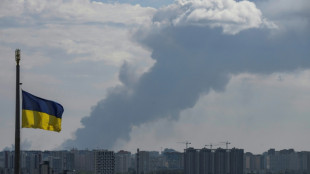 Kyiv orders heightened security amid intense Russian drone strikes

 Sabalenka kickstarts US Open three-peat bid as Fils crashes out

 Fils upset by resurgent Tsitsipas at US Open

 Trump says AI data center opponents want to be 'backwards and poor'

 Pakistan ditch coaches, send seven players home after England defeats

 Galliano pulls Met Gala exhibit after antisemitism backlash

 Afghan people should 'not be abandoned': top Red Cross official

 Six defining moments of Lionel Messi's Argentina career

 Trump blasts US backlash against data centers
 It 'hurts' says Messi of decision to retire from international football

 Benzema ends brief stint with Al Hilal in Saudi league

 Djokovic's Grand Slam future uncertain after brutal US Open defeat

 Turkey says regional defence pact not against any country

 US vows to keep economic pressure on Iran as G20 finance talks begin

 Shein valued at $26.3 bn in Hong Kong market debut

 Crude prices rise above $90 per barrel on US-Iran strikes

SHELTON, CT / ACCESS Newswire / July 30, 2025 / NanoViricides, Inc., a publicly traded company (NYSE Amer.:NNVC) (the "Company"), and a clinical stage, leading global pioneer in the development of broad-spectrum antivirals based on host-mimetic nanomedicine technology that viruses cannot escape, announced that its drug candidate NV-387 is the weapon necessary for combatting growing cases of measles worldwide, especially in the industrialized world including, USA, Canada, UK, and European Union.
NV-387 is possibly the only drug candidate that has been shown to be effective and safe in animal model studies of Measles virus in humanized h-CD150+ knock-in mice, as reported previously by NanoViricides. NV-387 has completed a Phase I clinical trial with no reported adverse events, indicating excellent safety and tolerability in humans. The development of NV-387 as a treatment for Measles can be accelerated under the US FDA programs.
Measles is considered a rare orphan disease in the USA. As such, NV-387 for the treatment of Measles would qualify for an Orphan Drug Designation. Orphan drug designation qualifies sponsors for incentives including tax credits for qualified clinical trials, exemption from user fees, and potential seven years of market exclusivity after approval[1].
The Company also plans to explore a "Fast Track" designation for the NV-387 Measles indication. If granted, a drug approval can occur on the basis of a successful Phase II clinical trial without requiring a Phase III clinical trial, which significantly reduces the timeline to approval.
Measles has become an important disease of concern globally in the recent years for several reasons. Most importantly, Measles disease can wipe out the previously learned immunity of the patient against many infections, including from prior infections, and non-live virus vaccines, making the population vulnerable to viruses that were encountered previously. This is because Measles virus attacks the CD150-bearing immune cells that are responsible for memorizing the prior infections and mounting defenses against them later.
Measles is possibly the most communicable diseases, spreading through aerosol, that is known to humans. In patients, it produces severe morbidity with skin rash, pain, fatigue, and other syndromes. Rarely it can cause a brain disease. Measles mostly affects children.
There were a total of 1,319 confirmed measles cases reported in the USA as of July 22, breaking the most recent record of 1,274 cases in 2019. Hospitalization rates for measles in the USA are about 13%, and fatalities are rare, although in 2025 there were three deaths to date.
Canada is having a much worse Measles season than the USA, with more than 3,800 cases[2] to date in 2025.
A Measles holiday warning has been issued in the UK this year[3]. England itself had more than 3,000 cases of Measles in 2024.
In the European Region, 127,350 measles cases were reported for 2024, double the number of cases reported for 2023 and the highest number since 1997, according to an analysis by WHO and the United Nations Children's Fund (UNICEF)[4] .
Worldwide, Measles cases continue to occur every year. Globally, there have been about 108,000 confirmed measles cases in 2025 to date, while in 2024 there were about 360,000 confirmed cases, according to the WHO[5].
A sustained measles vaccination rate of at least 95% is estimated to be required to maintain community immunity ("herd immunity"). Such a high rate is becoming increasingly difficult to achieve even in developed countries where access to vaccination is not an issue.
While growing vaccine hesitancy is considered an important reason for the fall in Measles vaccination rates, two other factors are of importance as well: (i) The overall population in the industrialized world, as well as in developing world, has increased frequency of immune dysfunction, obesity, and diabetes. The people with immune dysfunction or immune compromise are less likely to benefit from almost any standard vaccination as compared to healthy people and are likely to result in breakthrough infections. (ii) Additionally, the current vaccine for Measles is a live attenuated vaccine of the 1968 era, and the virus has evolved well past that, although so far the Measles virus strains continue to be susceptible to antibodies produced from the standard vaccine; this can change with continuing circulation of the virus in vaccinated persons and can result in a virus that can substantially defeat the vaccine[6].
Further, vaccine hesitancy itself is not irrational because the standard Measles vaccine is a live attenuated vaccine to be given to infants at early age; it is a virus infection that continues to remain in the subject, which is why it provides lifelong immunity. Measles infection itself also provides lifelong immunity that includes the current strains of the virus.
Thus, the Company projects continuing Measles cases worldwide, that require a drug to control the disease in the patient and its spread to others.
We believe NV-387 fills this important medical need. There is no approved drug for treatment of Measles at present.
NanoViricides, Inc. (the "Company") (www.nanoviricides.com) is a publicly traded (NYSE-American, stock symbol NNVC) clinical stage company that is creating special purpose nanomaterials for antiviral therapy. The Company's novel nanoviricide™ class of drug candidates and the nanoviricide™ technology are based on intellectual property, technology and proprietary know-how of TheraCour Pharma, Inc. The Company has a Memorandum of Understanding with TheraCour for the development of drugs based on these technologies for all antiviral infections. The MoU does not include cancer and similar diseases that may have viral origin but require different kinds of treatments.
The Company has obtained broad, exclusive, sub-licensable, field licenses to drugs developed in several licensed fields from TheraCour Pharma, Inc. The Company's business model is based on licensing technology from TheraCour Pharma Inc. for specific application verticals of specific viruses, as established at its foundation in 2005.
Our lead drug candidate is NV-387, a broad-spectrum antiviral drug that we plan to develop as a treatment of RSV, COVID, Long COVID, Influenza, and other respiratory viral infections, as well as MPOX/Smallpox infections. Our other advanced drug candidate is NV-HHV-1 for the treatment of Shingles. The Company cannot project an exact date for filing an IND for any of its drugs because of dependence on a number of external collaborators and consultants. The Company is currently focused on advancing NV-387 into Phase II human clinical trials.
The Company is also developing drugs against a number of viral diseases including oral and genital Herpes, viral diseases of the eye including EKC and herpes keratitis, H1N1 swine flu, H5N1 bird flu, seasonal Influenza, HIV, Hepatitis C, Rabies, Dengue fever, and Ebola virus, among others. NanoViricides' platform technology and programs are based on the TheraCour® nanomedicine technology of TheraCour, which TheraCour licenses from AllExcel. NanoViricides holds a worldwide exclusive perpetual license to this technology for several drugs with specific targeting mechanisms in perpetuity for the treatment of the following human viral diseases: Human Immunodeficiency Virus (HIV/AIDS), Hepatitis B Virus (HBV), Hepatitis C Virus (HCV), Rabies, Herpes Simplex Virus (HSV-1 and HSV-2), Varicella-Zoster Virus (VZV), Influenza and Asian Bird Flu Virus, Dengue viruses, Japanese Encephalitis virus, West Nile Virus, Ebola/Marburg viruses, and certain Coronaviruses. The Company intends to obtain a license for RSV, Poxviruses, and/or Enteroviruses if the initial research is successful. As is customary, the Company must state the risk factor that the path to typical drug development of any pharmaceutical product is extremely lengthy and requires substantial capital. As with any drug development efforts by any company, there can be no assurance at this time that any of the Company's pharmaceutical candidates would show sufficient effectiveness and safety for human clinical development. Further, there can be no assurance at this time that successful results against coronavirus in our lab will lead to successful clinical trials or a successful pharmaceutical product.
This press release contains forward-looking statements that reflect the Company's current expectation regarding future events. Actual events could differ materially and substantially from those projected herein and depend on a number of factors. Certain statements in this release, and other written or oral statements made by NanoViricides, Inc. are "forward-looking statements" within the meaning of Section 27A of the Securities Act of 1933 and Section 21E of the Securities Exchange Act of 1934. You should not place undue reliance on forward-looking statements since they involve known and unknown risks, uncertainties and other factors which are, in some cases, beyond the Company's control and which could, and likely will, materially affect actual results, levels of activity, performance or achievements. The Company assumes no obligation to publicly update or revise these forward-looking statements for any reason, or to update the reasons actual results could differ materially from those anticipated in these forward-looking statements, even if new information becomes available in the future. Important factors that could cause actual results to differ materially from the company's expectations include, but are not limited to, those factors that are disclosed under the heading "Risk Factors" and elsewhere in documents filed by the company from time to time with the United States Securities and Exchange Commission and other regulatory authorities. Although it is not possible to predict or identify all such factors, they may include the following: demonstration and proof of principle in preclinical trials that a nanoviricide is safe and effective; successful development of our product candidates; our ability to seek and obtain regulatory approvals, including with respect to the indications we are seeking; the successful commercialization of our product candidates; and market acceptance of our products.
The phrases "safety", "effectiveness" and equivalent phrases as used in this press release refer to research findings including clinical trials as the customary research usage and do not indicate evaluation of safety or effectiveness by the US FDA.
FDA refers to US Food and Drug Administration. IND application refers to "Investigational New Drug" application. cGMP refers to current Good Manufacturing Practices. CMC refers to "Chemistry, Manufacture, and Controls". CHMP refers to the Committee for Medicinal Products for Human Use, which is the European Medicines Agency's (EMA) committee responsible for human medicines. API stands for "Active Pharmaceutical Ingredient". WHO is the World Health Organization. R&D refers to Research and Development.
Contact:
NanoViricides, Inc.
[email protected]
Public Relations Contact:
[email protected]
[6]Measles happens to be a virus that does not readily escape vaccines and antibodies as other viruses do. This is because it lacks the "cloaking" feature on its cell-binding H-protein to hide the receptor-binding site. Other viruses use a cloaking feature and the cloak part mutates rapidly to evade vaccines and antibodies, allowing the virus to retain its ability to attack cells via the protected receptor-binding feature of its cell-binding protein.
SOURCE: NanoViricides
View the original press release on ACCESS Newswire
Y.Baker--AT