SpaceX Starship explodes on Texas launch pad / Photo: CHANDAN KHANNA - AFP/File

 India's Wholesale Inflation Jumps to 12.29% as Fuel Costs Surge
 China's October Activity Data Reveal a Weak Start to the Fourth Quarter
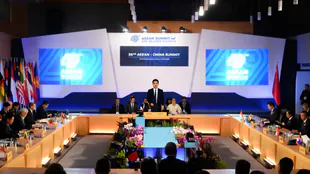 Philippines Urges ASEAN and China to Accelerate South China Sea Code of Conduct

 Mbeki Claims No Progress Since 2018; Author Cites Infrastructure and Economic Gains

 Qatar's Amir and Venezuelan Acting President Discuss Energy Cooperation

 Blue Chip Capital Group Announces Quotation of its Common Stock on the OTCID and Updates Status of Initial Regulatory Compliance
 OBI Pharma Signs Collaboration and License Agreement with Novartis

 Strategic Metals Reports Promising Results From the Rusty and Ranch Projects
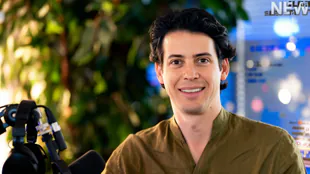 Big Mamma Founder Tigrane Seydoux Brings Italian Restaurant Group to Florida

A SpaceX Starship rocket exploded during a routine ground test in Texas late Wednesday, the company said, in the latest setback to billionaire Elon Musk's dream of sending humans to Mars.
The explosion -- which sent a towering fireball into the air -- happened at the Starbase launch facility at about 11:00 pm (0400 GMT Thursday), SpaceX and law enforcement officials said.
As the company prepared for a static fire test, "a sudden energetic event resulted in the complete loss of Starship and damage to the immediate area surrounding the stand," it said Thursday, updating its initial statement.
"The explosion ignited several fires at the test site which remains clear of personnel," it said.
"As is the case before any test, a safety zone was established around the test site and was maintained throughout the operation. There are no reported injuries, and all personnel are safe and accounted for."
During a static fire test, part of the procedures preceding a launch, the Starship's first-stage Super Heavy booster would be anchored to the ground to prevent it from lifting off during the test-firing.
Starbase, on the south Texas coast near the border with Mexico, is the headquarters for Musk's space project. The company was preparing for the 10th test flight of Starship.
"Initial analysis indicates the potential failure of a pressurized tank known as a COPV, or composite overwrapped pressure vessel, containing gaseous nitrogen in Starship's nosecone area, but the full data review is ongoing," SpaceX said.
Musk appeared to downplay the incident on Thursday.
"Just a scratch," he posted on his social media platform X.
- Mega-rocket -
Standing 403 feet (123 meters) tall, Starship is the world's largest and most powerful rocket and is central to Musk's long-term vision of building a long-term colony on Mars.
The Starship is billed as a fully reusable rocket with a payload capacity of up to 150 metric tons.
The latest setback follows the explosion of a prototype Starship over the Indian Ocean in late May.
That day, the biggest and most powerful launch vehicle ever built had lifted off from the Starbase facility, but the Super Heavy booster blew up instead of executing its planned splashdown in the Gulf of Mexico.
The previous two outings also ended poorly, with the upper stage disintegrating over the Caribbean.
However, the failures will likely do little to dent Musk's spacefaring ambitions.
SpaceX has been betting that its "fail fast, learn fast" ethos, which has helped it dominate commercial spaceflight, will eventually pay off.
The company has caught the Super Heavy booster in the launch tower's giant robotic arms three times -- a daring engineering feat it sees as key to rapid reusability and slashing costs.
NASA is also increasingly reliant on SpaceX, whose Dragon spacecraft is vital for ferrying astronauts to and from the International Space Station.
SpaceX said Thursday that there are "no commonalities" between the COPVs used on Starship -- the current focus on the investigation -- and those used on Falcon.
The Federal Aviation Administration approved an increase in annual Starship rocket launches from five to 25 in early May, stating that the increased frequency would not adversely affect the environment.
The decision overruled objections from conservation groups that had warned the expansion could endanger sea turtles and shorebirds.
burs-abs/sst/sla
M.King--AT