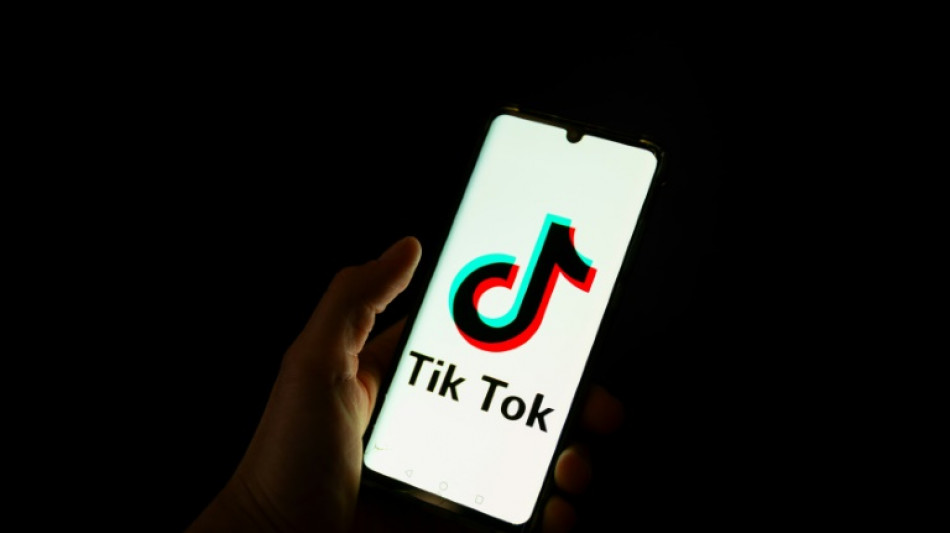
New push in Europe to curb children's social media use / Photo: Antonin UTZ - AFP/File

 Syria site infrastructure 'consistent with nuclear reactor': IAEA
 Juventus sign Woltemade, Sarr on loan from Premier League

 US strikes Iran in latest tit-for-tat attacks
 China's Xi arrives in Egypt as US sanctions threat looms over Iran links
 Car bomb at Colombian police station kills one, injures 11
 Rain delays start of play on US Open
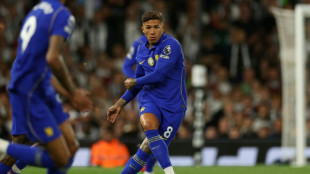 Man City agree blockbuster deal to sign Chelsea star Fernandez: reports
 Alkemya Metacore Secures $50M via Tokenised Equity to Scale Nickel Energy and Security Tech

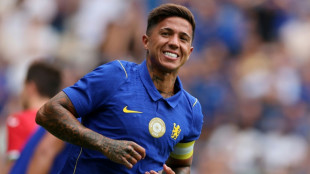 Man City chase Fernandez, Arsenal sell Jesus on deadline day
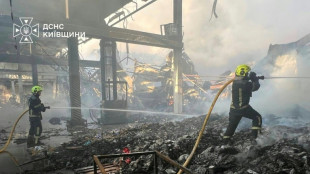 EU says Russian 'hybrid attacks' won't halt aid to Ukraine
 Explosives used in sabotage attack on German power lines
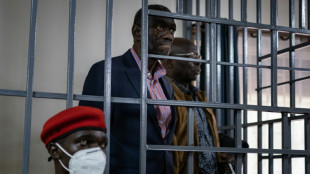
 Nepali families hold symbolic funerals for missing after floods
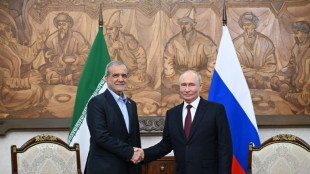
 Newcastle sign Lille forward Fernandez-Pardo

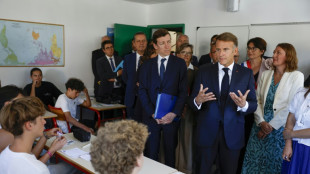 Even at Elysee, phones are handed in, Macron tells French pupils

 Chelsea agree to sign Atalanta's Ahanor, with Palace loan for this season

 Chelsea sign Atalanta's Ahanor and loan him to Palace

 UK chalks up hottest summer on record for second year running
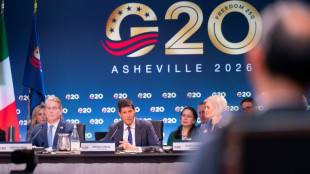
 China's Xi visits Egypt as US sanctions threat looms over Iran links

 RISE Robotics Awarded $100,000 MassVentures Grant to Accelerate Commercialization of Beltdraulic Technology

 Global bond sell-off deepens on inflation concerns
 Germany's far-right AfD promises 'boom' but economists fear worst

 Former England captain Stokes signs for Adelaide Strikers

 Pakistan selector and ex-captain Misbah resigns after coach sacked
 Shein flattens on Hong Kong debut facing global headwinds

 Eurozone inflation hits three-year high at 3.3% in August

From dangerous diet tips to disinformation, cyberbullying to hate speech, the glut of online content harmful to children grows every day. But several European countries have had enough and agree the EU should do more to prevent minors' access to social media.
The European Union already has some of the world's most stringent digital rules to rein in Big Tech, with multiple probes ongoing into how platforms protect children -- or fail to do so.
Backed by France and Spain, Greece spearheaded a proposal for how the EU should limit children's use of online platforms as a rising body of evidence shows the negative effects of social media on children's mental and physical health.
They discussed the plan Friday with EU counterparts in Luxembourg to push the idea of setting an age of digital adulthood across the 27-country bloc, meaning children would not be able to access social media without parental consent.
France, Greece and Denmark believe there should be a ban on social media for under-15s, while Spain has suggested a ban for under-16s.
Australia has banned social media for under-16s, taking effect later this year, while New Zealand and Norway are considering a similar prohibition.
After the day's talks in Luxembourg, it appeared there was no real appetite at this stage for an EU-wide ban on children under a specific age.
But Danish Digital Minister Caroline Stage Olsen indicated there would be no let-up. "It's going to be something we're pushing for," she said.
Top EU digital official Henna Virkkunen admitted specific age limits would be "challenging" for multiple reasons, including cultural differences in member states and how it would work in practice.
But the European Commission, the EU's digital watchdog, still intends to launch an age-verification app next month, insisting it can be done without disclosing personal details.
- 'Very big step' -
The EU last month published non-binding draft guidelines for platforms to protect minors, to be finalised once a public consultation ends this month, including setting children's accounts to private by default, and making it easier to block and mute users.
French Digital Minister Clara Chappaz said it would be "a very big step" if the EU made platforms check the real age of their users, as theoretically required under current regulation.
The worry is that children as young as seven or eight can easily create an account on social media platforms despite a minimum age of 13, by giving a false date of birth.
"If we all agree as Europeans to say this needs to stop, there needs to be a proper age verification scheme, then it means that children below 13 won't be able to access the platform," Chappaz said.
France has led the way in cracking down on platforms, passing a 2023 law requiring them to obtain parental consent for users under the age of 15.
But the measure has not received the EU green light it needs to come into force.
France also gradually introduced requirements this year for all adult websites to have users confirm their age to prevent children accessing porn -- with three major platforms going dark this week in anger over the move.
TikTok, also under pressure from the French government, on Sunday banned the "#SkinnyTok" hashtag, part of a trend promoting extreme thinness on the platform.
- In-built age verification -
France, Greece and Spain expressed concern about the algorithmic design of digital platforms increasing children's exposure to addictive and harmful content -- with the risk of worsening anxiety, depression and self-esteem issues.
Their proposal -- also supported by Cyprus and Slovenia -- blames excessive screen time at a young age for hindering the development of minors' critical and relationship skills.
They demand "an EU-wide application that supports parental control mechanisms, allows for proper age verification and limits the use of certain applications by minors".
The goal would be for devices such as smartphones to have in-built age verification.
The EU is clamping down in other ways as well.
It is currently investigating Meta's Facebook and Instagram, and TikTok under its mammoth content moderation law, the Digital Services Act (DSA), fearing the platforms are failing to do enough to prevent children accessing harmful content.
And last week, it launched an investigation into four pornographic platforms over suspicions they are failing to stop children accessing adult content.
D.Lopez--AT