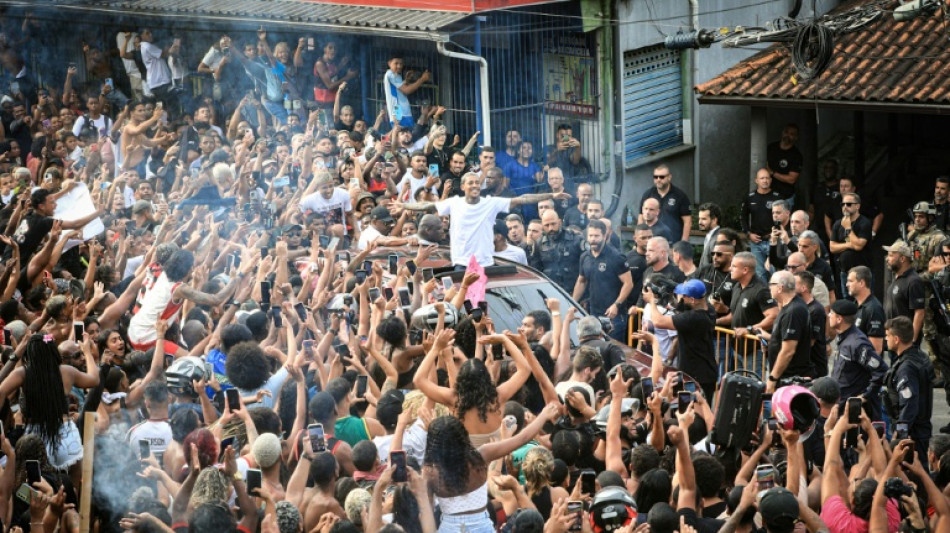
Does Brazilian funk glorify crime? Singer's arrest triggers debate / Photo: Victor CHAPETTA - AgNews/AFP

 Kroenke to buy baseball's Los Angeles Angels: statement

 US defends Trump's Venezuela oil deal

 OpenAI to launch new model with 'stronger safeguards' after hack

 Fans mourn 'bittersweet' final Ariana Grande gig in London

 Norway's King Haakon VIII swears allegiance to constitution

 Syria site infrastructure 'consistent with nuclear reactor': IAEA

 Juventus sign Woltemade, Sarr on loan from Premier League

 US strikes Iran in latest tit-for-tat attacks

 China's Xi arrives in Egypt as US sanctions threat looms over Iran links

 Car bomb at Colombian police station kills one, injures 11

 Rain delays start of play on US Open

 Man City agree blockbuster deal to sign Chelsea star Fernandez: reports
 Alkemya Metacore Secures $50M via Tokenised Equity to Scale Nickel Energy and Security Tech

 Man City chase Fernandez, Arsenal sell Jesus on deadline day

 EU says Russian 'hybrid attacks' won't halt aid to Ukraine

 Explosives used in sabotage attack on German power lines
 Nepali families hold symbolic funerals for missing after floods

 Newcastle sign Lille forward Fernandez-Pardo

 Even at Elysee, phones are handed in, Macron tells French pupils

 Chelsea agree to sign Atalanta's Ahanor, with Palace loan for this season

 Chelsea sign Atalanta's Ahanor and loan him to Palace

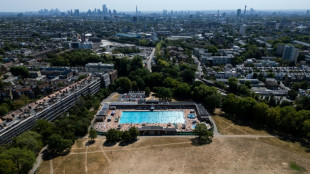 UK chalks up hottest summer on record for second year running

 China's Xi visits Egypt as US sanctions threat looms over Iran links

 RISE Robotics Awarded $100,000 MassVentures Grant to Accelerate Commercialization of Beltdraulic Technology

 Global bond sell-off deepens on inflation concerns

The arrest of a popular funk singer in Brazil on suspicion of glorifying a powerful crime gang has revived a long-standing debate over the criminalization of a genre born in Rio de Janeiro's gritty favelas, or slums.
Unlike its US namesake, which was popularized by James Brown, Rio funk borrows more from hip-hop, blended with samba and other Brazilian rhythms.
The lyrics, seen by many as celebrating favela drug lords, have repeatedly led to calls for songs to be censored.
Last week, MC Poze do Rodo, one of the genre's best-known artists with 16 million followers on Instagram, was arrested on charges of glorifying crime and having links to Comando Vermelho (CV), one of Brazil's biggest gangs.
The authorities said his arrest aimed to send a message to those "who romanticize and help spread narcoculture."
The police argue that Poze's music "clearly condones" drug trafficking and illegal use of firearms and point to concerts held "exclusively in areas dominated by CV, with a notable presence of traffickers armed with high-caliber weapons."
After five days in preventive custody, the 26-year-old singer was released on Tuesday to a rapturous welcome from waiting fans, who swarmed his car in a column of motorbikes.
Police fired tear gas and stun grenades to disperse the crowds.
Speaking afterwards, the singer claimed he was the victim of police discrimination.
"Rio de Janeiro police don't like me... because I'm black? Because I'm from a favela?"
- 'Singers are not criminals' -
Marlon Brendon Coelho Couto was born in the favela of Rodo, one of the biggest in western Rio.
He has admitted to selling drugs in his youth but says that he abandoned crime to devote himself to music.
Police footage of his arrest at his current home in the upmarket Recreio dos Bandeirantes district, cuffed and shirtless, surrounded by heavily armed officers, caused an outcry among his fans.
Fellow musicians took part in a campaign for his release, organized by his wife, influencer Viviane Noronha, on the grounds that "funk singers are not criminals."
Erika Hilton, a Congress member, argued that by arresting Poze the authorities were seeking to "project all the sins of the world onto black people."
But many rejoiced at seeing the star behind bars, including former far-right president Jair Bolsonaro, an ex-army captain, who posted a picture of the singer with a clown emoji on his Instagram account.
- Arresting the messenger -
Funk describes the reality of life in Rio's crime-blighted favelas.
Poze's lyrics have regularly caused controversy.
In his 2023 track "Homenagem Pra Tropa do Rodo," he pays tribute to men killed "shooting for Comando Vermelho."
The debate surrounding funk's role in crime mirrors long-standing discussions in the United States over the links between rap and violence in Black communities.
Over a decade ago, authorities in the northeastern Brazilian city of Fortaleza passed a law banning venues from hiring artists that incite violence.
Similar anti-Oruam bills, as they are known after the rapper son of a famous drug lord, are now also being debated by several other cities and state parliaments.
Danilo Cymrot, a doctor in criminology at the University of Sao Paulo, pointed to a "gray area" in the definition of glorification of violence, relating to artistic content.
"The artist doesn't necessarily agree with his lyrics," Cymrot, author of a book about Rio funk, said.
He added that "oftentimes, the police and the judiciary have a hard time understanding funk as a work of art."
As a result, he said, the artist's origins are often used to determine whether he condones violence.
"It's less the message itself and more who is singing it."
Th.Gonzalez--AT