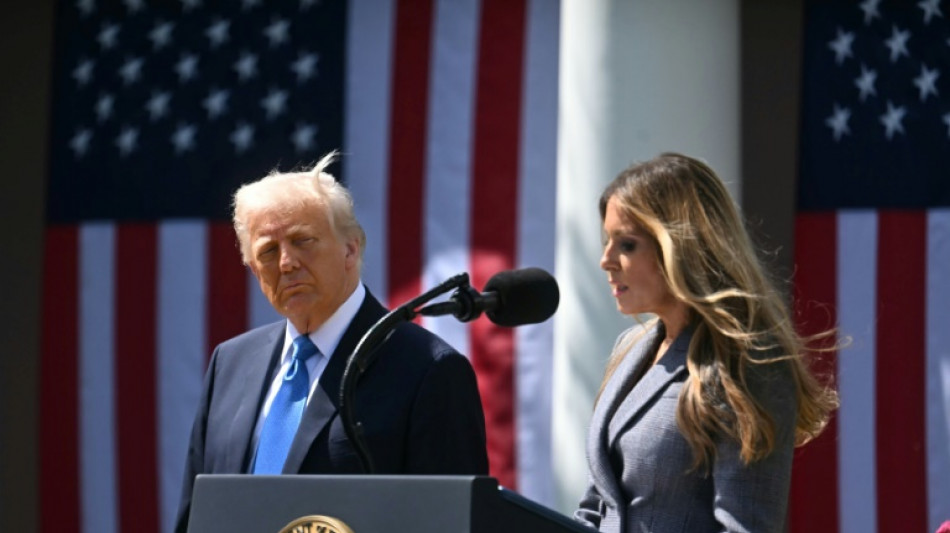
Trump signs bill outlawing 'revenge porn' / Photo: Jim WATSON - AFP

 Meloni government becomes Italy's longest-lasting
 Funerals in Nepal for missing, a week after deadly floods

 US aircraft carrier arrives in Thailand after months at sea

 US aircraft carrier approaches Thai port after months at sea
 Nepal's young PM faces gravest test after flood catastrophe
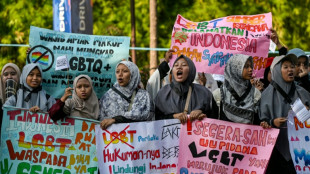 What rainbow? LGBTQ Indonesians on edge as hostility mounts

 O'Connor eyes Wallabies World Cup swansong after Force return
 Syria UXO causing death, injury every six hours: charity
 Tiger Woods set to change not guilty plea in DUI case: court documents

 Zelensky warns airlines Russian skies not safe due to Ukraine drones

 UK vows anti-settler measures as Israel warns of retaliation
 New pro Koivun among US Presidents Cup picks

 G20 finance leaders close talks marked by US welcoming Russia

 From Hollywood to big time tennis: teen makes US Open debut
 Man City secure Premier League record deal to sign Fernandez
 Kaepernick says NFL 'blackballing me' decade after protest

 Atletico loan David from Juve, send Lemar to Elche

 Chelsea 'keeper Sanchez makes deadline-day move to Como

 Kroenke to buy baseball's Los Angeles Angels: statement
 US defends Trump's Venezuela oil deal

 OpenAI to launch new model with 'stronger safeguards' after hack
 Fans mourn 'bittersweet' final Ariana Grande gig in London
 Norway's King Haakon VIII swears allegiance to constitution
 Syria site infrastructure 'consistent with nuclear reactor': IAEA
 Juventus sign Woltemade, Sarr on loan from Premier League

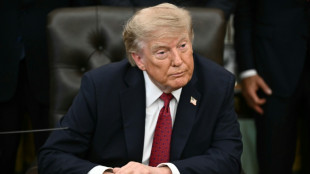
US President Donald Trump signed a bill on Monday making it a federal crime to post "revenge porn" -- whether it is real or generated by artificial intelligence.
The "Take It Down Act," passed with overwhelming bipartisan congressional support, criminalizes non-consensual publication of intimate images, while also mandating their removal from online platforms.
"With the rise of AI image generation, countless women have been harassed with deepfakes and other explicit images distributed against their will," Trump said at a signing ceremony in the Rose Garden of the White House.
"And today we're making it totally illegal," the president said. "Anyone who intentionally distributes explicit images without the subject's consent will face up to three years in prison."
First Lady Melania Trump endorsed the bill in early March and attended the signing ceremony in a rare public White House appearance.
The First Lady has largely been an elusive figure at the White House since her husband took the oath of office on January 20, spending only limited time in Washington.
In remarks at the signing ceremony, she described the bill as a "national victory that will help parents and families protect children from online exploitation."
"This legislation is a powerful step forward in our efforts to ensure that every American, especially young people, can feel better protected from their image or identity being abused," she said.
Deepfakes often rely on artificial intelligence and other tools to create realistic-looking fake videos.
They can be used to create falsified pornographic images of real women, which are then published without their consent and proliferate.
Some US states, including California and Florida, have laws criminalizing the publication of sexually explicit deepfakes, but critics have voiced concerns the "Take It Down Act" grants the authorities increased censorship power.
The Electronic Frontier Foundation, a nonprofit focused on free expression, has said the bill gives "the powerful a dangerous new route to manipulate platforms into removing lawful speech that they simply don't like."
The bill would require social media platforms and websites to have procedures in place to swiftly remove non-consensual intimate imagery upon notification from a victim.
- Harassment, bullying, blackmail -
An online boom in non-consensual deepfakes is currently outpacing efforts to regulate the technology around the world due to a proliferation of AI tools, including photo apps digitally undressing women.
While high-profile politicians and celebrities, including singer Taylor Swift, have been victims of deepfake porn, experts say women not in the public eye are equally vulnerable.
A wave of AI porn scandals have been reported at schools across US states with hundreds of teenagers targeted by their own classmates.
Such non-consensual imagery can lead to harassment, bullying or blackmail, sometimes causing devastating mental health consequences, experts warn.
Renee Cummings, an AI and data ethicist and criminologist at the University of Virginia, said the bill is a "significant step" in addressing the exploitation of AI-generated deepfakes and non-consensual imagery.
"Its effectiveness will depend on swift and sure enforcement, severe punishment for perpetrators and real-time adaptability to emerging digital threats," Cummings told AFP.
A.Clark--AT