
-
 Meloni government becomes Italy's longest-lasting
-
Venice to roll out red carpet for Clooney on opening night
-
 Funerals in Nepal for missing, a week after deadly floods
-
Hong Kong democracy activist Wong pleads guilty to foreign collusion: AFP
-
 US aircraft carrier arrives in Thailand after months at sea
-
Stocks sink, yields at multi-decade highs and oil spikes on Mideast flare-up

-
 US aircraft carrier approaches Thai port after months at sea
-
US defends Trump Venezuela oil deal as energy secretary lands in Caracas
-
 Nepal's young PM faces gravest test after flood catastrophe
-
Jubilant Monfils celebrates birthday with US Open win
-
 What rainbow? LGBTQ Indonesians on edge as hostility mounts
-
The Japanese idealist behind the last deradicalisation NGO in Somalia
-
 O'Connor eyes Wallabies World Cup swansong after Force return
-
Rybakina, Gauff advance as Zverev launches US Open campaign
-
 Syria UXO causing death, injury every six hours: charity
-
Macron in Britain to help unveil tapestry, hold Burnham talks
-
 Tiger Woods set to change not guilty plea in DUI case: court documents
-
China's Xi to hold talks with Sisi in rare visit to Egypt
-
 Zelensky warns airlines Russian skies not safe due to Ukraine drones
-
Confident Gauff reaches US Open 2nd round with straight-set win
-
 UK vows anti-settler measures as Israel warns of retaliation
-
US postal whistleblower warns ballot system could disrupt midterms
-
 New pro Koivun among US Presidents Cup picks
-
John Ternus takes over as Apple enters era of AI, foldable phones
-
 G20 finance leaders close talks marked by US welcoming Russia
-
Second-ranked Rybakina eases into US Open 2nd round

-
 From Hollywood to big time tennis: teen makes US Open debut
-
Man City sign Fernandez, Ndiaye as Premier League clubs set new spending record

-
 Man City secure Premier League record deal to sign Fernandez
-
Alcaraz aims to step it up in round two of US Open title defense
-
 Kaepernick says NFL 'blackballing me' decade after protest
-
Honduran judge drops corruption charges against ex-leader Hernandez

-
 Atletico loan David from Juve, send Lemar to Elche
-
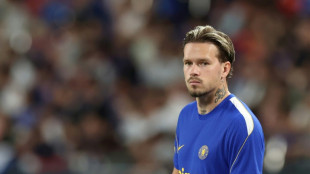
Mudryk joins Spurs on loan from Chelsea after doping ban ends
-
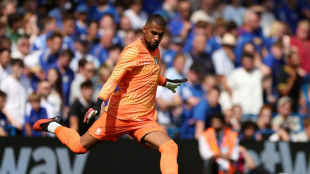 Chelsea 'keeper Sanchez makes deadline-day move to Como
-
What's next after judge strikes down New York's landmark climate fund law
-
 Kroenke to buy baseball's Los Angeles Angels: statement
-
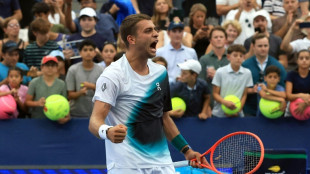
Cobolli claws out five-set victory at rain-hit US Open
-
 US defends Trump's Venezuela oil deal
-
Ndiaye seizes 'chance of a lifetime' in Man City move

-
 OpenAI to launch new model with 'stronger safeguards' after hack
-
Global bond sell-off, surging oil prices send markets into the red
-
 Fans mourn 'bittersweet' final Ariana Grande gig in London
-
Zuckerberg, Musk make plea at G20 for more AI data centers

-
 Norway's King Haakon VIII swears allegiance to constitution
-
'Discomfort' at G20 finance talks as US hosts Russian minister
-
 Syria site infrastructure 'consistent with nuclear reactor': IAEA
-
Man City set to sign Fernandez for record fee, Ndiaye on deadline day

-
 Juventus sign Woltemade, Sarr on loan from Premier League
-
Back-to-school in Cuba a grim day with shortages of everything
Salman Rushdie assailant sentenced to 25 years in prison
An American-Lebanese man was sentenced to 25 years in prison on Friday for trying to kill novelist Salman Rushdie in a 2022 knife attack at a New York cultural center.
Hadi Matar, 27, was convicted in February of attempted murder and assault for the stabbing, which left Rushdie blind in one eye.
Matar received the maximum sentence of 25 years for the attack on Rushdie and seven years for assault on another attendee at the speaking event. The sentences are to run concurrently.
Rushdie, a British-American, told jurors during the trial about Matar "stabbing and slashing" him at the upscale cultural center.
"It was a stab wound in my eye, intensely painful, after that I was screaming because of the pain," Rushdie said, adding that he was left in a "lake of blood."
Matar -- who shouted pro-Palestinian slogans on several occasions during the trial -- stabbed Rushdie about 10 times with a six-inch blade.
He previously told media he had only read two pages of Rushdie's "The Satanic Verses," but believed the author had "attacked Islam."
Matar's lawyers had sought to prevent witnesses from characterizing Rushdie as a victim of persecution following Iran's 1989 fatwa calling for his murder over supposed blasphemy in the novel.
Iran has denied any link to the attacker and said only Rushdie was to blame for the incident.
The optical nerve of Rushdie's right eye was severed in the attack.
His Adam's apple was lacerated, his liver and small bowel penetrated, and he became paralyzed in one hand after suffering severe nerve damage to his arm.
Rushdie was rescued from Matar by bystanders. Last year, he published a memoir called "Knife" in which he recounted the near-death experience.
Rushdie, who was born in Mumbai but moved to England as a boy, was propelled into the spotlight with his second novel "Midnight's Children" (1981), which won Britain's prestigious Booker Prize for its portrayal of post-independence India.
But "The Satanic Verses" brought him far greater, mostly unwelcome, attention.
Rushdie became the center of a fierce tug-of-war between free speech advocates and those who insisted that insulting religion, particularly Islam, was unacceptable under any circumstance.
Books and bookshops were torched, his Japanese translator was murdered and his Norwegian publisher was shot several times.
Rushdie lived in seclusion in London for a decade after the 1989 fatwa, but for the past 20 years -- until the attack -- he lived relatively normally in New York.
H.Gonzales--AT