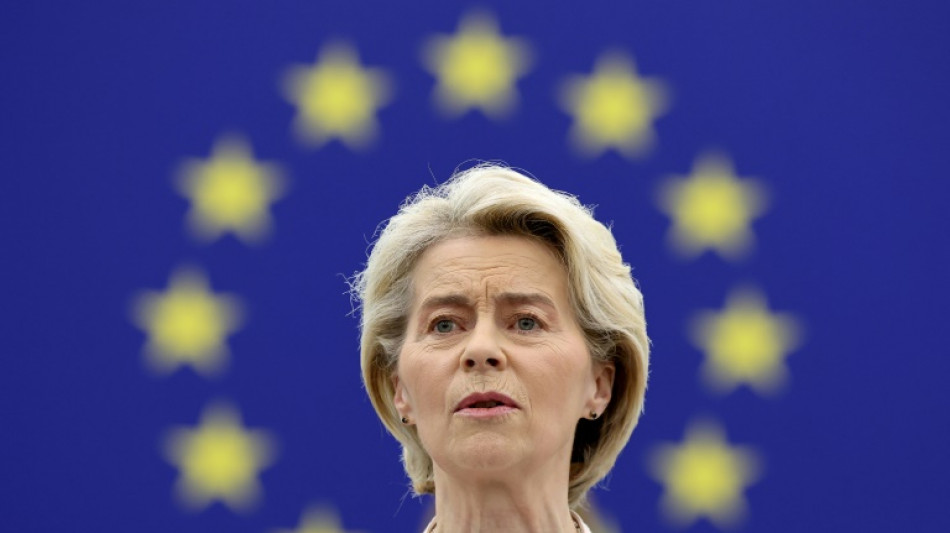
Judgment day in EU chief's Covid vaccine texts case / Photo: FREDERICK FLORIN - AFP

 Cricketers to get best rooms at Asian Games, says Japan chief

 Zverev out-lasts Sonego in wild five-setter to advance at US Open

 Amid war, Ukrainian soldiers celebrate love at ritual wedding

 Venice to roll out red carpet for Clooney on opening night

 Hong Kong democracy activist Wong pleads guilty to foreign collusion: AFP

 Stocks sink, yields at multi-decade highs and oil spikes on Mideast flare-up

 US defends Trump Venezuela oil deal as energy secretary lands in Caracas

 Jubilant Monfils celebrates birthday with US Open win
 The Japanese idealist behind the last deradicalisation NGO in Somalia

 Rybakina, Gauff advance as Zverev launches US Open campaign

 Macron in Britain to help unveil tapestry, hold Burnham talks
 China's Xi to hold talks with Sisi in rare visit to Egypt
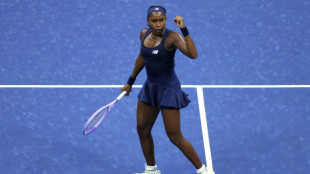 Confident Gauff reaches US Open 2nd round with straight-set win

 US postal whistleblower warns ballot system could disrupt midterms

 InterContinental Hotels Group PLC Announces Transaction in Own Shares - September 02

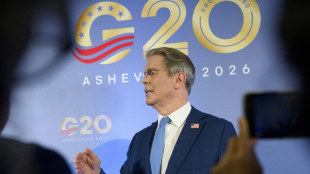
 G20 finance leaders close talks marked by US welcoming Russia

 From Hollywood to big time tennis: teen makes US Open debut

 Man City secure Premier League record deal to sign Fernandez

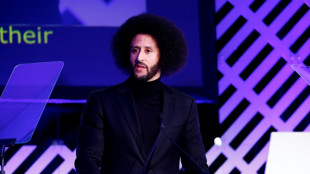 Kaepernick says NFL 'blackballing me' decade after protest

 Atletico loan David from Juve, send Lemar to Elche

 Chelsea 'keeper Sanchez makes deadline-day move to Como

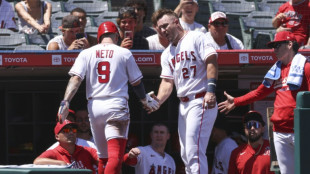 Kroenke to buy baseball's Los Angeles Angels: statement

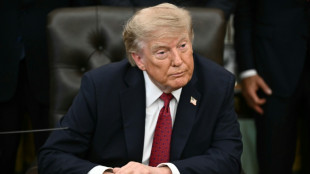 US defends Trump's Venezuela oil deal

 OpenAI to launch new model with 'stronger safeguards' after hack
 Fans mourn 'bittersweet' final Ariana Grande gig in London

A top court is to rule Wednesday on whether the EU failed the transparency test by declining to release text messages sent by Ursula von der Leyen to the head of Pfizer as the bloc tried to secure Covid vaccines.
The case before the Court of Justice of the European Union (EUCJ) is seen as a test for the EU Commission president, whose governance has at times been accused of centralised and opaque decision-making.
At its centre are elusive exchanges between von der Leyen and Albert Bourla, chief executive of Pfizer -- which was chosen by the bloc as its main vaccine supplier at the height of the pandemic.
The New York Times, which revealed the existence of the messages, sued the commission in 2023 after Brussels declined to produce them following a freedom of information request.
The commission argued it could not find the texts because they had not been recorded and archived -- something it says is done only when the content is deemed "substantive".
"The commission never denied the existence of text message exchanges," an EU official said. "What it was argued... is that these exchanges did not contain important information".
The New York Times has asked the lower chamber of the Luxembourg-based EUCJ to quash the commission's decision not to hand it the messages. The verdict can be appealed.
- 'Maladministration' -
The EU moved swiftly after the Covid pandemic emerged in 2020 to secure vaccines for member countries to buy for their citizens and residents at a time of massive global demand for the shots.
But many aspects of the procurement from Pfizer have been kept confidential, leading to claims of a lack of transparency -- and several legal proceedings in Belgium and with EU courts.
"This case presents a very important issue: whether officials may evade public transparency by communicating via text messages rather than more traditional means," a lawyer for The Times, Bondine Kloostra, said in her opening arguments in November.
Lawyers for the 27-nation bloc have argued the private messages did not constitute part of the vaccine negotiation.
They might have involved side issues, such as von der Leyen and Bourla agreeing to speak on a certain day, at a certain time, they suggested.
Commission workers, including its chief, do not have an obligation to record all their emails, texts and instant messaging chats, as this would be "materially impossible", an EU official said.
Emails are automatically deleted after six months, he noted.
A duty to archive arises only when such messages contain important information that is not "short-lived" and relates to the commission's policies, activities and decisions.
Such assessment is done in the first instance by the person receiving or sending the texts, so in the case before the court by von der Leyen.
The commission's lawyer, Paolo Stancanelli, said in November that its services asked to track down the messages after The Times reached out to the EU chief's cabinet, which replied it was unable to find them.
In January 2022, the EU's ombudsman described this as "maladministration", saying the messages should have been subject to the EU's public transparency rules for official documents.
A.Moore--AT