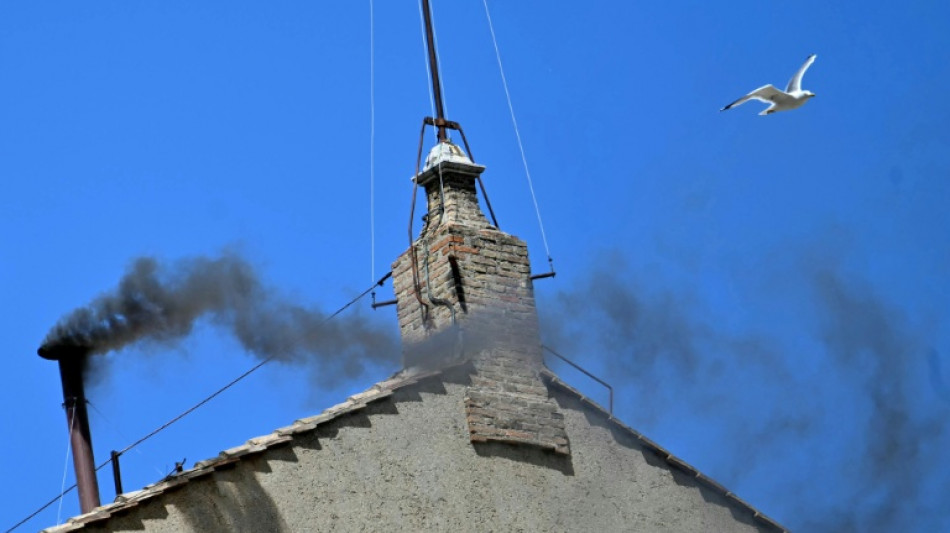
Second black smoke, cardinals to vote again for new pope / Photo: Alberto PIZZOLI - AFP

 Australia defends Pacific climate meeting despite doubts on attendance
 Iran attacks US sites after American strikes, wedding deaths
 Stocks drop, yields at three-decade highs on Mideast flare-up
 EU summons Russian envoy, eyes sanctions after Germany drone 'attack'
 Stocks drop as yields and oil prices spike on Mideast flare-up
 Cricketers to get best rooms at Asian Games, says Japan chief
 Zverev out-lasts Sonego in wild five-setter to advance at US Open
 Amid war, Ukrainian soldiers celebrate love at ritual wedding
 Venice to roll out red carpet for Clooney on opening night
 Hong Kong democracy activist Wong pleads guilty to foreign collusion: AFP
 Stocks sink, yields at multi-decade highs and oil spikes on Mideast flare-up
 US defends Trump Venezuela oil deal as energy secretary lands in Caracas
 Jubilant Monfils celebrates birthday with US Open win
 The Japanese idealist behind the last deradicalisation NGO in Somalia
 Rybakina, Gauff advance as Zverev launches US Open campaign
 Macron in Britain to help unveil tapestry, hold Burnham talks
 China's Xi to hold talks with Sisi in rare visit to Egypt
 Confident Gauff reaches US Open 2nd round with straight-set win
 US postal whistleblower warns ballot system could disrupt midterms
 Independent Pharmacy Cooperative Acquires USave Pharmacy Group
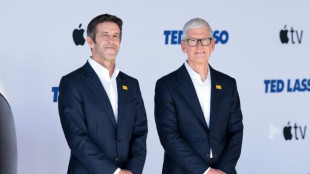 John Ternus takes over as Apple enters era of AI, foldable phones
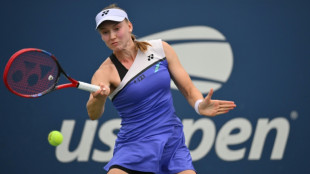 Second-ranked Rybakina eases into US Open 2nd round
 Man City sign Fernandez, Ndiaye as Premier League clubs set new spending record
 Alcaraz aims to step it up in round two of US Open title defense
 Honduran judge drops corruption charges against ex-leader Hernandez
Thick black smoke billowed Thursday from the chimney of the Sistine Chapel in a sign that cardinals again failed to elect a new head of the Catholic Church.
Among the thousands of Catholics and curious tourists massed in St Peter's Square, there was applause but also sighs at the result, which came after the second and third ballots.
The 133 cardinals voting for a successor to Pope Francis as head of the world's 1.4 billion Catholics were shut in for the secretive conclave on Wednesday evening.
Sequestered away from the world, they communicate their progress by burning their ballot papers and sending up smoke through the chimney of the frescoed 15th-century chapel.
Black smoke means no one has secured the minimum two-thirds majority -- 89 votes -- and white smoke signals the election of the 267th pope.
The first black smoke on Wednesday evening arrived some three hours and 15 minutes after the cardinals closed their doors, greeted with some disappointment by the assembled crowds.
But many people returned on Thursday, where the red-robed prelates held two more ballots in the morning. They were scheduled to hold another two in the afternoon and then four more on Friday, unless a pope is elected sooner.
"I don't want it rushed -- whatever they need to do to make the right decision," said Barbara Mason, 50, who travelled from Canada for the conclave.
She was hoping for a pope who will continue in Francis's progressive footsteps, especially as a champion of the environment and migrants, "going forward, not going backward".
Francis, a charismatic Argentine reformer who sought to open up the Church during his 12 years as pope, died on April 21 aged 88.
- Oath of secrecy -
Paolo Cabrera, 40, from the Philippines, arrived early at the Vatican with his wife Cynthia to secure a spot as close as possible to St Peter's Basilica, where the new pontiff will be presented to the world from the balcony after the vote.
"It is very, very exciting to be here," he said.
As Filipinos, they said they were rooting for their compatriot Cardinal Luis Antonio Tagle, one of the favourites -- but said that they would be happy with "anybody appointed by God".
The cardinal electors -- all those aged under 80 -- spent the night in the Santa Marta guesthouse and were to seek divine inspiration at private mass early Thursday before starting to vote again.
Seated at tables and chairs laid out beneath Michelangelo's frescoes in the Sistine Chapel, each cardinal must write down their choice for pope on a ballot paper and take it to the altar, where it is put in a silver urn.
After the ballots have been counted, they are burned in a cast iron stove dating back to 1939. Chemicals are added to a second, newer stove, connected to the same flue, which colour the smoke.
While their procession into the Sistine Chapel on Wednesday was broadcast live by the Vatican, including on screens in St Peter's Square, the feed cut as soon as they locked the doors.
The cardinals had to leave their phones behind and took an oath not to reveal the secrets of the conclave on pain of excommunication -- and they will stay until they make a decision.
- Waiting -
In 2005, Pope Benedict XVI was elected in four ballots and Pope Francis in 2013 in five ballots.
But experts warn the 2025 conclave -- the largest and the most international ever, assembling cardinals from around 70 countries -- could take longer.
There is no clear frontrunner to succeed Francis, with the cardinals representing a range of progressive and conservative traditions within the Church.
The challenges facing the 2,000-year-old institution are clear, and the new pope after his election will need to tread carefully amid geopolitical uncertainty, while addressing deep fractions within the Church.
There is also the continued fallout from the global clerical sex abuse scandal and, in the West, increasingly empty pews.
Around 80 percent of the cardinals voting were appointed by Francis -- an impulsive yet energetic champion of the downtrodden.
But while some cardinals are looking to a new pope to protect and develop his legacy, others want a more conservative defender of doctrine.
More than a dozen names are circulating, from Italian Pierbattista Pizzaballa to Hungary's Peter Erdo and Sri Lanka's Malcolm Ranjith.
"The church has many divisions between liberals and conservatives, which are divisions that should not be, because I believe that the Church is universal," said Juan Benitez, a 37-year-old Colombian.
burs-dc/ar/ide/rlp
H.Thompson--AT