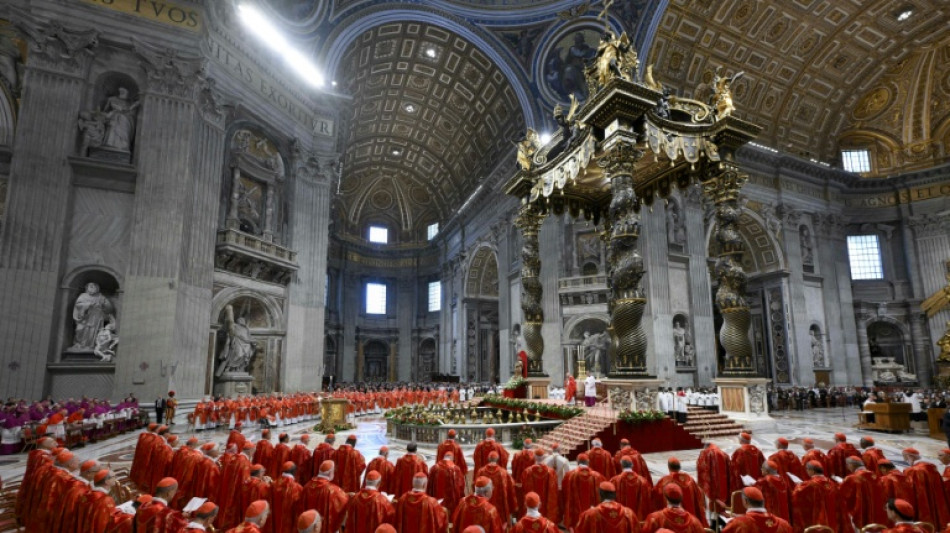
Cardinals locked inside Sistine Chapel as conclave begins / Photo: Handout - VATICAN MEDIA/AFP

 Australia defends Pacific climate meeting despite doubts on attendance
 Iran attacks US sites after American strikes, wedding deaths
 Stocks drop, yields at three-decade highs on Mideast flare-up
 EU summons Russian envoy, eyes sanctions after Germany drone 'attack'
 Stocks drop as yields and oil prices spike on Mideast flare-up
 Cricketers to get best rooms at Asian Games, says Japan chief
 Zverev out-lasts Sonego in wild five-setter to advance at US Open
 Amid war, Ukrainian soldiers celebrate love at ritual wedding
 Venice to roll out red carpet for Clooney on opening night
 Hong Kong democracy activist Wong pleads guilty to foreign collusion: AFP
 Stocks sink, yields at multi-decade highs and oil spikes on Mideast flare-up
 US defends Trump Venezuela oil deal as energy secretary lands in Caracas
 Jubilant Monfils celebrates birthday with US Open win
 The Japanese idealist behind the last deradicalisation NGO in Somalia
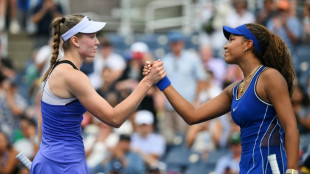
 Rybakina, Gauff advance as Zverev launches US Open campaign
 Macron in Britain to help unveil tapestry, hold Burnham talks
 China's Xi to hold talks with Sisi in rare visit to Egypt
 Confident Gauff reaches US Open 2nd round with straight-set win
 US postal whistleblower warns ballot system could disrupt midterms
 Independent Pharmacy Cooperative Acquires USave Pharmacy Group
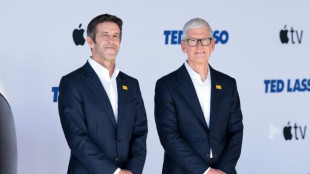 John Ternus takes over as Apple enters era of AI, foldable phones
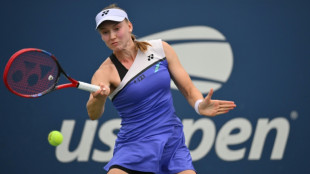 Second-ranked Rybakina eases into US Open 2nd round
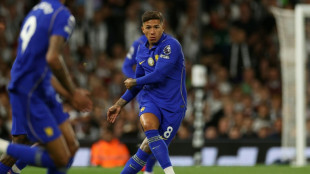
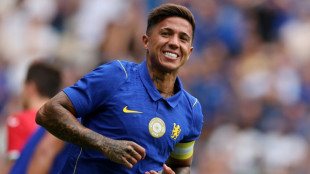 Man City sign Fernandez, Ndiaye as Premier League clubs set new spending record
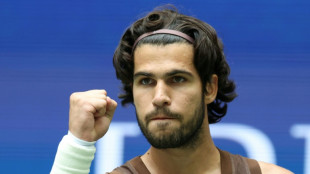 Alcaraz aims to step it up in round two of US Open title defense
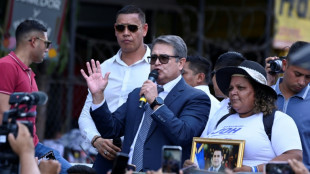 Honduran judge drops corruption charges against ex-leader Hernandez
Cardinals choosing the next leader of the global Catholic Church were locked into the Vatican's Sistine Chapel on Wednesday, marking the formal start of the conclave to elect a successor to Pope Francis.
Shortly after 17:45 (15:45 GMT), the conclave's master of ceremonies declared "Extra omnes" -- "Everybody out" in Latin -- and then shut the heavy doors of the 15th century chapel, leaving the 133 "Princes of the Church" to make their choice in secrecy.
The centuries-old ritual, which is expected to last several days, comes just over a fortnight after the death of Pope Francis, the Argentine Jesuit who led the world's 1.4 billion Catholics for 12 years.
The cardinal electors had earlier gathered in the nearby Pauline Chapel in silent prayer before proceeding to the 15th-century Sistine Chapel, where tables and chairs have been laid out beneath Michelangelo's frescoes.
They took a group oath of secrecy before each cardinal approached the altar to utter his personal vow in front of the Italian master's depiction of the Last Judgement, when Christians believe God will return to decide who goes to heaven or hell.
According to a live video feed produced by the Vatican, they took a vow not to reveal what happened in the conclave, on pain of excommunication.
The conclave is the largest and the most international ever, with cardinals from around 70 countries -- many of whom did not know each other before being summoned to Rome following Francis's death.
There is no clear frontrunner to succeed the charismatic Francis, with the cardinals representing a range of progressive and conservative traditions within the Church.
But the challenges facing the 2,000-year-old institution are clear.
The new pope faces diplomatic balancing acts at a time of geopolitical uncertainty, as well as deep splits within the Church itself.
There is also the continued fall-out from the clerical child abuse scandal and -- in the West -- increasingly empty pews.
- Waiting for the smoke -
Thousands of people gathered outside in St Peter's Square to watch the proceedings, which were streamed live on several large screens in front of St Peter's Basilica.
There was applause for the declaration of "Extra omnes".
Many hope to see the smoke that will come out of the Sistine Chapel's chimney when the cardinals have voted -- black smoke for no winner, white for a new pope.
"It would be perfect, lovely to be here for a new pope," said Irish tourist Catriona Hawe, 60.
"Francis was brilliant, progressive, a man of the people, though he didn't move things forward as quickly as I would have liked," she said.
"The Church won't be doing itself any favours if it elects someone conservative."
Besides outward displays of faith, the conclave has also generated a festive atmosphere, with one young woman in the square showing off her black miniature poodle dressed as the pope.
The cardinals will cast just one ballot on the first evening, with a result expected around 7:00pm (1700 GMT), before retiring to the nearby Santa Marta guesthouse.
If no one secures the two-thirds majority needed to be elected, they will resume voting on Thursday, with four ballots a day scheduled until there is a winner.
- Pray for unity -
The cardinals joined a mass in St Peter's Basilica ahead of the conclave on Wednesday morning, where Cardinal Giovanni Battista Re, dean of the College of Cardinals, offered his peers some final advice.
"We are here to invoke the help of the Holy Spirit, to implore his light and strength so that the pope elected may be he whom the Church and humanity need at this difficult and complex turning point in history," he said.
"This is also a strong call to maintain the unity of the Church... a unity that does not mean uniformity, but a firm and profound communion in diversity."
He called it a choice of "exceptional importance", requiring the red-robed prelates to set aside "every personal consideration".
Battista Re himself is too old to vote, with cardinal electors required to be under the age of 80.
The mass was the last rite to be celebrated publicly before the Church's 267th pope is presented to the world from a balcony of St Peter's Basilica.
Both Francis and his predecessor Benedict XVI were elected within two days, but the longest papal election in Church history lasted 1,006 days, from 1268 to 1271.
Addressing the cardinals ahead of the conclave, Italian Cardinal Pietro Parolin -- the senior elector -- called on God to instill in them "the spirit of intelligence, truth and peace" needed for their task.
- Women protest -
The cardinals have spent days discussing the most pressing challenges facing the Catholic Church and the character traits its new leader needs.
Burning issues include falling priest numbers, the role of women, the Vatican's troubled balance sheets and how to adapt the Church to the modern world.
Battista Re urged the cardinals to pray for "a pope who knows how best to awaken the consciences of all... in today's society, characterised by great technological progress but which tends to forget God".
Meanwhile across Rome, women's rights activists gathered to protest the absence of women in the conclave.
"We are saying to the cardinals, you cannot keep ignoring 50 percent of the Catholic population, you cannot go into a locked room and discuss the future of the Church without half of the Church," said Miriam Duignan, of the UK-based Wijngaards Institute for Catholic Research.
Some 80 percent of the cardinals voting were appointed by Francis -- an impulsive yet charismatic champion of the downtrodden.
More than a dozen names are circulating, from Italian Pierbattista Pizzaballa to Hungary's Peter Erdo and Sri Lanka's Malcolm Ranjith.
E.Flores--AT