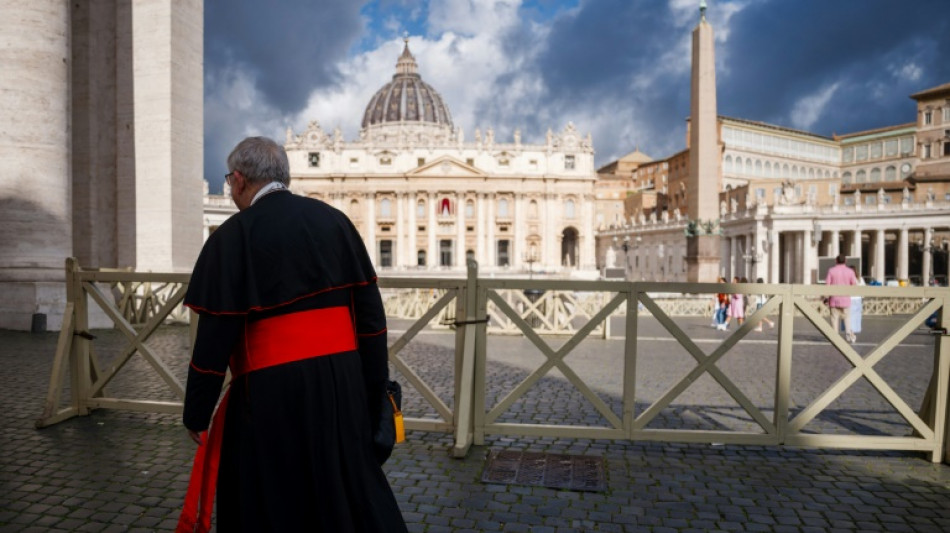
Papal conclave by the numbers / Photo: Dimitar DILKOFF - AFP

 Australia defends Pacific climate meeting despite doubts on attendance
 Iran attacks US sites after American strikes, wedding deaths
 Stocks drop, yields at three-decade highs on Mideast flare-up
 EU summons Russian envoy, eyes sanctions after Germany drone 'attack'

 Stocks drop as yields and oil prices spike on Mideast flare-up
 Cricketers to get best rooms at Asian Games, says Japan chief
 Zverev out-lasts Sonego in wild five-setter to advance at US Open

 Amid war, Ukrainian soldiers celebrate love at ritual wedding
 Venice to roll out red carpet for Clooney on opening night
 Hong Kong democracy activist Wong pleads guilty to foreign collusion: AFP
 Stocks sink, yields at multi-decade highs and oil spikes on Mideast flare-up
 US defends Trump Venezuela oil deal as energy secretary lands in Caracas
 Jubilant Monfils celebrates birthday with US Open win
 The Japanese idealist behind the last deradicalisation NGO in Somalia
 Rybakina, Gauff advance as Zverev launches US Open campaign
 Macron in Britain to help unveil tapestry, hold Burnham talks
 China's Xi to hold talks with Sisi in rare visit to Egypt
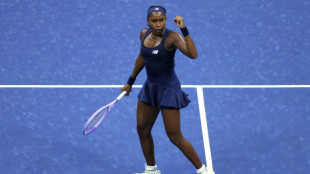 Confident Gauff reaches US Open 2nd round with straight-set win
 US postal whistleblower warns ballot system could disrupt midterms
 Independent Pharmacy Cooperative Acquires USave Pharmacy Group
 John Ternus takes over as Apple enters era of AI, foldable phones
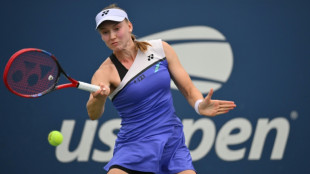 Second-ranked Rybakina eases into US Open 2nd round
 Man City sign Fernandez, Ndiaye as Premier League clubs set new spending record
 Alcaraz aims to step it up in round two of US Open title defense
 Honduran judge drops corruption charges against ex-leader Hernandez
The Vatican's papal conclave to choose a new spiritual leader for the world's 1.4 billion Catholics is governed by procedures and rituals that have evolved over centuries.
But the result of the election will be influenced by arithmetic unique to this year's exercise:
- 133 Cardinal electors -
A record number of churchmen are eligible to vote in conclave. There are 135 who meet the criteria -- to be a cardinal under the age of 80 -- but only 133 are to take part in the vote, with two said to be too ill to attend. This is up from 115 during the last two conclaves in 2005 and 2013.
Among them, 52 hail from Europe, 23 Asia, 17 South or Central America, 17 Africa, 20 North America, and four Oceania.
- 69 countries -
The cardinal electors come from 69 countries across five continents, another record.
- 70 years and three months -
The average age of the cardinal electors is 70 years and three months. The youngest is Ukraine's Mykola Bychok, archbishop of Melbourne, at 45.
The oldest is Carlos Osoro Sierra, a Spaniard who at 79 years and 11 months was almost too old to vote.
- 81.2 percent -
A large majority, 81.2 percent, of the 133 cardinal electors were appointed by Pope Francis during his 12 years at the head of the Holy See. These 108 are taking part in their first conclave.
Among the veterans, 20 were named by Benedict XVI and five by John Paul II.
- 17 Italians -
For centuries both the papacy and the college of cardinals were dominated by Italians, but as the church has gone global their numbers have fallen.
Nevertheless, at 17, Italy still has the biggest national contribution, down from 28 in 2013.
- 15 new countries -
Some 15 countries are represented for the first time, with cardinals from Haiti, Cape Verde, Papua New Guinea and South Sudan.
- 18 religious orders -
Within the Catholic Church are several religious orders. Francis, for example, was a Jesuit and 18 such movements will have cardinals in the Sistine Chapel for the voting.
- Four votes per day -
If no clear winner emerges in the initial ballot, the cardinals will vote four times a day, twice in the morning and twice in the afternoon, until a majority emerges.
- 89-vote majority -
The new pope will need a two-thirds majority. With 133 in the room, 89 cardinals must write his name on their secret ballot papers.
- Two stoves -
The ballots cast by the cardinals are burned in a stove, both to preserve the secrecy of the process and to act as a signal of progress to the faithful gathered outside the sealed chapel.
Today, two stoves are used, connected to the same chimney.
In one, the ballots are burned, in the other a chemical compound is burned to create either black smoke -- no majority yet -- or white -- a new pope has been chosen.
- Two days? -
If no majority emerges quickly, in theory a conclave could continue for weeks or months.
In practice, the previous two -- the 2005 election of Benedict XVI and of Francis in 2013 -- lasted two days.
In the 20th and 21st centuries, conclaves have never lasted longer than five days, as was the case for Pope Pius XI's election in 1922, which required 14 ballots.
P.Smith--AT