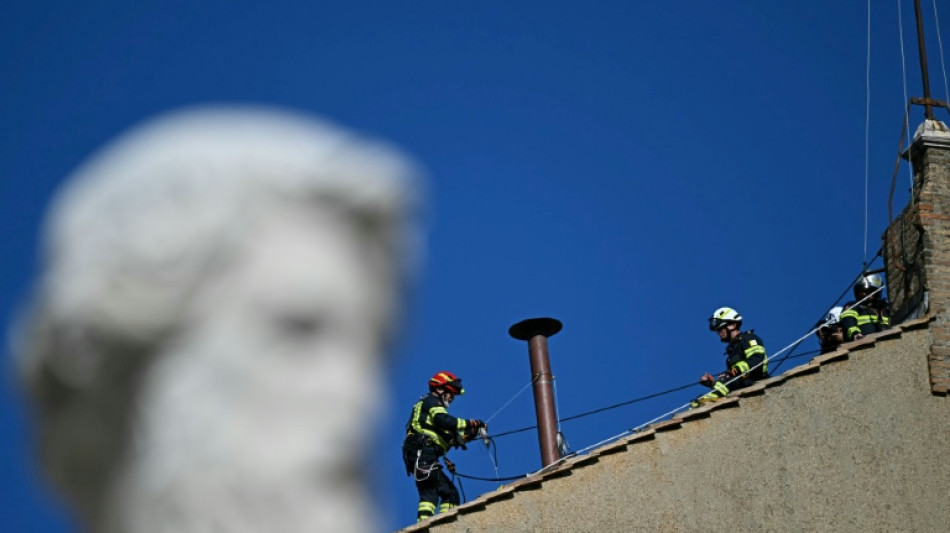
Vatican chimney installed ahead of papal conclave / Photo: Gabriel BOUYS - AFP

 UN says world must navigate 'reality' of 1.5C overshoot
 Taliban govt defends ban on protest, citing Islamic law

 10 missing as Turkish cargo ship sinks after collision off Istanbul

 easyMarkets Expands Commodity Offering with 24/7 Gold, Silver and Oil Trading
 Australia defends Pacific climate meeting despite doubts on attendance
 Iran attacks US sites after American strikes, wedding deaths
 Stocks drop, yields at three-decade highs on Mideast flare-up
 EU summons Russian envoy, eyes sanctions after Germany drone 'attack'
 Stocks drop as yields and oil prices spike on Mideast flare-up
 Cricketers to get best rooms at Asian Games, says Japan chief
 Zverev out-lasts Sonego in wild five-setter to advance at US Open
 Amid war, Ukrainian soldiers celebrate love at ritual wedding
 Venice to roll out red carpet for Clooney on opening night
 Hong Kong democracy activist Wong pleads guilty to foreign collusion: AFP
 Stocks sink, yields at multi-decade highs and oil spikes on Mideast flare-up
 US defends Trump Venezuela oil deal as energy secretary lands in Caracas
 Jubilant Monfils celebrates birthday with US Open win
 The Japanese idealist behind the last deradicalisation NGO in Somalia
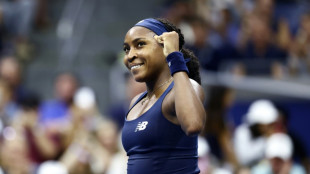 Rybakina, Gauff advance as Zverev launches US Open campaign
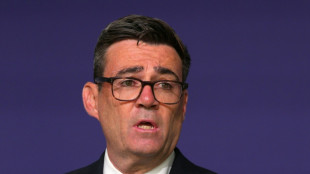 Macron in Britain to help unveil tapestry, hold Burnham talks
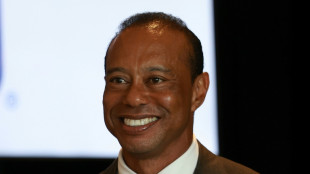
 China's Xi to hold talks with Sisi in rare visit to Egypt
 Confident Gauff reaches US Open 2nd round with straight-set win
 US postal whistleblower warns ballot system could disrupt midterms
 Protagonist Therapeutics to Participate in Two Investment Bank Conferences in September 2026

 Preppy Pledges to Help 250,000 People Enter Allied Health Careers by 2031
Firefighters installed the chimney atop the Sistine Chapel on Friday which will emit white smoke to signal the election of a new pope as preparations proceed just five days before cardinals gather for the conclave.
Some 133 Catholic cardinals will gather below Michelangelo's famed frescoes in the 15th-century chapel, situated inside the Apostolic Palace at the Vatican, to elect a successor to Pope Francis.
Held behind locked doors, the conclave will signal to the world the outcome by burning ballots in a special stove, with the chimney emitting black smoke if no one has been elected, or white smoke if there is a new pope.
Cardinals from around the world have been called back to Rome following the death on April 21 of Francis, an energetic reformer from Argentina who led the Catholic Church for 12 years.
All but four of the cardinal electors -- those aged under 80 -- who can vote in the conclave are already in Rome, Vatican spokesman Matteo Bruni said.
Ahead of the election, cardinals of all ages have been meeting daily at the Vatican to discuss the challenges facing the next head of the world's 1.4 billion Catholics.
Friday's meeting emphasised spreading the Catholic faith, the need for unity and the risk of "counter-witness" -- problems such as sexual abuse and financial scandals -- among other issues, Bruni told reporters.
Cardinal Luis Antonio Tagle of the Philippines, Italy's Pietro Parolin -- who served as secretary of state under Francis -- and Ghana's Peter Turkson are among the favourites to be the next pope.
But there is an old Roman saying that he who enters the conclave a pope, leaves a cardinal -- a warning that the favourite rarely emerges as the winner.
"I think the Church is in prayer mode, but it must also put itself in surprise mode," Cardinal Gregorio Rosa Chavez, 82, told reporters as he headed into Friday morning's meeting.
"Remember what happened with Pope Francis -- what a surprise!"
- 'Once in a lifetime' -
Among the crowds of tourists and pilgrims in St Peter's Square on Friday, the installation of the chimney on the Sistine Chapel -- a thin metal tube with a capped top -- went largely unnoticed.
But many were aware that history was in the making.
"It definitely is a historic moment and it definitely feels special to be in Rome," said Glenn Atherton, a Briton visiting from London.
"It feels like a once-in-a-lifetime thing," he told AFP.
There are 135 cardinals eligible to vote in the conclave, but two have withdrawn for health reasons.
These were Cardinal Antonio Canizares Llovera, Archbishop emeritus of Valencia in Spain, and Cardinal John Njue, Archbishop emeritus of Nairobi in Kenya, the Vatican confirmed.
The conclave is due to begin at 4:30 pm (1430 GMT) on Wednesday, where the cardinals will take an oath to maintain the secrecy of the election, on pain of excommunication.
That first day they will hold one ballot, with the winner -- technically any baptised male, but in reality always one of their own -- needing a two-thirds majority, or 89 votes, to win.
During the following days they will hold two votes in the morning and two in the afternoon.
If a winner is elected, the ballots will be burned in the special stove with the addition of chemicals to emit a white smoke to alert the waiting world to the decision.
If no candidate has enough votes during the first morning vote, the cardinals will proceed to a second vote, and only after that point will the ballots be burned.
The afternoon session follows the same procedure -- if a pope is elected, there will be white smoke, but if not, the cardinals will proceed to a second vote and only after that will the ballots be burned.
If no pope is elected, the smoke emitted by the chimney is black.
The ancient signalling system -- which still remains the only way the public learns whether a pope has been elected -- used to involve mixing wet straw with the ballots to produce white smoke, and tarry pitch to create black smoke.
But after several episodes in which greyish smoke caused confusion, the Vatican introduced a new system in 2005.
At the last conclave, in 2013, the Vatican said it used a mixture of potassium perchlorate, anthracene and sulphur to produce black smoke, and potassium chlorate, lactose and rosin for white.
Two stoves stand in a corner of the chapel, one for burning the ballots and the other for the chemicals, with the smoke from both stoves going up a common flue, it said then.
Details for the procedure of next week's conclave have not yet been confirmed.
E.Hall--AT