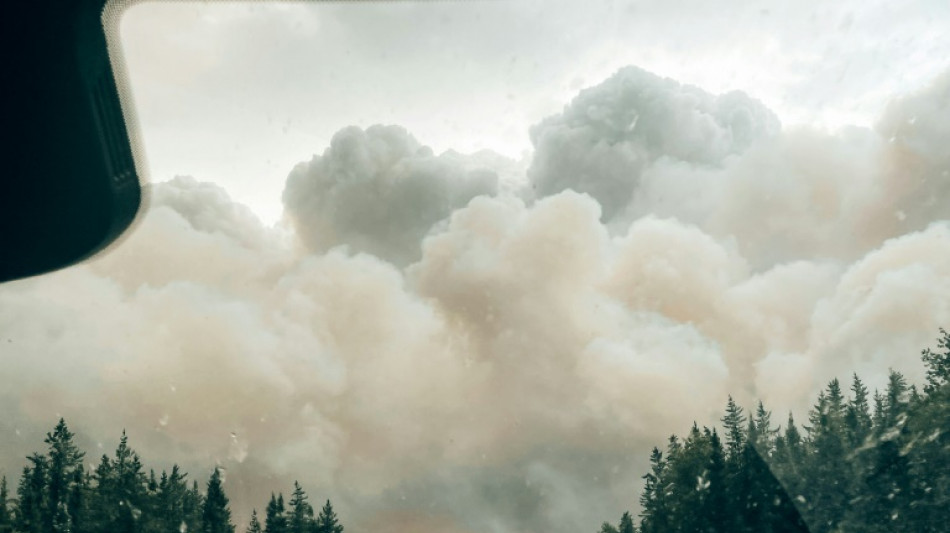
Extreme fire: 'unprecedented risk' poorly understood / Photo: Daryann GAUTHIER - Societe De Protection Des Forets/AFP/File

 Gasly a 'class act' says Alpine boss after Monza pole

 Athletic Bilbao crush Simeone's flat Atletico
 Stay far from battlefield, warns Japanese director in Vietnam War film

 Tens of thousands of Croatians protest over hazardous waste
 Haaland heads unconvincing Man City top of Premier League

 US envoys in Moscow as Russia and Ukraine vow not to hit capitals during talks
 Motorsport governing body rejects Alpine boss's claims of bias

 US envoy on West Bank visit says Israel has responsibility for Palestinians
 Ethiopian Miss World contestant spotlights pain of sister's murder

 'Leader' Raphinha rising to Barca striker challenge

 Oasis fans gather in Venice for band reunion film

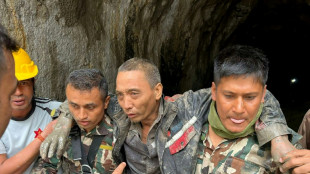 Two Nepal rescues revive hopes 10 days after flood
 Pogacar to miss worlds after season-ending Vuelta crash
 Greenwood, Guendouzi handed bans after Fenerbahce-Lyon brawl
 In Iceland, the mystery of the poet, the tomb and the Danish grocer
 Ratko Mladic: Bosnian Serb commander to convicted war criminal
 Bolivian army base blasts kill two, wound dozens
 Alcaraz, Sabalenka into US Open last 16 as Williams sisters lose on return
 Williams sisters fall in thrilling return to US Open doubles
 Bangladesh measles toll nears grim 1,000-child mark

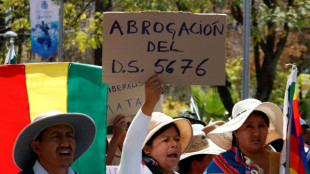 Bolivia farmers return to streets over diesel price hikes
 Hilltop Painting Brings Trusted Interior and Exterior Painting to Whatcom and Skagit County Homes
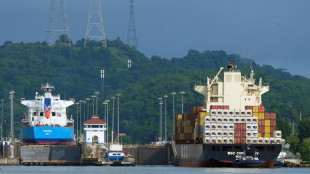 Panama Canal begins reducing crossings due to El Nino
 Trump again seeks to remove protections for wolves
 'Getting there' - Alcaraz into US Open last 16 along with Sabalenka

In an era of town-torching megablazes spewing smoke plumes visible from space, scientists say there is still a lot they don't know about the effects of extreme fire on people, nature and the climate.
Athens, Maui and now Los Angeles are among major cities across the globe to suffer catastrophic fires, while blazes in Canada's forests have broken records in recent years.
Changes in fire behaviour wrought by climate change and other human influences represent "an unprecedented risk that is still very poorly understood", an international group of scientists warned last year in a report for the European Space Agency and FutureEarth.
Human activities, they said, "have become an inexhaustible source of wildfires".
Scientists tallying effects on people and planet are flying planes through smoke belched by raging infernos, scouring satellite images and scooping samples from soils and waterways.
Sometimes the flames come to them.
In late December 2021, Christine Wiedinmyer, a University of Colorado professor specialising in air pollution and fire emissions, was working at home when emergency services rang telling her to leave.
What started as two small fires on the edges of Boulder had become a monster wall of flame in under an hour, whipped by hurricane-force winds over snow-free grassland.
Wiedinmyer found it hard to believe there was a serious risk on that winter's day but the pasture around town was tinder-dry from months of drought and the fire was already bearing down with the force of a blowtorch.
"You could see the smoke plume right behind my house," she told AFP.
Wiedinmyer joined tens of thousands of locals inching out of town in heavy traffic engulfed in churning smoke and flying embers.
The next day it began to snow.
Wiedinmyer returned to a soot-smeared home and questions from neighbours: were surviving structures contaminated? If so, how could they be safely cleaned?
- Forecast fireweather-
Fire has played a role in nature for millions of years -- some species thrive on it -- and human history is entwined with the ability to tame it.
But destructive and intense megafires are now increasing, as humans shape a new combustible era that prominent fire historian Stephen Pyne has called the "Pyrocene".
"Fire has been a companion and now it's becoming our worst enemy," he said.
Tinderbox conditions -- a combination of heat, drought and strong winds often called "fire weather" -- are made more common by climate change.
But it is not the only factor.
Lightning, power lines and arson have provided a spark, while damage risk grows as homes and businesses encroach into fire-prone areas.
In some forest regions, decades of overzealous fire prevention have allowed a build-up of flammable vegetation, leading to calls to relearn indigenous fire management techniques.
Intense rainfall -- on the rise as warming alters the water cycle -- may make things worse, spurring plants to grow fast and then dry into kindling.
Research in 2021 linked melting Arctic sea ice to larger wildfires in the western United States.
With warming of two degrees Celsius -- just above the upper limit of the Paris climate deal -- and expected changes in rainfall, wildfires are projected to burn 35 percent more land, the UN's climate expert panel has said.
There are limitations to humans' ability to adapt, said Kirsten Thonicke, of Potsdam Institute for Climate Impact Research, as smoke carries pollution huge distances.
"You cannot evacuate Sydney or San Francisco, you can only try to protect people there," she said, stressing the need to cut planet-heating emissions.
- 'Regime change' -
Some fires change the weather.
Firestorm clouds can whip up winds and shoot off lightning bolts, while fire tornados are towering funnels of flame thrashing across the landscape.
And extreme blazes are affecting the environment and atmosphere.
The 2023 Canadian wildfires released more carbon in five months than Russia emitted from fossil fuels in a year, NASA scientists found.
Most of that CO2 is reabsorbed as trees regrow but there are concerns that more frequent fires could reduce forests' capacity to take up carbon.
In 2023, researchers found that a chemical reaction from smoke released by massive wildfires in Australia made 2020's ozone hole 10 percent wider.
Another study found ash from the same fires landed on the ocean, triggering plankton blooms that soaked up the extra CO2, at least temporarily.
Joan Llort, of the Barcelona Supercomputing Center, who led that research, said ash from huge fires was part of "regime change" in the Arctic, coating ice and causing it to melt faster.
- Close to home -
What preoccupied Christine Wiedinmyer after Boulder's Marshall Fire was residue in homes.
"There's a lot of nasty stuff that gets put out there when you burn a house or a car, or electronics," she said. "Where does it go?"
Wiedinmyer and colleagues took samples from the air, soils and houses and measured the effects of cleaning.
Early research found harmful smoke compounds were sucked into walls only to leach out days or even months later.
One finding of potential use to residents in LA, where thousands of homes have burned, was that wiping down walls and floors with soap and water reduced contamination.
"That is a really useful piece of information to help guide future people who are exposed," Wiedinmyer said.
M.Robinson--AT