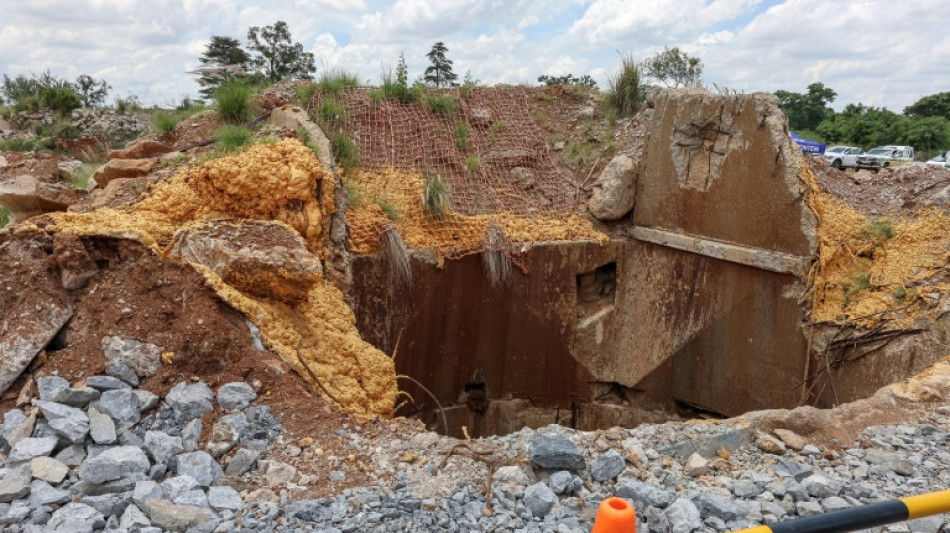
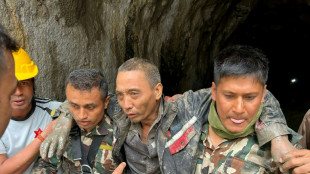
S.Africa rescuers say clearance of clandestine miners now over / Photo: Linda GIVETASH - AFP

 Gasly a 'class act' says Alpine boss after Monza pole

 Athletic Bilbao crush Simeone's flat Atletico

 Stay far from battlefield, warns Japanese director in Vietnam War film

 Tens of thousands of Croatians protest over hazardous waste

 Haaland heads unconvincing Man City top of Premier League

 US envoys in Moscow as Russia and Ukraine vow not to hit capitals during talks

 Motorsport governing body rejects Alpine boss's claims of bias

 US envoy on West Bank visit says Israel has responsibility for Palestinians

 Ethiopian Miss World contestant spotlights pain of sister's murder

 'Leader' Raphinha rising to Barca striker challenge

 Oasis fans gather in Venice for band reunion film

 Two Nepal rescues revive hopes 10 days after flood

 Pogacar to miss worlds after season-ending Vuelta crash

 Greenwood, Guendouzi handed bans after Fenerbahce-Lyon brawl
 In Iceland, the mystery of the poet, the tomb and the Danish grocer

 Ratko Mladic: Bosnian Serb commander to convicted war criminal

 Bolivian army base blasts kill two, wound dozens
 Alcaraz, Sabalenka into US Open last 16 as Williams sisters lose on return

 Williams sisters fall in thrilling return to US Open doubles
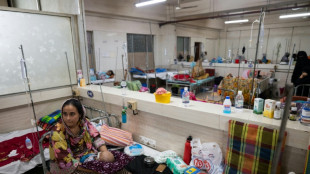 Bangladesh measles toll nears grim 1,000-child mark

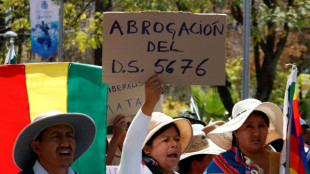 Bolivia farmers return to streets over diesel price hikes

 Hilltop Painting Brings Trusted Interior and Exterior Painting to Whatcom and Skagit County Homes

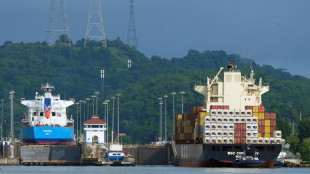 Panama Canal begins reducing crossings due to El Nino
 Trump again seeks to remove protections for wolves
 'Getting there' - Alcaraz into US Open last 16 along with Sabalenka

Rescuers retrieving illegal miners from a disused South African gold shaft said on Thursday a final sweep appeared to show nobody was left underground, after 78 bodies and more than 200 miners were lifted out this week.
Many of those rescued looked frail, their legs just skin and bone. Nine people are in hospital under police supervision, a spokeswoman for the force said.
Illegal miners, most of them foreign nationals, had occupied the shaft -- once part of South Africa's vast mining industry.
The move spurred a months-long police crackdown to remove the miners, some of whom had been underground for weeks, if not months.
At least 246 people have resurfaced since a specialised machine installed on Monday sent a cage down the 2.6-kilometre (1.6-mile) shaft near Stilfontein, about 140 kilometres southwest of Johannesburg.
Investigators face "a mammoth task" in identifying the dead as some of the bodies were already decomposing, and in some cases just bones, police spokeswoman Athlenda Mathe told journalists at the site on Thursday.
Since the police operation began in August, a total of 87 bodies have been retrieved and 1,907 miners have resurfaced.
The vast majority of the clandestine miners are foreign nationals, with 1,125 from Mozambique and 465 Zimbabweans, police said.
Only 26 are South Africans.
Rescuers determined late on Wednesday there was no-one left in the shaft, the head of Mines Rescue Services, Mannas Fourie, told reporters at the site.
- 'Those who try' -
The cage was sent down again with cameras on Thursday for a final sweep.
"We couldn’t see any person still left behind and we couldn’t hear any voices on the recording," Fourie said.
The miners had been located at a level some 1,280 metres (around 4,200 feet) below ground but the cage was sent down further until it hit water to confirm there were no other people, he added.
No longer viable for commercial extraction, the mine was entered illicitly by the men trying to eke out a living.
Locally known as "zama zamas" -- "those who try" in the Zulu language -- illegal miners frustrate mining companies and are often accused of criminality by residents.
All those who resurfaced from the derelict Stilfontein site have been arrested by police and charged with illegal mining and related offences.
Among the dead, only two have been identified so far, Mathe said.
Identification will be a lengthy process given the condition of the remains and the fact many miners were undocumented migrants, she said.
The causes of death will also need to be determined.
Community leader Johannes Qankase told AFP Thursday that he believed most of the men starved to death.
- 'Mass grave' -
To force the miners out, police had restricted supplies of food and water that the surrounding community had been dropping down the shaft.
In November, a court ordered police to end all such restrictions.
The site had been turned into "a mass grave by the government, killing our people like this because people are hungry", Qankase said.
On Thursday, the acting provincial police commissioner defended officers' actions.
Speaking at the site, Patrick Asaneng said that if they had allowed local people access to the shaft, they would have been "in a way aiding and abetting crime and criminality -- and we're not supposed to do that".
Police said they were investigating the broader criminal networks that orchestrate the mining activity, recruit miners and traffic the illicit gold.
"Those ringleaders who are controlling what happens underground... some of them have been retrieved, some already in police custody, but we are looking for the real kingpins," Mathe said.
University of Limpopo criminologist Witness Maluleke told AFP illegal mining was organised by international "elite individuals" across borders that posed to law enforcement "a mountainous web to curtail".
"If left unattended, more South Africans will learn this criminal behaviour and become elusive experts, to add more numbers to this practice," he said.
The miners "come to this risky, dangerous situation because of poverty, because of hunger", he said.
"They will reopen it."
S.Jackson--AT