-
 Nepali rescuers buoyed by miracle finds but tough conditions persist
-
Indonesia's main airport suspends operations after volcanic eruption

-
 At last: Straight sets win over Tabilo puts Zverev in US Open last 16
-
US aircraft carrier departs Thailand after port call

-
 Jovic 'loses sanity five times over' to oust friend Eala in US Open epic
-
Haze emergency grips Malaysian Borneo town
-
 China's memories of Mao fade to nostalgia 50 years after his death
-
Messi creates both Miami goals in 2-2 draw with Atlanta

-
 US envoys discuss with Putin 'substantive' plans for steps to end Ukraine war
-
Rybakina books US Open fourth-round berth, inches closer to No. 1

-
 Zheng stuns Keys as US Open upsets dim American hopes
-
Sobering reality: Curbs on alcohol in northeast Syria cause discontent
-
 Jovic 'loses sanity five times over' to oust Eala and book Gauff clash
-
Wobbly Osaka 'shocked' to battle past Mertens and reach last 16

-
 'Like a jewel': Japan's luxury ice revered by bars worldwide
-
Indian Oscar-nominated filmmaker turns camera on his cancer

-
 'The flood is coming': How a Nepal principal saved 900 students
-
Argentina 'let off hook' by Australia as Kiss's winning run ends

-
 Kiss's winning run ends as Argentina hold Australia to draw
-
Argentina threatens to sanction oil projects around Falklands
-
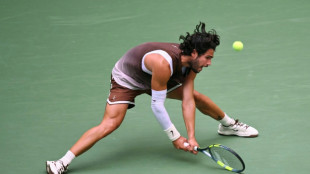 Alcaraz excited to face 'dangerous' Paul for US Open quarter-final berth
-
Gauff into round four at US Open after straight-set win

-
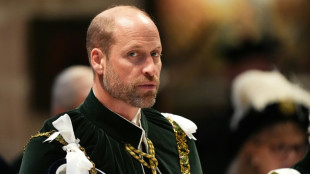 Prince William to represent King Charles III at Norway late King Harald's funeral
-
Bordeaux hammer Racing in Top 14 start as Bielle-Biarrey extends deal

-
 Inter and Roma roar back to win thrillers and share top spot
-
Zheng, Potapova pull off upsets to reach US Open last 16

-
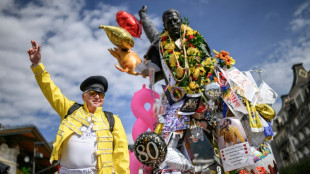 Don't stop them now: fans party for Freddie Mercury's 80th birthday
-
Swiatek into US Open fourth round in tight two-setter

-
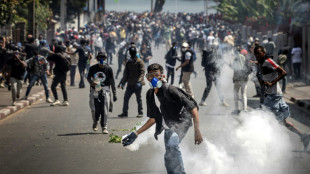 AFP photographer wins top prize for Madagascar protest coverage
-
Werro wins in Brussels, as Russell and Dos Santos shine

-
 Keys: 'I felt like I couldn't play tennis'
-
Kolbe breaks jaw and shoulder injury sidelines Savea

-
 Simmonds stars as Pau upset Montpellier
-
US military strikes oil tankers as Iran vows tougher reprisals
-
 Inter roar back in five-goal thriller with Napoli
-
Zheng rallies to stun Keys, Anisimova out in US Open third round

-
 Haaland keeps Man City perfect in Premier League, blunt Spurs held
-
Bayern held to draw by stubborn Schalke

-
 Hamilton worried by Ferrari pace while Antonelli prepares for a fight
-
Lens lose again ahead of Champions League date

-
 Vuelta stage 15 shortened due to extreme heat, Mas consolidates lead
-
Olympic champion Zheng storms home to reach US Open last 16

-
 Putin meets US envoys for Ukraine war talks
-
Big-spending Spurs must make better attacking decisions, says De Zerbi

-
 Modric available for Croatia in Nations League
-
South Africa dominate New Zealand in second half to lead series

-
 Potapova upsets 2025 US Open runner-up Anisimova
-
Kiefer Sutherland still in action, but ibuprofen lending helping hand

-
 Gasly a 'class act' says Alpine boss after Monza pole
-
'Are we ready?' Oasis film captures band's frosty reunion
UN says Israel bombardment of Syria 'must stop'
The UN special envoy for Syria called Tuesday on Israel to halt its military movements and bombardments in Syria, after a war monitor reported 300 air strikes since the fall of president Bashar al-Assad.
Assad fled Syria as an Islamist-led rebel alliance swept into the capital Damascus, ending five decades of brutal rule by his clan on Sunday.
Abu Mohammed al-Jolani, the Islamist leader who headed the offensive that forced Assad out, has begun talks on a transfer of power and vowed to pursue former senior officials responsible for torture and war crimes.
His group, Hayat Tahrir al-Sham, is rooted in Syria's branch of Al-Qaeda and is proscribed by many Western governments as a terrorist organisation, though it has sought to moderate its rhetoric.
The fall of Assad, who maintained a complex web of prisons and detention centres to keep Syrians from straying from the Baath party line, sparked celebrations around the country and in the diaspora all over the world.
Syria's civil war killed 500,000 people and forced half the country to flee their homes, millions of them finding refuge abroad.
The country now faces profound uncertainty after the collapse of a government that had run every aspect of daily life in the image of Assad and his father, from whom the ousted president inherited power.
Israel has conducted many strikes on Syria since the civil war began in 2011 with Assad's crackdown on a democracy movement.
The Syrian Observatory for Human Rights said it had recorded more than 300 Israeli strikes since Assad was deposed.
Geir Pedersen, the UN special envoy for Syria, on Tuesday called on Israel to stop.
"We are continuing to see Israeli movements and bombardments into Syrian territory. This needs to stop. This is extremely important," he told reporters in Geneva.
AFP journalists in the capital Damascus heard loud explosions on Tuesday but could not independently verify the source or scope of the attacks.
- Military sites 'destroyed' -
On Monday, Israel said it had struck "remaining chemical weapons or long-range missiles and rockets in order that they will not fall in the hands of extremists".
The Observatory, which relies on a network of sources around Syria, said Israeli strikes had "destroyed the most important military sites in Syria".
The group said the strikes targeted weapons depots, navy vessels and a research centre that Western countries suspected of having links to chemical weapons production.
With Syria in flux, AFP journalists in Damascus were unable to obtain official comment from the Syrian side on the strikes though they saw the defence research centre had been destroyed.
In Latakia on the coast, smoke and fire was still rising Tuesday morning from the wreckage of navy vessesl equipped with machine guns and rocket launchers, half sunken in the water, an AFP correspondent saw.
A worker at the port told AFP employees still had to turn up for work.
"Employees are still coming in to take care of state facilities even after the regime fell," said Ahmad Khabaze.
Israel, which borders Syria, also sent troops into a buffer zone east of the Israeli-annexed Golan Heights after Assad's fall, in what Foreign Minister Gideon Saar described as a "limited and temporary step" for "security reasons".
Israeli Prime Minister Benjamin Netanyahu said Monday that the Golan Heights, occupied by Israel for almost 60 years, would perpetually remain part of Israel.
Israel backer the United States said the incursion must be "temporary", after the United Nations said Israel was violating a 1974 deal.
The Israeli military on Tuesday denied reports that its tanks were advancing towards Damascus, insisting that its forces were stationed within the buffer zone.
Assad spent years suppressing rebellion using everything in his means, including air strikes and even chemical weapons, but he was ultimately deposed in a lightning offensive that lasted less than two weeks.
The rebels launched their offensive on November 27, the same day a ceasefire took effect in the Israel-Hezbollah war.
The war saw Israel inflict staggering losses on Hezbollah, which had for years fought in support of Assad's government in Syria, long a conduit of weapons for the militant group from Iran.
- 'Ran like crazy' -
Islamist leader Jolani, who now uses his real name Ahmed al-Sharaa, said on Tuesday: "We will not hesitate to hold accountable the criminals, murderers, security and army officers involved in torturing the Syrian people."
Jolani held talks on Monday with outgoing prime minister Mohammed al-Jalali "to coordinate a transfer of power that guarantees the provision of services" to Syria's people, according to a statement on Telegram.
The fall of Assad has sparked a frantic search by families of the tens of thousands of people held in the country's jails and detention centres.
As they advanced towards Damascus, the rebels released thousands of detainees, but many thousands more remain missing.
A large crowd gathered Monday outside Saydnaya jail, synonymous with the worst atrocities of Assad's rule, to search for relatives, many of whom had spent years there, AFP correspondents said.
"I ran like crazy" to get to the prison, said Aida Taha, 65, searching for her brother who was arrested in 2012.
Crowds of freed prisoners wandered the streets of Damascus, many maimed by torture, weakened by illness and emaciated by hunger.
Neighbouring Lebanon and Jordan welcomed home detainees who had been held in Syria for decades.
How the ousted leader might face justice remains unclear, but UN investigators who for years have been gathering evidence of horrific crimes called Assad's fall a "game-changer" because they will now be able to access "the crime scene".
A.O.Scott--AT