Japanese scramble to buy beloved rice as shortages bite / Photo: Philip FONG - AFP

 South African election results renew debate over identity-based voting

 South African voters report smoother local election but declining IEC trust

 Dolly Parton museum and Nashville hotel open after singer’s death

 George and Amal Clooney attend New York political-comedy reading

 British buyers pay substantial premiums for period-home appearance

 Thomas Markle released to house arrest after child-abuse-image charge

 Dawn of War 4 developers chose Adeptus Mechanicus for tactical variety

 Italy face unbeaten South Africa in Turin Nations Championship match

 ChatGPT interactive interface feature tested across six custom tools
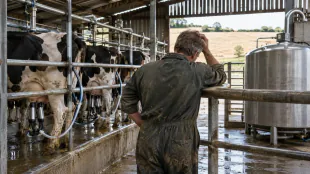 Freshways milk-price cut deepens pressure on UK dairy farms
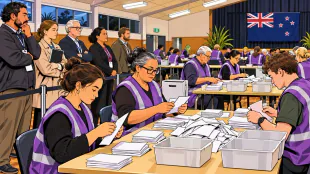 Labour and National remain virtually tied as New Zealand vote count advances

 The Good Daughter adapts Karin Slaughter thriller with Rose Byrne and Meghann Fahy

 Heavy-lift drone evacuates wounded Ukrainian soldier from frontline kill zone

 Morrison says West Brom recovered after pressure from successive derby losses

 Britain considers 2027 state visit for Ukraine’s Zelensky

 Survey Finds Majority of Brits Use Polite Language with AI Assistants

The threat of a "megaquake", a series of typhoons, and a week-long national holiday have some Japanese scrambling to buy rice -- the nation's cherished staple food -- with the government warning Tuesday against panic buying.
"We could only procure half the usual amount of rice this summer and bags of rice get quickly sold out," a clerk at a branch of the popular Fresco supermarket chain told AFP in the Japanese capital.
Rice shelves in some stores emptied or stocks were rationed after a government warning this month -- since lifted -- of a possible "megaquake", as well as several typhoons and the annual Obon holiday.
Other factors include lower harvests caused by hot weather and water shortages, as well as increased demand related to record numbers of foreign tourists.
At one food store in Tokyo, a sign seen by AFP read: "In order for many customers to be able to buy, we ask you to purchase one (bag of rice) a day per family."
- 'No prospects -
A worker at another store in Tokyo said: "We can't purchase any rice at all, and there's no prospect of buying anytime soon".
The Fresco worker told AFP that daily stocks ran out by midday.
"Customers queue up before the store opens but piles of bags, each of which contains 10 kilograms (22 pounds), are always sold out during the morning," he said.
Farm minister Tetsushi Sakamoto appealed for calm Tuesday.
"Please be cool-headed in your purchase activity by buying only the amount of rice you need," Sakamoto said, stressing "the supply shortage situation will be gradually resolved.
Rice is deeply ingrained in Japanese culture and its harvesting has shaped the nation's landscape -- even being used as a currency in the 7th century.
With an annual consumption of seven million tons per year, it is by far the most consumed food staple in the country.
Demand has been falling for some time, however, because of a declining population and changing eating habits by many Japanese as they opt for alternatives.
The nation's stockpile in June was the lowest since 1999 when comparable data was first collected, but officials believe the inventory is sufficient.
A new harvesting season has started with 40 percent of the crop available by the end of September, a farm ministry official told AFP.
T.Perez--AT