
Scientists scour 'Mexico's Galapagos' for quake, volcano clues / Photo: DOUWE VAN HINSBERGEN - UNIVERSITY OF UTRECH/AFP

 IC Markets Australia Wins People's Choice Forex Broker Innovation Award at the 2026 Finder Innovation Awards
 Brent oil tops $100 on Mideast flare-up, fanning inflation fears

 EU wants to edge out China in public contracts

 Google unveils 13 bn euro AI expansion in Finland
 Singapore's hefty ministerial pay hikes draw mixed feelings

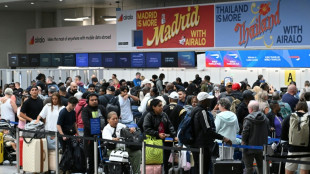 Cyberattack ruled out in UK air traffic glitch as more flights axed

 Ekiden Launches Canton Network’s First Order Book-Based Derivatives Exchange
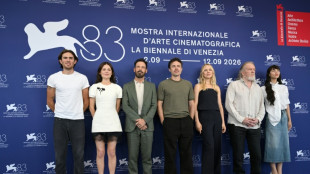
 Germany's Merz accuses AfD of promoting 'ethnic cleansing'

 Japanese director Kore-eda's manga film charms critics in Venice

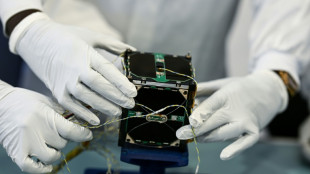 As African space race heats up, Senegal pursues homemade satellites

 UK's little-known Bayeux Tapestry replica steps into spotlight
 Shelton stuns Alcaraz in 3:34 am US Open finish, Sabalenka battles on

 Alcaraz falls to Shelton in epic latest-ever US Open finish
 Tradition Announces Partnership With Affin Moneybrokers to Support Malaysian Market Data

 Protesters urge South Korea to stay out of Iran war

 Africa's informal economy: a burden and lifeline

 Kenyan start-up makes robotic limbs to sign for deaf kids
 Iran, US trade blows as Hormuz impasse deepens

 The round-the-clock monitors protecting Bhutan from glacier risk

 'Hell': Father of surfers killed in Mexico testifies at trial

 Travellers in UK face more chaos after air traffic control glitch

 Crude pushes towards $100 on Mideast flare-up, fanning inflation fears

 Record rain forces Asian Games athletes to evacuate accommodation
 Amusing or addictive? The algorithms powering our social feeds

 Norway bids farewell to King Harald V, 'grandfather' of the nation
Could a volcanic eruption off Mexico's coast unleash a tsunami like the one that devastated Tonga? What really causes tectonic plates to shift and trigger earthquakes? Scientists visited a remote archipelago in search of answers.
Located in the Pacific Ocean several hundred kilometers from the Mexican coast, the Revillagigedo Islands are known as "Mexico's Galapagos" due to their isolation and biodiversity.
One of the archipelago's volcanos, Barcena, last erupted spectacularly in 1953, and another Evermann, in 1993. Both remain active today.
Located on a mid-ocean ridge, the four islands, which were added to the UNESCO World Heritage list in 2016, are uninhabited apart from navy personnel, and access is tightly restricted.
Getting there takes about 24 hours or more by boat and few civilians visit apart from scuba drivers lured by giant manta rays, humpback whales, dolphins and sharks.
Last month, an international team of 10 scientists carried out a week-long mission whose aims included trying to determine if -- or more likely when -- there will be another volcanic eruption.
"What we're trying to find is how explosive these volcanos can be and how dangerous," said the group's leader, Douwe van Hinsbergen, a professor at Utrecht University in the Netherlands.
- Challenging convention -
The worry is that something similar to the cataclysmic eruption of the Hunga Tonga–Hunga Ha'apai volcano in January could send a tsunami hurtling towards Mexico's Pacific Coast.
"Whenever there are active island volcanos, there are always possibilities of generating tsunamis," said Pablo Davila Harris, a geologist at Mexico's Institute for Scientific and Technological Research of San Luis Potosi.
"What we volcanologists are looking for is when the next eruption is going to happen," using modeling based on previous volcanic activity, he added.
The team also hopes that its analysis of minerals brought up by past eruptions will help to understand the motion of tectonic plates, which cause earthquakes and volcanic activity.
"Plates move over mantle. Is the mantle pushing the plates? Is the mantle doing nothing?" van Hinsbergen said.
According to conventional theory, convection -- the mantle's motion caused by the transfer of heat from the Earth's core to the outer layer -- causes tectonic plates to move and grind against each other.
Van Hinsbergen's hypothesis is that the mantle is in fact "a big lake of rock that is essentially not convecting," which he said would require a complete rethink.
"If that is true, then everything that we see, at least on timescales of tens of millions of years and shorter, is driven by gravity pulling plates down. And that would make the whole system a lot simpler," he said.
The mission received funding from a Dutch program for -- in van Hinsbergen's words -- "ideas that are almost certainly wrong but if they're not they will have big implications."
The samples collected have been taken to Europe for analysis and the results are expected to be known later this year.
F.Ramirez--AT