Crypto-curious corporations struggle to find right recipe

 Malaysia's JDT claims unbeaten run world record

 Bolivian economy minister fired after Congress vote
 Russell roars to Dutch GP sprint pole, Antonelli fifth
 Russell takes pole for Dutch GP sprint
 England start life after Bazball with rout of Pakistan

 'Duck run' pest control catching on in S.Africa's winelands

 UK, Canada, Australia slam Israel ending probe into aid worker killings
 Spurs spending spree vital to raise standards: De Zerbi
 US, Canada try to wrap up trade deal before latest Trump deadline

 World No.1 Sinner withdraws from US Open with knee injury

 Judge allows UK rugby brain injury court case to continue to trial
 Trump announces temporary tariff relief on ground beef imports
 Pope to visit San Marino, address Italian political event
 All Blacks just as good as Springboks, says captain Savea

 Romania holding suspected 'low-level agent' after pistols found near Berlin: Germany

 UK forecasts 'biggest' El Nino will smash records, spark hottest year

 Cyclist Alaphilippe attracts tributes as reports say he has quit
 Top-ranked An, holder Yamaguchi reach badminton worlds semi-finals
 Iran president says time to end war while in position of strength

 Antonelli fastest in sole Dutch GP practice session

 2,500 dead and rising -- UN says DR Congo Ebola outbreak 'growing exponentially'
 England all out for 409, lead Pakistan by 238 runs in 1st Test
 Premier League returns with Arsenal eyeing title dynasty

 Bayern knew about Musiala's condition 'a long time ago' says Kompany
 Ex-Pakistan PM Khan taken back to jail after hospital checks

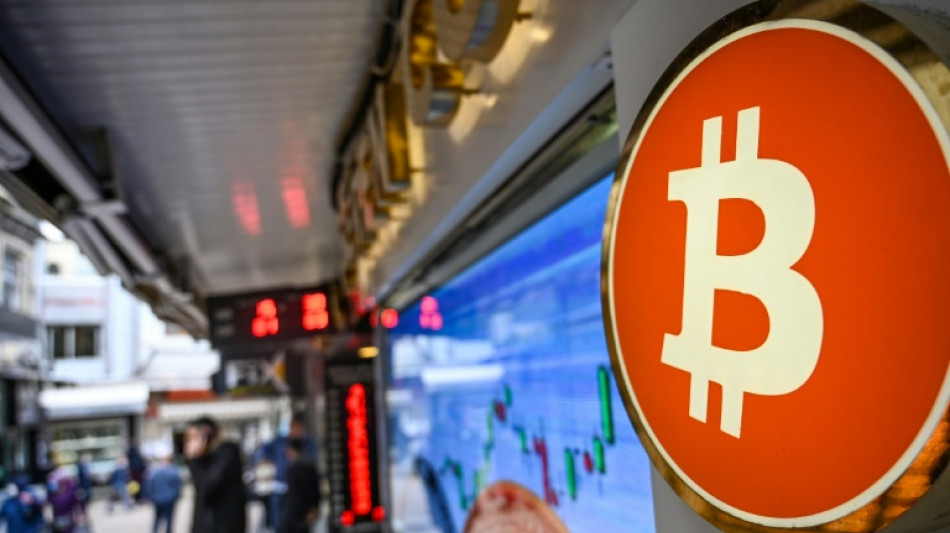
Four years ago, fried-chicken chain KFC tweeted from its Canadian account that it would accept bitcoin as payment for its "buckets".
The company told AFP its tongue-in-cheek campaign -- "digital tender for chicken tenders" -- sold out in an hour and the chain has not taken crypto payments since, but online articles regularly recycle the claim that KFC "accepts" bitcoin.
Many other companies have tried to harness crypto payments before abandoning their efforts, Tesla and Dell among them.
Bitcoin will almost certainly never be practical for everyday purchases because its value fluctuates wildly, and each transaction is expensive, energy-hungry and takes at least half an hour.
"No one's going to walk into a KFC to buy a chicken burger and then have to wait 30 minutes for a payment," South African developer and crypto expert Andre Cronje told AFP.
But there are now thousands of smaller cryptocurrencies with faster processing times and more stable prices.
Analysts say the total market value of cryptocurrencies has now topped $2 trillion, roughly half of which is bitcoin.
Companies are gagging to get in on the act and developers like Cronje are building the infrastructure to enable the virtual coins to be used to pay for everyday items.
But public buy-in is crucial, and corporations seem to be struggling to find the perfect formula.
- 'Watch the jockeying' -
Microsoft typifies the emerging pattern of big companies dabbling in crypto.
The first rule: keep it at arm's length from the core business.
The tech giant has stressed that shareholders will not be exposed to the ups and downs of crypto prices.
PayPal and Apple, two other crypto-curious corporations, have made similar pledges to their shareholders.
To keep crypto off its balance sheet, Microsoft partnered with a firm called Bakkt that allows clients to convert crypto assets into products like gift cards for Xbox, or charge their Starbucks payment card.
Bakkt, which has received investments from Microsoft's venture capital fund M12, went public last year and a flurry of big partnership announcements with the likes of Mastercard sent its share price soaring.
But then came the nose-dive as it reported widening losses and its business came under scrutiny.
The firm had said it expected to have nine million customers by the end of 2021, yet its executives gave a figure of 1.7 million transacting accounts late last year.
PayPal, meanwhile, garnered a lot of publicity for a "checkout with crypto" feature launched in the US and UK last year.
PayPal's system converts users' cryptoassets into money before passing on payment to the vendors.
But it is unclear how popular any of these services are -- none of these companies responded to AFP requests for details of the uptake.
Market watchers say it is too early to tell how these forays into crypto will play out.
"My view is to not get too excited yet but just watch the jockeying," said analyst John Freeman of CFRA research, accepting the hot air made it difficult to predict what would happen next.
- 'When, not if' -
The barriers to widespread adoption of direct crypto payments for everyday items are considerable -- perhaps even unsurmountable.
Developer Cronje said he functioned largely without the need for regular cash or banks by using services like BitPay and BitRefill, which allow crypto to be spent anywhere from Amazon to Uber.
But he accepted his less tech-savvy friends "would be broke very quickly" if they tried to rely on the blockchain, the technology that underpins cryptocurrencies.
Instead, he envisages a future where people will continue to use credit cards and banks but back-end tasks will be largely automated on the blockchain.
"This is a technology that conservatively is going to save them between 20 percent and 25 percent of their overheads and their costs," he said.
"So it's not a matter of if, it's a matter of when."
Meanwhile, non-financial businesses will continue to throw themselves into the crypto space, often to emerge slightly wiser but no richer.
The Pavilions hotel chain, for example, partnered with a payments firm last year to allow customers to use crypto but found it made little difference to its business.
"It turns out no one likes to spend their bitcoins, even on holidays!" Pavilions spokesman Tim Sargeant told AFP in an email.
"It has shown us that bitcoin is more an investment tool than something people wish to part with for payment."
M.O.Allen--AT