European arms imports nearly double over Ukraine: study / Photo: Giuseppe CACACE - AFP/File

 Nepal flood death toll rises as rescuers scour tunnels

 France's Mistral sees value soar with 3 bn euro cash infusion

 Nepal glacier saw exceptional heat before collapse caused deadly floods: researcher

 Ethiopia boosts drone production to fight rebels
 Yemen rebels hit Saudi Arabia with wave of strikes, wounding 73

 Nepalis mark a year since deadly protests that toppled government

 Rubio launches Latin America tour to cement US influence
 France tries 14 over deadliest Channel migrant crossing disaster

 Australia threatens hefty fines if big tech fails 'duty of care'
 Zverev romps into quarter-finals as Darderi downed
 Kauai on tornado watch as Hurricane Lowell nears Hawaiian islands
 Pakistan roll the dice in search of consolation win over England

 Yen extends gains as traders eye rate hike, tech rallies again
 'The ber months': Christmas arrives early in the Philippines
 N. Korea calls Russia bridge a sign of tighter ties

 US sanctions threaten to crush Iranian students' dreams

 Former champ Gauff holds off Jovic to reach US Open quarter-finals

 Battery X Metals to Appoint Accomplished Technology and Consumer Brands Executive Nicholas Reichenbach to Board of Directors
 Equitech-Bio Expands Reagent Portfolio with New IgG Offering and Publication-Backed Product Validation from Bioz

 CPG Life Fund I Launches $20 Million Operator-Led CPG Fund

 Who is the Best Female Cosmetic Surgeon in Florida?

 CANEX Metals Announces C$6.5 Million Strategic Financing Led By C$3 Million Investment by Eric Fier
 Helio Sets September Roadshow Across Austin, Houston, Phoenix, Scottsdale
 Gaming Realms PLC Announces Interim Results

 Universal Edge Technologies Establishes Senior Advisory Committee, Names Mark Powell and Mark P. Mills as Founding Members
Weapons imports to Europe nearly doubled over the past five years, partly due to the war in Ukraine, while exports from Russia halved, researchers said on Monday.
Ukraine has become the world's fourth largest arms importer, while France has replaced Russia as the world's second largest exporter behind the United States.
Arms imports to Europe rose by 94 percent in 2019-2023, compared to the preceding five-year period, while overall global arms transfers decreased slightly, according to a report by the Stockholm International Peace Research Institute (SIPRI).
SIPRI prefers to analyse trends over half-decades as a few deliveries of major contracts can tilt yearly figures.
The increase is "partially explained by the war in Ukraine, and Ukraine has become the fourth largest importer of arms in the world in the last five years", SIPRI researcher Katarina Djokic told AFP.
SIPRI noted that at least 30 countries had supplied major weapons as military aid to Ukraine since Russia invaded in February 2022.
But other European nations also increased imports, with a larger share coming from the world's number one exporter of arms, the United States.
In the 2019-2023 period, 55 percent of imports to Europe were from the US, up from 35 percent in the 2014-2018 period.
This is partly due to most European states being NATO members and partners of the US in the development of weapon systems like the F-35 fighter jet, Djokic said.
- Russian exports plummet -
At the same time increased imports from the US underlined many European nations' desire to quickly acquire weapons and therefore buy "off the shelf" rather than develop new systems.
Globally, US exports grew by 17 percent in the period, bringing its share of total arms exports to 42 percent.
Meanwhile, Russia -- which long held the position as the second largest exporter -- saw its exports fall by 53 percent between 2014-2018 and 2019-2023.
Russia was not only exporting fewer weapons, it was also exporting to fewer recipients.
It only exported to 12 countries in 2023, compared to 31 in 2019.
"There are also important changes in the policies of their biggest customer, China," Djokic said.
China was traditionally one of the biggest recipients of Russian arms but has been pushing to develop its domestic production.
China still accounted for 21 percent of Russian exports, while India was the biggest recipient with 34 percent.
While Russia's exports declined, France saw its own grow by 47 percent, thereby narrowly edging out Russia to become the world's second largest exporter.
- Violations of humanitarian law -
France accounted for 11 percent of total weapons exports in 2019-2023.
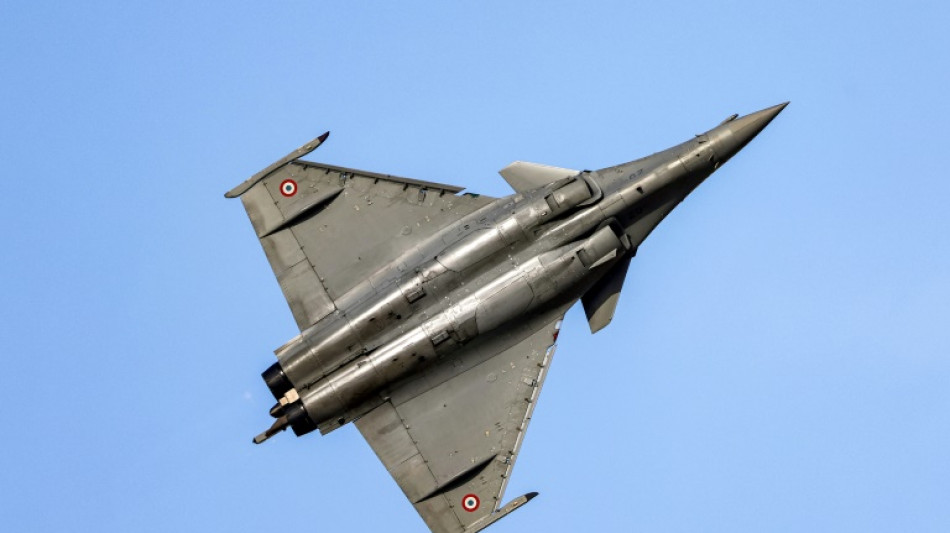
In particular, Djokic noted that France had been particularly successful in selling its Rafale fighter jet outside Europe.
The war in Gaza -- which began in retaliation for Hamas's October 7 attack on southern Israel -- has already affected arms imports to Israel.
This is primarily through transfers of weapons from the US, either via new military aid or the speeding up already existing contracts, according to SIPRI researcher Zain Hussain.
Hussain cautioned that the longer term impact of the conflict was harder to predict.
"We already see in certain European states a kind of push by different actors or states to limit arms to Israel during its (military) operations in Gaza due to potential violations of international humanitarian law," Hussain said.
Such measures could affect transfers to Israel.
The question then remains as to whether they would remain in place after the end of Israel's current ground and air assault on Gaza, Hussain explained.
T.Wright--AT