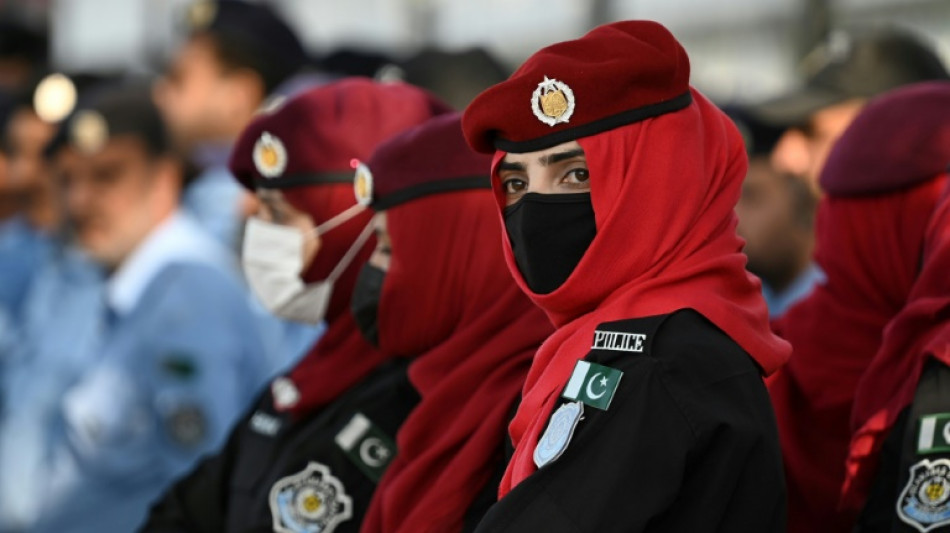
Pakistan PM on way out as no-confidence vote looms

 Malaysia's JDT claims unbeaten run world record

 Bolivian economy minister fired after Congress vote
 Russell roars to Dutch GP sprint pole, Antonelli fifth
 Russell takes pole for Dutch GP sprint

 England start life after Bazball with rout of Pakistan

 'Duck run' pest control catching on in S.Africa's winelands
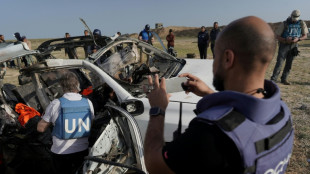 UK, Canada, Australia slam Israel ending probe into aid worker killings
 Spurs spending spree vital to raise standards: De Zerbi

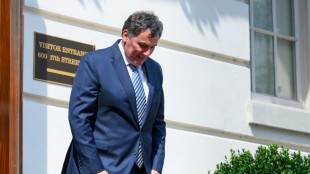 US, Canada try to wrap up trade deal before latest Trump deadline

 World No.1 Sinner withdraws from US Open with knee injury

 Judge allows UK rugby brain injury court case to continue to trial

 Trump announces temporary tariff relief on ground beef imports

 Pope to visit San Marino, address Italian political event
 All Blacks just as good as Springboks, says captain Savea

 Romania holding suspected 'low-level agent' after pistols found near Berlin: Germany

 UK forecasts 'biggest' El Nino will smash records, spark hottest year

 Cyclist Alaphilippe attracts tributes as reports say he has quit
 Top-ranked An, holder Yamaguchi reach badminton worlds semi-finals
 Iran president says time to end war while in position of strength

 Antonelli fastest in sole Dutch GP practice session

 2,500 dead and rising -- UN says DR Congo Ebola outbreak 'growing exponentially'
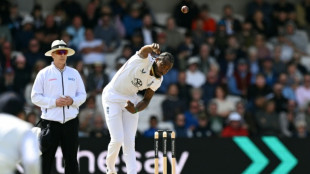
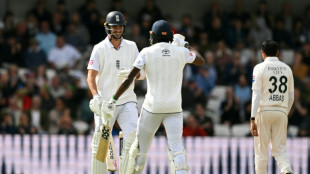 England all out for 409, lead Pakistan by 238 runs in 1st Test

 Premier League returns with Arsenal eyeing title dynasty

 Bayern knew about Musiala's condition 'a long time ago' says Kompany

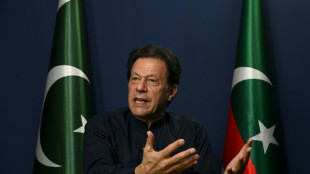 Ex-Pakistan PM Khan taken back to jail after hospital checks
Pakistan Prime Minister Imran Khan looked certain to be kicked out of office Saturday by a no-confidence vote in parliament, but a political crisis in the nuclear-armed nation of 220 million will likely continue.
Khan lost his majority in the 342-seat national assembly through defections by coalition partners and members of his own Pakistan Tehreek-e-Insaf party (PTI), and the opposition need just 172 votes to dismiss him.
There is no vote for a new premier on the agenda Saturday, but that could change and Pakistan Muslim League-N (PML-N) leader Shehbaz Sharif is the anointed candidate.
But whoever takes over will still have to deal with the issues that bedevilled Khan -- soaring inflation, a feeble rupee and crippling debt.
Militancy is also on the rise, with Pakistan's Taliban emboldened by the return to power last year of the hardline Islamist group in neighbouring Afghanistan.
Khan, 69, said late Friday he had accepted a Supreme Court ruling that ordered the no-confidence vote, but insisted he was victim of a "regime change" conspiracy involving the United States.
The former international cricket star said he would not cooperate with any incoming administration and called on his supporters to take to the streets.
A heavy security blanket was thrown over the capital Saturday, with thousands of police on the streets and a ring of steel containers blocking access to the government enclave.
- 'Foreign interference' -
The Supreme Court ruled Thursday that Khan acted illegally by dissolving parliament and calling fresh elections after the deputy speaker of the national assembly -- a loyalist -- refused to allow an earlier no-confidence vote because of "foreign interference".
Khan said the PML-N and the Pakistan People's Party (PPP) -- two normally feuding dynastic groups who joined forces to oust him -- had conspired with Washington to bring the no-confidence vote because of his opposition to US foreign policy, particularly in Muslim nations such as Iraq and Afghanistan.
With reference to the defections, he also accused the opposition of buying support in the assembly with "open horse-trading... selling of lawmakers like goats and sheep".
"I was disappointed with the Supreme Court decision but I want to make it clear that I respect the Supreme Court and Pakistan's judiciary," he said.
"There is a conspiracy from abroad," Khan said. "This is a very serious allegation... that a foreign country conspired to topple an entire government."
Washington has denied any involvement.
How long the next government lasts is also a matter of speculation.
The opposition said previously they wanted an early election -- which must be called by October next year -- but taking power gives them the opportunity to set their own agenda and end a string of probes they said Khan launched vindictively against them.
Local media quoted an election commission official as saying it would take them at least seven months to prepare for a national vote.
Pakistan has been wracked by political crises for much of its 75-year existence, and no prime minister has ever seen out a full term.
Publicly the military appears to be keeping out of the current fray, but there have been four coups since independence in 1947 and the country has spent more than three decades under army rule.
A.O.Scott--AT