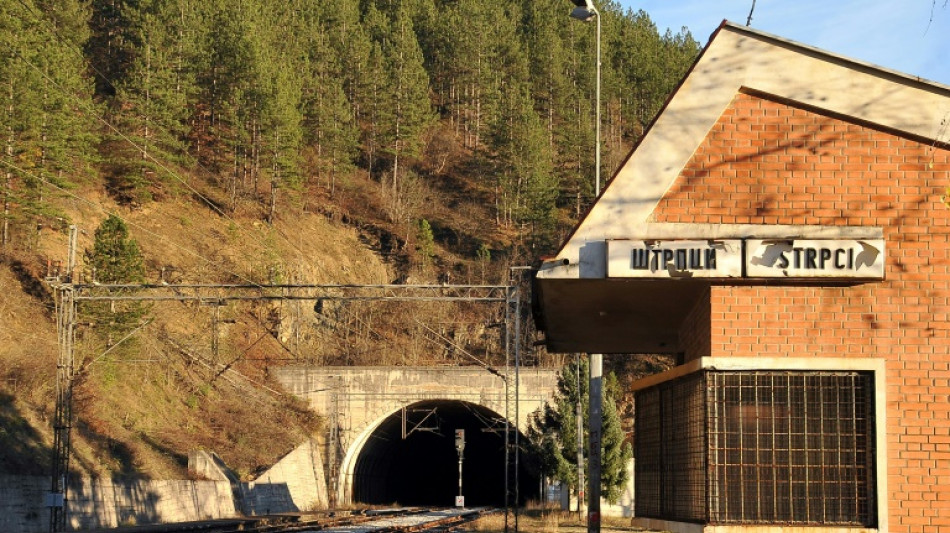
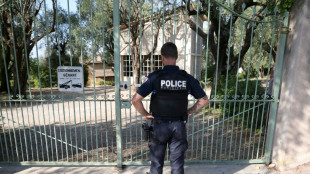
Decades on, Serbia struggles to prosecute Yugoslav war crimes / Photo: ELVIS BARUKCIC - AFP/File

 South Africa economy shrinks ahead of local elections

 CapTLX Expands Institutional-Oriented Platform for Access to U.S. Capital Markets
 UK's Prince George starts at Eton College

 French far right keeps guarded silence over AfD Germany triumph
 Russia-Ukraine talks possible this month, Zelensky says, as Moscow pounds Kyiv
 Turkish Airlines will be new Liverpool shirt sponsor in £300 mn deal
 On London's Brick Lane, a data centre sparks local battle
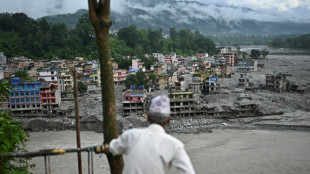 Nepal flood death toll rises as rescuers scour tunnels
 France's Mistral sees value soar with 3 bn euro cash infusion

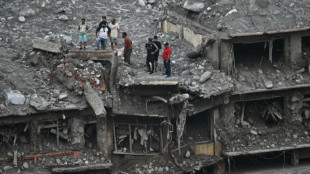 Nepal glacier saw exceptional heat before collapse caused deadly floods: researcher

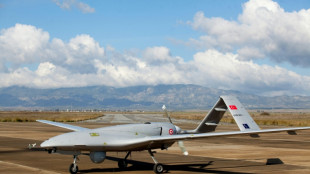 Ethiopia boosts drone production to fight rebels
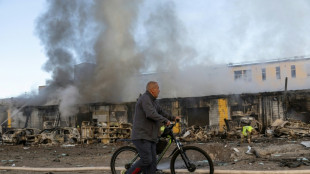
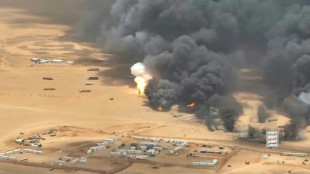 Yemen rebels hit Saudi Arabia with wave of strikes, wounding 73

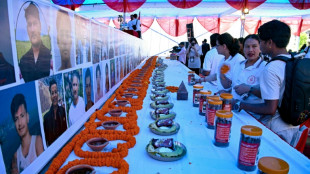 Nepalis mark a year since deadly protests that toppled government

 Rubio launches Latin America tour to cement US influence
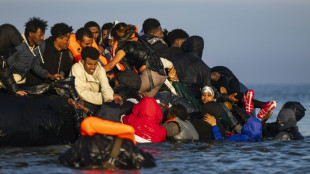 France tries 14 over deadliest Channel migrant crossing disaster

 Australia threatens hefty fines if big tech fails 'duty of care'
 Zverev romps into quarter-finals as Darderi downed

 Kauai on tornado watch as Hurricane Lowell nears Hawaiian islands

 Pakistan roll the dice in search of consolation win over England

 Yen extends gains as traders eye rate hike, tech rallies again

 'The ber months': Christmas arrives early in the Philippines

 N. Korea calls Russia bridge a sign of tighter ties

 US sanctions threaten to crush Iranian students' dreams

 Former champ Gauff holds off Jovic to reach US Open quarter-finals

 Formation Metals Extends A-Zone 200 Metres to the South and Identifies a New Vein Set, Returning 2.53 g/t Au over 11.8 Metres and 1.41 g/t Au over 20.6 Metres at the Advanced N2 Property

Exactly 31 years ago, gunmen forced 20 civilians off a train in the Bosnian village of Strpci. They were beaten, robbed and later murdered.
It was one of an untold number of atrocities in the bloody wars that broke up Yugoslavia -- and justice in many such cases is painfully slow.
In the Serbian capital Belgrade, the trial of those accused of carrying out the Strpci massacre is still going on, with the suspects free.
"It is unforgivable that 30 years after the kidnapping and murder of 20 civilians in Strpci, the Serbian judicial authorities are incapable of conducting the trials in a professional manner and rendering a verdict," said the Balkans-based Humanitarian Law Center.
An estimated 130,000 people were killed in the wars that tore the former Yugoslavia apart in the 1990s.
In the decades since, several leading figures from the fighting -- including Bosnia Serb commander Ratko Mladic -- have been prosecuted at an international tribunal in The Hague. Scores more have been tried by local courts across the Balkans.
But in Serbia, convicted war criminals released from prison have been celebrated by top state officials and hailed in pro-government media.
Others have resumed their political careers or written works of revisionist history distributed by state-run publishers.
- Stop-start Serbian trials -
In the Strpci case, four former members of the Avengers, a paramilitary group linked with the Bosnian Serb army, got prison sentences ranging between five and 10 years after an initial trial that ended in February 2022.
But just a year later the verdict was overturned. A new trial opened in January.
The start-stop nature of the proceedings has angered advocacy groups that push for justice in war crimes trials.
According to the indictment, a special armed group was formed in Visegrad, Bosnia in February 1993 and tasked with kidnapping non-Serb passengers from the train connecting Belgrade to Bar in Montenegro.
The four accused in the trial -- Gojko Lukic, Dusko Vasiljevic, Jovan Lipovac and Dragana Djekic -- are suspected of kidnapping the passengers in Strpci and handing them to their killers.
The executioners have never been identified and no investigation has ever been opened into who masterminded the massacre.
Just four of the victims' bodies have been recovered, roughly 70 kilometres (43 miles) from the scene of the kidnapping along the shores of Lake Perucac.
Milan Lukic -- a prominent Serb paramilitary commander linked to the Avengers -- was sentenced to life imprisonment by the International Criminal Tribunal for the former Yugoslavia for crimes against humanity.
But he was never convicted of having a role in the Strpci killings.
- Convictions outside Serbia -
While Serbia has been accused of dragging its heels in war crimes cases, other countries in the region have shown greater initiative in tackling the issue, including the prosecutions of Serb paramilitary members.
A court in Montenegro convicted Nebojsa Ranisavljevic in 2004 and sentenced him to 15 years in prison for his role in the Strpci kidnappings.
And in neighbouring Bosnia, seven former members of the Avengers were sentenced in August 2023 to 13 years in prison each for their part in the crime.
"The sentences should certainly have been more severe. But they show to a certain extent the willingness of society in Bosnia-Herzegovina to try war criminals," Edvin Kanka Cudic, a war crimes specialist for the Bosnia-based Association for Social Research and Communication, told AFP.
"Unfortunately, the same cannot be said for Serbia, since the trials, like that of Strpci, also last a long time."
A.Moore--AT