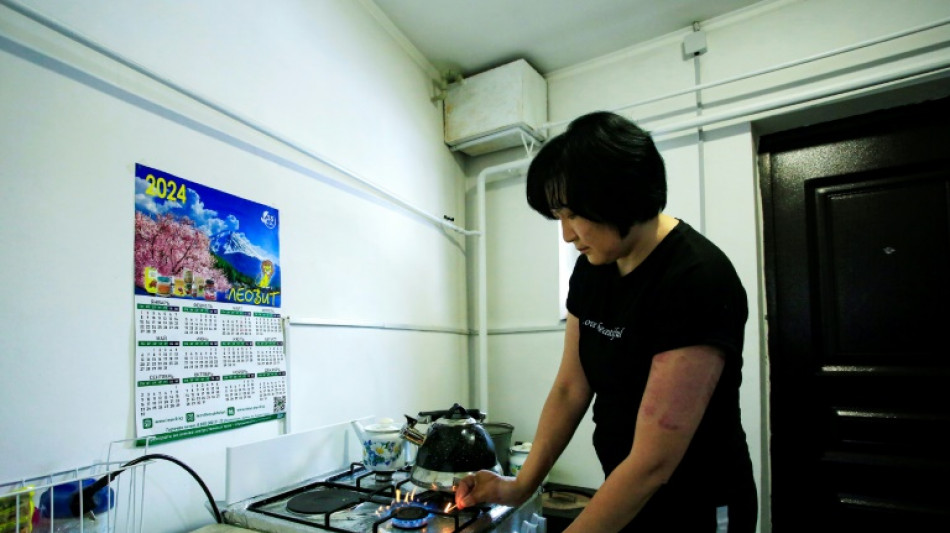
Kazakh influencers, rights groups denounce domestic violence 'epidemic' / Photo: Ruslan PRYANIKOV - AFP

 South Africa economy shrinks ahead of local elections

 CapTLX Expands Institutional-Oriented Platform for Access to U.S. Capital Markets
 UK's Prince George starts at Eton College

 French far right keeps guarded silence over AfD Germany triumph
 Russia-Ukraine talks possible this month, Zelensky says, as Moscow pounds Kyiv
 Turkish Airlines will be new Liverpool shirt sponsor in £300 mn deal

 On London's Brick Lane, a data centre sparks local battle
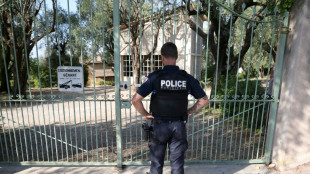
 Nepal flood death toll rises as rescuers scour tunnels

 France's Mistral sees value soar with 3 bn euro cash infusion

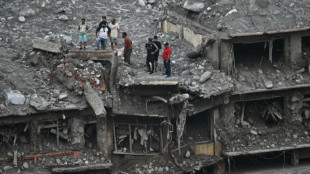 Nepal glacier saw exceptional heat before collapse caused deadly floods: researcher

 Ethiopia boosts drone production to fight rebels
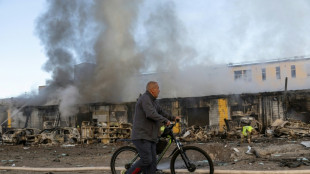
 Yemen rebels hit Saudi Arabia with wave of strikes, wounding 73

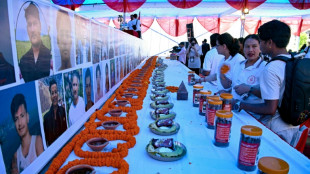 Nepalis mark a year since deadly protests that toppled government

 Rubio launches Latin America tour to cement US influence

 France tries 14 over deadliest Channel migrant crossing disaster

 Australia threatens hefty fines if big tech fails 'duty of care'

 Zverev romps into quarter-finals as Darderi downed

 Kauai on tornado watch as Hurricane Lowell nears Hawaiian islands

 Pakistan roll the dice in search of consolation win over England

 Yen extends gains as traders eye rate hike, tech rallies again
 'The ber months': Christmas arrives early in the Philippines

 N. Korea calls Russia bridge a sign of tighter ties

 US sanctions threaten to crush Iranian students' dreams

 Former champ Gauff holds off Jovic to reach US Open quarter-finals

 Formation Metals Extends A-Zone 200 Metres to the South and Identifies a New Vein Set, Returning 2.53 g/t Au over 11.8 Metres and 1.41 g/t Au over 20.6 Metres at the Advanced N2 Property

After miraculously surviving her ex-husband's attempt to kill her, Indira Tergeubayeva has been fighting to be recognised as a victim in her native Kazakhstan.
"My ex-husband had been stalking me for two years, threatening to kill me," the accountant, 42, told AFP in Almaty.
"On December 22, 2022, he came to the shop where I work, doused me with petrol, and set me on fire," she recounted.
Despite being left with horrific injuries, police refused to investigate her abuser because he died in the attack.
More than 80 femicides are officially recorded each year in Kazakhstan, where domestic violence is not included in the criminal code.
In a society deeply entrenched with patriarchal attitudes, the United Nations estimates that the unofficial figure could be as high as 400.
Tergeubayeva suffered third-degree burns and underwent several skin grafts on her face and hands. Several of her fingers remain dislocated.
Her ex-husband will never stand trial, but she wants an explanation from the police.
"We have laws in Kazakhstan, but they don't work for everyone," she said.
- Turning point -
Rights groups say women in Kazakhstan feel pressured to drop accusations or reconcile with their abusers.
According to the interior ministry, of more than 100,000 reports received each year "60 percent of victims refuse to lodge a complaint".
For Tergeubayeva and many others, proving their abuse in court is often an uphill battle.
"The Kazakh police still don't recognise me as a victim," she said, her voice bitter.
"I've filed complaints everywhere, but the police didn't do their job, nobody defended me," added Tergeubayeva, who suspects that her ex-husband made deals with the police to avoid punishment.
"We've had women commit suicide too. The police don't take us seriously. 'Tomorrow you'll be reconciled,' they say."
Cases of domestic violence are often glossed over by traditional media in Kazakhstan, where public debate is tightly controlled, but survivors and activists are increasingly speaking out on social media.
Last year, the death of Saltanat Nukenova, 31, killed by her husband in a restaurant in the capital Astana, sparked widespread outrage online.
The perpetrator, former economy minister Kuandyk Bishimbayev, was charged with "particularly cruel murder" and "torture".
In the aftermath, an online petition calling for tougher legislation garnered more than 150,000 signatures in just a few days, a record in Kazakhstan.
- 'Epidemic of domestic violence' -
Influencers have also taken to social media to denounce what they call an "epidemic of domestic violence".
A beauty products shop with over 90,000 followers on Instagram produced a viral video with an ironic "tutorial" advising how to conceal the marks of beatings with make-up.
Following the backlash, Kazakh President Kassym-Jomart Tokayev promised legislation to criminalise domestic violence and authorities launched a public awareness campaign.
Cinema has also taken up the issue. At the end of the year, the Kazakh horror film "Dastur" recorded unprecedented box-office success.
It tells the story of a young girl forced to marry her rapist, the son of an influential landowner.
The police have announced an increase in arrests, and parliament is working on legislation to tackle the issue.
But as Tergeubayeva's case shows, a complaint does not guarantee an investigation. She said the problem of domestic violence is compounded by endemic corruption.
For human rights lawyer Galym Nurpeisov, this awakening is still in its infancy, and there is no guarantee that it will withstand society's male-dominated culture.
"A woman in Kazakhstan cannot openly express her opinion," he told AFP.
"Increasing criminal liability for domestic violence will not solve this problem."
H.Romero--AT