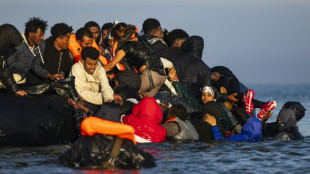
Countries 'reaching beyond borders' to silence dissidents: HRW / Photo: OZAN KOSE - AFP

 South Africa economy shrinks ahead of local elections

 CapTLX Expands Institutional-Oriented Platform for Access to U.S. Capital Markets
 UK's Prince George starts at Eton College
 French far right keeps guarded silence over AfD Germany triumph
 Russia-Ukraine talks possible this month, Zelensky says, as Moscow pounds Kyiv
 Turkish Airlines will be new Liverpool shirt sponsor in £300 mn deal
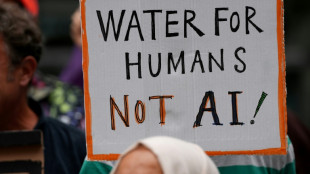 On London's Brick Lane, a data centre sparks local battle
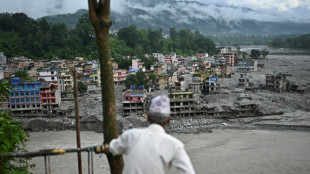 Nepal flood death toll rises as rescuers scour tunnels
 France's Mistral sees value soar with 3 bn euro cash infusion

 Nepal glacier saw exceptional heat before collapse caused deadly floods: researcher

 Ethiopia boosts drone production to fight rebels
 Yemen rebels hit Saudi Arabia with wave of strikes, wounding 73
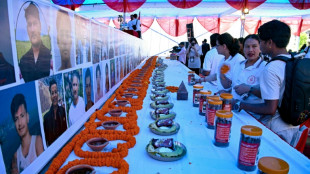 Nepalis mark a year since deadly protests that toppled government

 Rubio launches Latin America tour to cement US influence

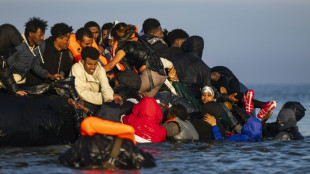 France tries 14 over deadliest Channel migrant crossing disaster

 Australia threatens hefty fines if big tech fails 'duty of care'
 Zverev romps into quarter-finals as Darderi downed
 Kauai on tornado watch as Hurricane Lowell nears Hawaiian islands
 Pakistan roll the dice in search of consolation win over England

 Yen extends gains as traders eye rate hike, tech rallies again
 'The ber months': Christmas arrives early in the Philippines
 N. Korea calls Russia bridge a sign of tighter ties

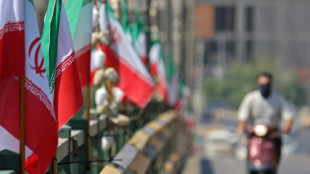 US sanctions threaten to crush Iranian students' dreams

 Former champ Gauff holds off Jovic to reach US Open quarter-finals

 Formation Metals Extends A-Zone 200 Metres to the South and Identifies a New Vein Set, Returning 2.53 g/t Au over 11.8 Metres and 1.41 g/t Au over 20.6 Metres at the Advanced N2 Property

Governments around the world are "reaching beyond their borders" to attack their own citizens abroad in order to crush dissent, Human Rights Watch said Thursday, urging more protection for them.
The New York-based rights group said so-called "transnational repression" was having a "chilling effect" on political criticism and called on countries and international organisations to take action.
"Methods... include killings, abductions, unlawful removals, abuse of consular services, the targeting and collective punishment of relatives, and digital attacks," an HRW report said.
Some governments have abused the Interpol alert system to "illegitimately target a national living abroad".
The report details 75 cases of governments in more than two dozen countries -- including Saudi Arabia, Bahrain, Belarus and Cambodia -- carrying out "human rights abuses... to silence or deter dissent" over the past 15 years.
"Governments should dedicate resources to understand how transnational repression occurs on their soil and take needed steps to better protect those who initially came looking for safety," said HRW's Bruno Stagno.
The rights group said governments attack those living abroad that they deem a threat, including human rights activists, journalists and political opponents.
This had a "serious chilling effect on the rights of freedom of expression... for those who are targeted, or fear they could be," it said.
HRW gave the example of the 2018 murder and dismemberment of Saudi journalist Jamal Khashoggi in Turkey, after he entered the Istanbul consulate to obtain travel documents.
Others have been abducted, it said, like Belarusian journalist Roman Protasevich, who was arrested after his flight from Greece to Lithuania was forced to land in Minsk in 2021. He was sentenced to eight years in jail, then "pardoned".
It said countries had also attacked family members to coerce dissidents into silence.
Police in Chechnya abducted the mother of Ibragim Yangulbaev, who runs an anti-government Telegram channel from abroad, and sentenced her to five and a half years in prison, HRW said.
- Forced returns -
Some governments have abused Interpol's red notices, which trigger a global alert enabling law enforcement to arrest a person before a possible extradition, it added.
In one case, Bahraini dissident Ahmed Jaafar Mohamed Ali fled to Serbia after Bahraini authorities tortured him, HRW said.
But after Bahrain sentenced him to life in prison following "unfair" trials, then issued a red notice against him, he was arrested and unlawfully extradited in January 2022, it said.
In another case, likely involving an agreement between Cambodia and Thailand to swap "foreign fugitives", Thailand forcibly returned home Cambodian refugees Veourn Vesna and Voeung Samnang in 2021. They had links to the opposition.
Thailand earlier this month detained three more Cambodian activists.
Some countries have taken steps to counter transnational repression, including Australia and the United States, HRW said.
Australian police launched a programme to advise Australians on what to do if they think foreign governments are targeting them.
And the United States has passed legislation to counter the use of Interpol for political aims.
But HRW said more needed to be done.
Y.Baker--AT