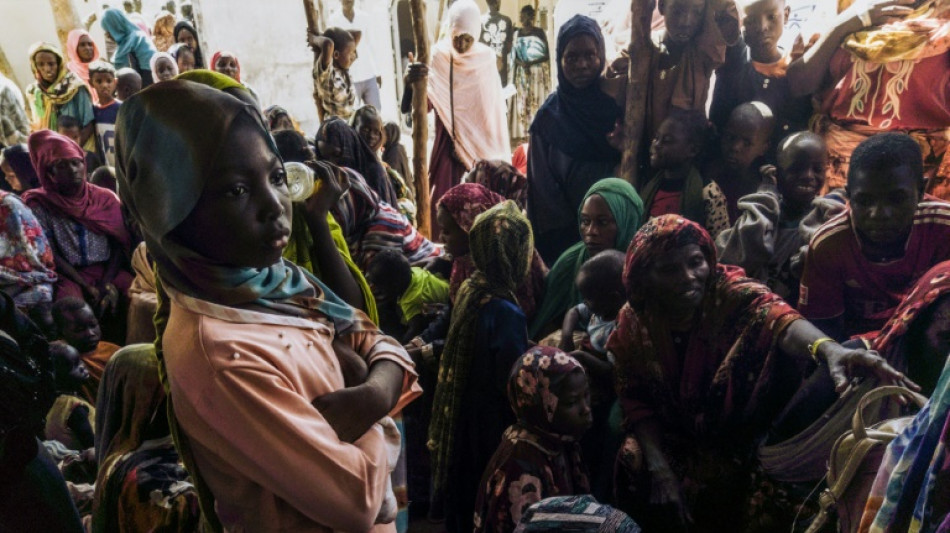
'Starving': Sudan aid workers sound the alarm over spiralling crisis / Photo: - - AFP

 The "Everlasting Battery" Inside Your Joints:UConn Professor's Self-Powered Healing Material just Got Acquired

 Visionary or conman? Elon Musk enigmatic star of Venice documentary

 Trial opens in France over deadliest Channel migrant crossing disaster

 England skipper Root says it's wrong to accuse Pakistan of lacking fight
 Owen Wilson leaves tough action work to Alan Ritchson in 'Runner'
 France's BIC sees high potential in US pot smokers

 WHO says needs 5,000 more healthworkers to tackle Ebola in DRC
 Napoli's McTominay has successful heart procedure

 Two Renoir paintings missing after break-in at France museum

 Oil prices jump, stocks drop as Mideast war flares

 South Lebanon town buries its dead after Israeli strike
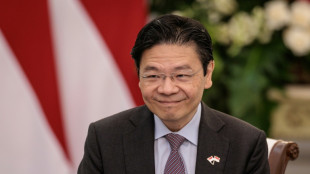 Singapore to bump cabinet wages, already world's highest

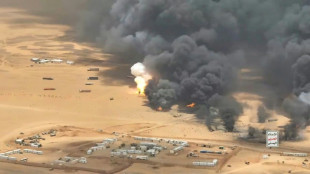 Saudi vows response as Houthis hit oil sites in worst attack in years
 Thieves steal Renoir paintings from France museum
 Nicaragua accuses Germany of multiple violations of law in Gaza genocide case

 Dutch peanut butter artwork proves a sticky attraction
 Forex Expo Dubai to Take Place as Scheduled on 22–23 September 2026
 Russia pounds Kyiv, ending three-day halt for US talks
 Flights resume gradually in Indonesia after volcanic eruption
 French AI firm Mistral valued at 21 bn euros after latest funding

 Sweden heads to the polls in close election race
 Australia's Big Bash T20 teams face sale to private investors

 Russia resumes strikes on Kyiv after three-day halt

 Canada's counter-tariffs take effect on various US goods

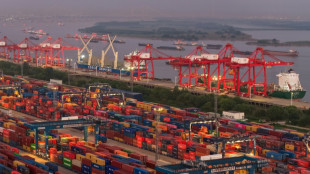 China's trade booms as focus turns to expected Trump-Xi summit

Sudanese aid worker Shakir Elhassan and his family were among millions forced to flee their homes and former lives after war broke out last year in Sudan.
Some 10 months later, he is one of many voices in the sector warning of a devastating humanitarian crisis that could soon spiral into famine.
"The needs are unprecedented," the communications manager at Care International said, deploring a lack of global attention.
"There is a huge gap in medicines, food," he said, speaking to AFP from the east of the country after what he described as 10 days without internet.
Conflict broke out in April last year between Sudan's army chief Abdel Fattah al-Burhan and Mohamed Hamdan Daglo, his former deputy and commander of the paramilitary Rapid Support Forces (RSF).
Elhassan fled the capital Khartoum in July, joining his wife and three children who had already sought refuge 180 kilometres (110 miles) further south in the town of Wad Madani.
But in December the RSF attacked the town in Jazirah state, which had become a "humanitarian hub" for the region.
"It was horrific, I moved out from Jazirah just with the clothes" on my back, he said.
"On the road, there was thousands of people moving on foot, in a state of panic. Most of them were women and children."
He and his family found shelter some 400 km east of there, in the provincial capital of Kassala state near the Eritrean border, where they still live and he says he sees a constant trickle of new arrivals.
"People arrive in Kassala exhausted, some of them sick, starving. Many of them told me they are bankrupt," he said.
"I have seen thousands of people here sheltering in very poor conditions," he added.
- 'People will die' -
The war in Sudan has killed thousands, including 10,000 to 15,000 people in the single town of El Geneina in the western region of Darfur, according to UN figures.
It has displaced more than six million people inside the country, while more than a million have fled abroad, mostly to neighbouring Chad and Egypt.
The United Nations says outbreaks of diseases pose a growing threat, particularly in overcrowded shelter sites, with the country already facing outbreaks of cholera and dengue fever.
Inside the country, some 25 million people -- more than half the population -- need humanitarian aid.
Of those, 18 million face crisis or worse levels of hunger.
Ten months on from the start of the conflict, many are struggling to find food to eat.
William Carter, country director for Norwegian Refugee Council, visited Darfur in recent weeks.
"Aside from the trauma and the physical loss, what struck me is the level of hunger," he said.
"People have sold everything. Bakeries are not producing even the half of what they do usually because they have no flour nor wheat."
France-based non-governmental organisation Solidarites International warned that Sudan -- already one of the poorest countries on the planet -- would be "going straight into a famine" if nothing was done.
"It will be the largest humanitarian crisis Sudan has ever known," said its regional director Justine Muzik Piquemal.
"If food cannot be brought in through the humanitarian route, people will have nothing because there is nothing on markets," she added.
"People will die of hunger."
- 'Whole generation' at risk -
In early February, Doctors Without Borders (MSF) warned that one child was dying every two hours in the Zamzam camp for displaced people in North Darfur.
That amounted to around 13 child fatalities a day, it said, with many other malnourished children at risk.
Clementine Nkweta-Salami, UN humanitarian coordinator for Sudan, in November warned that human rights violations in Darfur were "verging on pure evil", describing children "caught in crossfire" and girls raped in front of their mothers.
Deepmala Mahla, the humanitarian head for Care International, said the country was "at risk of losing a whole generation".
"A lot of children are this close to dying because of starvation," she said.
France is to host a humanitarian conference to provide aid to Sudan in April.
The United Nations this month launched an appeal for more than $4 billion to help people in Sudan and neighbouring countries.
But last year it only received half of the funds it had requested from donors.
Alice Verrier, from French charity Premiere Urgence Internationale, said that so far there had been far less humanitarian aid sent the African country than to Ukraine after Russia invaded in 2022.
"When you look at the sums of money set aside for Ukraine, we're not at all on the same scale," she said.
"The Sudanese crisis has been completely forgotten."
P.A.Mendoza--AT