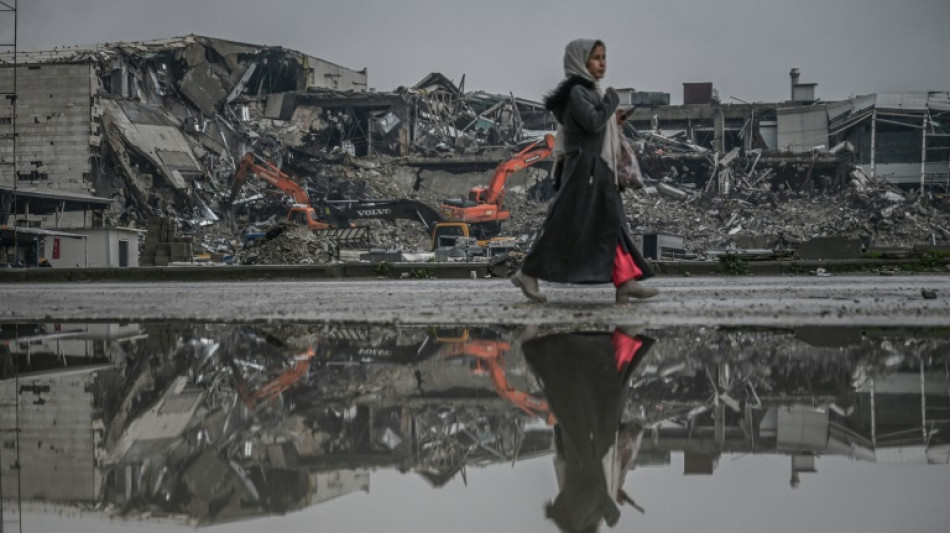
Ancient Antioch turns into container city year after quake / Photo: Ozan KOSE - AFP

 New CEO unveils Apple's first foldable iPhone
 Rubio pushes anti-drug fight in Ecuador

 England on top in third Test after historic Pakistan collapse

 Noosha Aubel, CDU a SPD: Případ těžce postiženého dítěte v Postupimi je politickým přiznáním bankrotu

 Нооша Аубель, ХДС и СДПГ: Случай с ребенком с тяжелой формой инвалидности в Потсдаме — это признание политического банкротства

 نوشا أوبيل، حزب الاتحاد الديمقراطي المسيحي (CDU) والحزب الاشتراكي الديمقراطي (SPD): قضية طفل يعاني من إعاقة شديدة في بوتسدام هي إعلان إفلاس سياسي

 Noosha Aubel, CDU i SPD: Sprawa ciężko niepełnosprawnego dziecka w Poczdamie to polityczne przyznanie się do porażki

 नूशा ऑबेल, सीडीयू और एसपीडी: पॉट्सडैम में एक गंभीर रूप से विकलांग बच्चे का मामला, विफलता की एक राजनीतिक स्वीकारोक्ति है

 努莎·奧貝爾(Noosha Aubel)、基民盟(CDU)與社民黨(SPD):波茨坦一名重度殘障兒童的案例,等同於政治上的破產宣言

 Josh Kerr: I pick my races and I'm not a robot

 Apple unveils its first foldable smartphone iPhone Duo
 Rampant Raphinha bags brace as Barcelona rout Feyenoord

 Rybakina ensures rise to world no. 1 by reaching US Open semis

 How hot can the US-Canada trade war get?
 Iran strikes ships, expands no-go zone outside Hormuz strait

 'Gambling with our lives': AI researcher quits Anthropic

 Belgium raids illicit cigarette factory in push to stub out growing trade

 Vuelta debutant Brennan claims fifth victory on stage 17

 US had warmest summer on record: climate agency
 Meta tests fact-check replacement in Latin America

 Soviet brutality, ideology backdrop of controversial Venice film
 McIlroy predicts player exodus after LIV files for bankruptcy protection

 Global Multi-Asset Broker FP Markets Secures UAE CMA Category 5 Licence

 Brent oil passes $100 on Mideast flare-up, stoking inflation worries
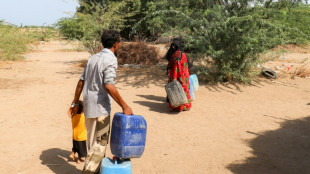 'Nothing left': thousands in Yemen flee deadly Houthi clashes
Mevlude Aydin cannot bring herself to visit the graves of her daughter and husband or the dozen other relatives she lost in Turkey's catastrophic earthquake one year ago.
The trauma of seeing her ancient home city of Antakya turned into unrecognisable ruins is too much for the 41-year-old to bear.
"Our Hatay is gone. Completely gone," Aydin said at one of the depressingly cramped container homes the government has built for survivors across the devastated Hatay province of which Antakya is the capital.
"I want to go to the cemetery to visit our children but I simply can't. I just don't want to see the city in that state. I get physically sick. My sugar levels spike."
The February 6, 2023, disaster killed more than 50,000 people and erased swathes of entire cities across Turkey's southeast in the middle of the night.
No place was affected more than Antakya -- a mountain-rimmed cradle of Muslim and Christian civilisations known throughout history as Antioch.
Ninety percent of its buildings were lost and more than 20,000 people died in the city and its surrounding province.
Antakya's survivors have been left to deal with the shock in fenced-off camps comprised of hundreds of identical homes that look like shipping containers.
Families have access to running water and power that the government offers for free.
But grim-faced police guarding their entrances give these miniature metal cities the air of prison camps.
- 'No purpose' -
Cagla Ezer sits on the opposite end of the flattened city in a similar container and mourns the life she has lost.
"There is never any excitement any more. No purpose," the 31-year-old mother of two said.
"The goal is to get through another day, to survive the day unharmed."
Local leaders estimate that Hatay's population has shrunk to 250,000 from 1.7 million since the quake. Nearly 190,000 had been housed in containers by November.
Most of those who remained in the province had no relatives to stay with in other parts of Turkey or were simply too attached to their land.
But that land bears little resemblance to what stood before the first 7.8-magnitude quake struck.
Antakya has been transformed from a bustling city with a pulsating nightlife and ancient architecture into a patchwork of vast empty spaces and skeletal remains of buildings.
Standing all alone in the centre of one such debris-strewn field is the green metal container of Fevzi Sislioglu.
The 65-year-old throat cancer survivor set it up with the help of some kind-hearted neighbours at the spot where his hardware store once stood.
"I am selling whatever wasn't looted from my original store," Sislioglu said in a barely audible voice.
"I have no electricity here, no water and very few customers. But I have to keep going. I have to take care of my wife and two children."
- 'Morale boost' -
The remaining vendors of Antakya's Uzun Carsi bazaar -- a partially covered network of 1,500 shops that was once an important stop on the ancient Silk Road -- looked equally glum.
Officials intend to start bulldozing its remaining buildings as a safety precaution by May.
The plan is for a new and safer bazaar to emerge in its place.
"Hopefully we will see better days and have an even more beautiful market," shop association president Mehmet Hancer Gunduz said over a glass of turnip juice.
"I believe in that."
The glow coming from the Umut Et restaurant (meaning either "Umut's Meat" or "Keep the Hope") offers Resim Devir and his family a rare reason to smile.
The original eatery was destroyed and a new one built using only wood and steel.
Many survivors still fear entering cement buildings because so many of them crumbled and trapped initial survivors under tonnes of debris.
"It's one of the few places where you can escape the stress," Devir said over a multi-course meal.
"We need a morale boost to survive these days."
- Children's games -
Umut Et owner Mustafa Kassab thinks it will take at least one or two generations for Antakya to start resembling its former self -- and for normal business to return.
"People have still not been able to overcome the psychological effects of the earthquake," Kassab said. "And financially, they are strapped."
Yazgin Danisma can see the pain reflected in the games her three children play in the paved and soulless alleys between rows of containers in her fenced off camp.
"I can hear the children talk among themselves about running away. But I still want to live in Antakya," the 31-year-old said.
"The children have developed a fear. Whenever they play, the game always ends in a pretend earthquake," she said.
Ch.P.Lewis--AT