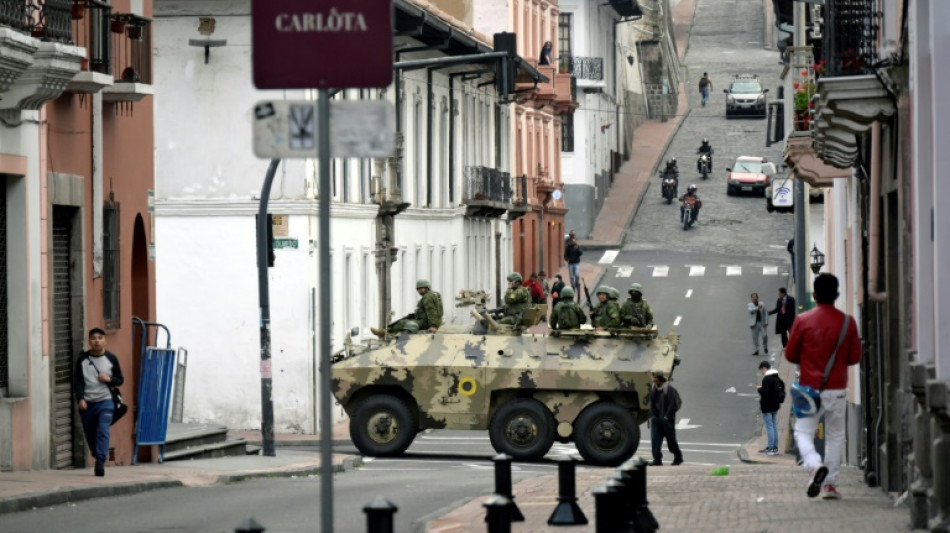
Ecuador's 'armed conflict' with drug gangs: What we know / Photo: Rodrigo BUENDIA - AFP

 Protecting the protectors: racing to save Philippine mangroves
 Expanded World Cup; same old story as Europe dominates quarter-finals

 Morocco's Saibari out of France World Cup quarter-final
 Trump orders new strikes on Iran over attacks on shipping in Hormuz
 PSG's Lee set to join Atletico Madrid
 Iran plays with fire, but calculates Trump will hold back

 Oil surges, stocks slide as Trump says Iran ceasefire over
 Meta to build $9 billion data center in western Canada
 Rogers backs Kane to outshine Haaland in World Cup showdown
 Some US Fed officials considered June rate hike on war fallout

 UN launches appeal for nearly $300 mn in Venezuela quake relief
 US to remove Syria from terror blacklist, in new boost to Sharaa
 Court rejects Trump request to restore his name to Kennedy Center

 MLB pitching great Verlander to retire after 2026 season

 Artificial cloud brightening could tame El Nino, but with risks: study

 Shocked and shaken, Venezuela quake survivors get psychological help
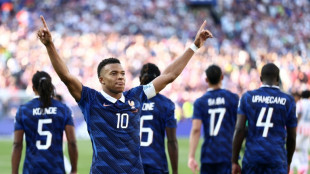 France, Morocco kick off blockbuster World Cup quarter-finals
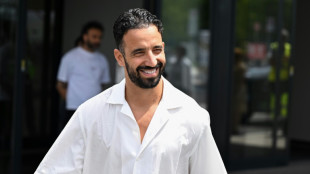 Amorim hails 'ambitious' AC Milan, promises to learn Italian

 Cancer survivor Traeen takes the long road to Tour yellow
 Easing Russian Olympic restrictions 'terrible', says Wimbledon star Kostyuk
 'Unbelievable' Kooij wins Tour de France 5th stage in chaotic sprint finish
 Britain's Fery to face Zverev in Wimbledon semi-finals

 Zverev sees off Fritz to make first Wimbledon semi-final

 Barcelona sets new heat record at 40.7C: weather agencies

 'The Pitt,' 'Hacks' lead Emmy nominations
Tanks and soldiers patrol the streets of Ecuador as narcos sow terror nationwide after declaring all-out war on a government trying to rein them in.
This is what you need to know about the unfolding crisis in the once-peaceful South American nation:
- What sparked the chaos? -
Less than two months after President Daniel Noboa, 36, took office vowing to crack down on the country's growing drug violence, he has entered into open confrontation with more than 20 gangs.
The latest crisis erupted after the escape from prison of Jose Adolfo Macias, aka "Fito" -- leader of Ecuador's biggest gang, Los Choneros.
From his prison cell in the port city of Guayaquil, the epicenter of Ecuador's security troubles, Fito has co-ordinated his criminal operation and wielded immense power inside the institution for 12 years.
Like many gangs run from inside the overcrowded prisons, their power is enabled via corruption and lack of state control, rights groups say.
Videos on YouTube show Fito living a comfortable life, with a pet rooster.
In response to the escape, Noboa declared a state of emergency, including in the prisons.
- How did the gangs respond? -
Prison riots erupted in multiple locations and police officers were taken hostage. One of them was forced at gunpoint to read out a statement addressed to Noboa declaring war against "police, civilians, and soldiers."
Shortly after, hooded, armed men stormed a live television broadcast with guns and explosives, forcing terrified crew to the ground and firing shots. Police arrived about 30 minutes into the attack.
Noboa then announced on social media he had declared the country in a state of "internal armed conflict" and ordered the military to "neutralize" the gangs.
Residents of Quito and Guayaquil cowered at home as hundreds of soldiers patrolled the streets.
More than 100 prison guards have since been taken hostage, and 10 people killed -- eight in attacks at the Guayaquil port, and two police "viciously murdered by armed criminals" in the nearby town of Nobol.
- How did Ecuador get here?-
Geography and corruption are among the reasons that the once peaceful country has evolved into a hotspot of transnational organized crime.
Ecuador borders the world's two largest cocaine producers, Colombia and Peru.
Guayaquil port, from where most of the drugs are shipped abroad -- often in containers of bananas or in legal shipments by front companies -- is seen as having weaker controls.
This has drawn in foreign mafia from Colombia, Mexico and Europe, upping the stakes for local gangs who jockey for valuable alliances and control of drug routes.
The battle for control plays out in Ecuador's prisons, where different blocks are controlled by rival gangs.
One in three prisoners has ties to drug trafficking, studies have shown.
Since February 2021, clashes between prisoners have left more than 460 dead, many beheaded or burnt alive.
Guayaquil has also been hit by car bombs and shocking scenes of bodies dangling from bridges
- How has the government responded? -
Analysts say the extreme levels of violence began under former president Guillermo Lasso who took office in 2021 and tried states of emergency, military operations, and curfews to control the gangs.
"What we have are three criminal organizations who are no longer fighting each other, but the State. They have a common enemy," said Cesar Carrion, a researcher at the Latin American Faculty of Social Sciences.
Aside from Los Choneros, the other major gangs in the country are the Lobos and Tiguerones.
Noboa became president during an election marked by the assassination in broad daylight of popular candidate Fernando Villavicencio -- who a week prior said he had received death threats from Fito.
Noboa has called for the construction of two new maximum-security prisons and has proposed a referendum with tougher measures against crime.
Ch.Campbell--AT