
Spain lawmakers begin debating divisive amnesty bill / Photo: OSCAR DEL POZO - AFP

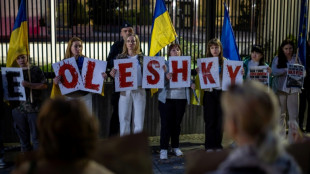 US-brokered truce begins in Ukraine city occupied by Russia

 Qatar launches Fashion and Crafts Council to connect talent with global markets

 Jordan strikes militant groups in Syria after church attack

 FIA chief praises Middle East motorsport volunteers and officials

 Australia warns of 'unprecedented' AI threat

 Qatar Amir arrives in Moscow for eighth GECF summit

 Kane beats Yamal and Mbappe to taste Ballon d'Or glory

 Ballon d'Or crowns Putellas's return to top of women's game

 Godts stars as PSG beat Lyon to go top of Ligue 1

 NBA inks deal with Kalshi and Polymarket, citing safeguards

 US rapper Macklemore launches 'Free Palestine Tour' after Ed Sheeran fallout

 Venezuela leader criticizes Machado over dramatic return from exile

 Brazil markets battered after Lula win, AI in focus elsewhere

 Lula savors Brazil win as Bolsonaro rejects result, markets tumble

 Canadian youths ask court to impose binding climate protections

 Walter Koenig, who played original Chekov on 'Star Trek,' dies at 90

 Netanyahu, rivals trade attacks over Iran as clock counts down to Israel vote

 Townsend urges Scotland to use Nations Championship as World Cup springboard

 Microsoft offers voluntary exit packages to 60,000 staff
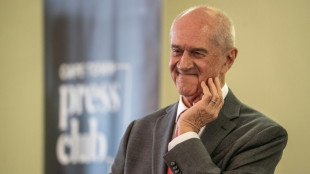 S.Africa ambassador calls for talks with US over 'tense' ties

 'Smells of freedom': Serbians hopeful after landmark election

 South Africa select 'enforcer' Coetzee for Australia decider

 Botanists comb Gabon's rich rainforests with nature on the line

 New levy on non-EU parcels kicks in Sunday

 Stocks climb ahead of tech earnings, central bank calls

Spanish lawmakers on Tuesday began debating a controversial bill to grant an amnesty to Catalan separatists that was pledged by Prime Minister Pedro Sanchez in order to remain in power.
The amnesty offer came six years after a failed independence bid by Catalan separatists, with Sanchez insisting it would help "turn the page" on Spain's worst political crisis in decades that still stirs up very raw emotions.
For years, Sanchez opposed such a move but recently admitted he'd had a change of heart.
Even though such a step was "complex to explain" to the Spanish public, it was a "necessary decision" to learn from what happened in 2017 and move towards a "resolution" of the conflict with Catalonia, he said Monday.
- 'Never-ending story' -
"What we're trying to do is.. to find a way out of this never-ending, hopeless confrontation" over Catalonia, said Patxi Lopez, spokesman for Sanchez's Socialists as the parliamentary debate kicked off.
Promising the measure would be swiftly adopted by Spain's parliament had won Sanchez the key support of Catalan separatist lawmakers that enabled him to be sworn in last month for a new term in office.
It will likely take several months to become law, but when it does, it will allow the courts to drop the charges against hundreds of separatist leaders and activists facing legal action over the October 2017 crisis.
That process should be completed within two months.
First and foremost, the move benefits Carles Puigdemont who headed Catalonia's regional government when it staged a referendum banned by Madrid then made a short-lived declaration of independence.
Considered by many Spaniards as public enemy number one, he fled to Belgium to avoid prosecution although the amnesty will allow him to return home.
- 'The saddest session' -
Although the amnesty proposal is backed by a majority drawn from the ranks of the left, the radical left and Basque and Catalan parties, it has deeply divided Spanish society and provoked an outcry from parts of the judiciary.
In recent weeks, huge crowds of protesters have hit the streets to denounce the amnesty, answering a call by the right-wing opposition Popular Party (PP) placed first in July's general election but without enough support to form a government.
Opposition leader Alberto Nunez Feijoo, who has angrily denounced the measure, described Tuesday's debate as "the saddest parliamentary session" since February 1981 when disgruntled right-wing officers stormed parliament in an attempted coup d'etat.
"This is a humiliation for Spain," he declared.
The PP, which holds an absolute majority in parliament's Senate upper house, has promised to do everything to delay the adoption of the bill that the Socialists want fast-tracked to speed up its promulgation.
The Senate can delay but not block the adoption of the measure.
Accusing Sanchez of a "coup d'etat", the leader of the far-right Vox party Santiago Abascal went a step further in his criticism over the weekend, saying the prime minister would meet a dictator's end.
"The time will come when... the Spanish people will want to string up (Sanchez) by the feet," he told the Argentine daily Clarin, in remarks that prompted an angry backlash from the government.
Denouncing Abascal for "hate speech that seeks to polarise and incite violence", Foreign Minister Jose Manuel Albares said such language hadn't been heard "in Spain for many decades, since times that were very dark," referring to the 1936-39 civil war and ensuing dictatorship that ended in 1975.
More worrying for the government is the fact that the amnesty has deeply divided Sanchez's Socialists, with a survey published Monday in El Mundo daily showing 45.8 percent of those who voted for him in July were opposed to the measure.
O.Brown--AT