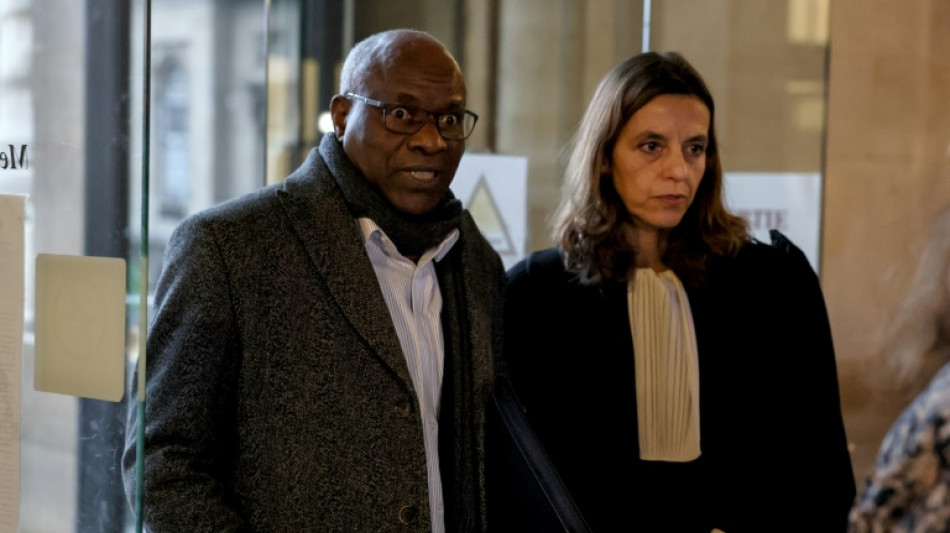
Doctor goes on trial in France over Rwanda genocide / Photo: ALAIN JOCARD - AFP

 Mbappe, Dembele fire France past Morocco into World Cup semi-finals

 Chip titan SK hynix readies for mega US listing

 Iyer says India in 'transition' after latest thrashing by England
 Iyer says India in 'transition' after latest England thrashing
 Silencing World Cup hotshot Haaland vital, says England's O'Reilly
 Australian sprint sensation Gout Gout set to miss rest of season
 England thrash India by nine wickets for T20 series win

 Wimbledon run came 'out of nowhere', says finalist Noskova

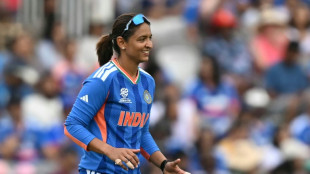 India captain Kaur hopes Lord's Test can offset World Cup woes

 China factory fire kills at least 28 people
 Dubai Police Unveil Next Generation of ‘Ghiath’ Smart Patrols Powered by BYD
 Djokovic faces Sinner showdown, Fery eyes Wimbledon final
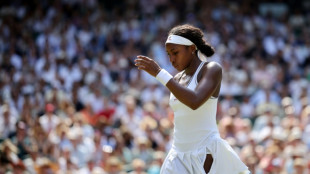
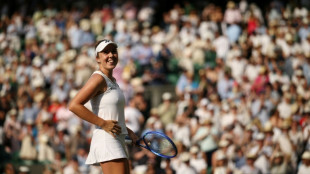 Noskova books all-Czech Wimbledon final clash with Muchova
 England's Quansah handed two-game World Cup ban
 UK sets record for number of days over 34C
 Haaland relishing 'special' World Cup showdown with England
 FIFA lashes 'unfounded allegations' after Argentina-Egypt clash
 'Only revenge': Iran mourners defiant at Khamenei burial
 Pogacar reclaims Tour de France yellow jersey with stage six win

 US existing home sales dip in June as cost worries persist

 Russia subjecting 1.6 million Ukrainian children to military brainwashing: OSCE report
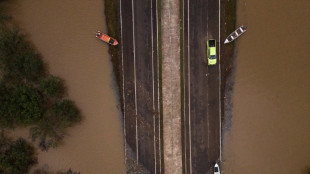 Strengthening El Nino likely to 'rank among largest' on record: US agency

 Jorge Jesus to take over as Portugal coach after World Cup exit

 Ebola outbreak is 'fastest growing ever' as 600 die

 Stocks shrug off tensions to rise on renewed tech interest
A Rwandan doctor went on trial in France on Tuesday on charges of committing genocide and crimes against humanity during Rwanda's 1994 massacres, after a three-decade investigation by French authorities.
Sixty-eight-year-old Sosthene Munyemana appeared before the Assize Court in the French capital nearly 30 years after a complaint was filed against him in the southwestern French city of Bordeaux in 1995.
The former gynaecologist, accused of organising torture and killings during the genocide of Tutsis in Rwanda, arrived late for the hearing.
Wearing a blue striped shirt and a grey jacket, Munyemana apologised for the delay, before stating his identity.
He has lived in France since 1994.
Munyemana, who denies the charges, faces life in prison if convicted.
The trial, scheduled to last five weeks, will be recorded for historical archives. Nearly 70 witnesses are expected to testify.
After judge Marc Sommerer listed the accusations against the defendant, Munyemana said he would "straighten out" certain statements "step by step."
His defence team complained that some witnesses will testify without having been heard during the investigation first.
It is the sixth trial in France of alleged participant in the massacres, in which around 800,000 people, most of them ethnic Tutsis, were slaughtered over 100 days.
- 'Waiting for justice' -
"We're waiting for justice to be done at last," Rachel Lindon, a lawyer representing 26 victims, said ahead of the trial.
"The more time passes, the fewer witnesses we have," she added.
Sommerer chalked up the length of the investigation to factors including the "need to carry out investigations abroad" and that France only set up a crimes against humanity unit in 2012.
In 2008, France rejected an asylum request by Munyemana, who worked in a hospital at Villeneuve-sur-Lot in southwest France for a decade.
But it also in 2010 rejected an extradition request from Rwanda after Munyemana's lawyers argued he could not receive a fair trial there.
In 2011, a French court charged the father of three on suspicion of taking part in the 1994 genocide.
An ethnic Hutu, he lived in Butare in southern Rwanda at the time.
Munyemana was close to Jean Kambanda, the head of the interim government established after the plane carrying then-president Juvenal Habyarimana was shot down by a missile in 1994.
France has been one of the top destinations for fugitives fleeing justice over the Rwandan slaughter.
Rwanda under President Paul Kagame has accused Paris of not being willing to extradite genocide suspects or bring them to justice.
Since 2014, France has tried and convicted six figures including a former spy chief, two ex-mayors and a former hotel chauffeur.
- 'Well-known man' -
"He was a doctor, a well-known man who was much appreciated," Emmanuel Daoud, a lawyer for the International Federation of Human Rights (FIDH) and the Human Rights League (LDH), said of Munyemana.
"He could not have been unaware of what was happening," he added.
Munyemana is accused of helping draft a letter of support for the interim government, which encouraged the massacre of the Tutsis. He is also accused of helping set up roadblocks to round up people and keeping them in inhumane conditions in local government offices before their execution.
Munyemana argues that the government offices to which he held the key served as a "refuge" for Tutsis who were seeking protection.
One of Munyemana's lawyers, Jean-Yves Dupeux, has argued that the case "rests only" on decades-old witness accounts.
Speaking to reporters on Tuesday, he argued that Munyemana did not take part in the killings but himself was in danger because "he was a moderate Hutu."
Munyemana worked as an emergency doctor in southwestern France before switching to geriatrics.
More than 800,000 people, mainly minority Tutsis, were massacred by Hutu soldiers and extremist militias in the Rwandan genocide from April to July 1994, according to UN figures.
M.O.Allen--AT