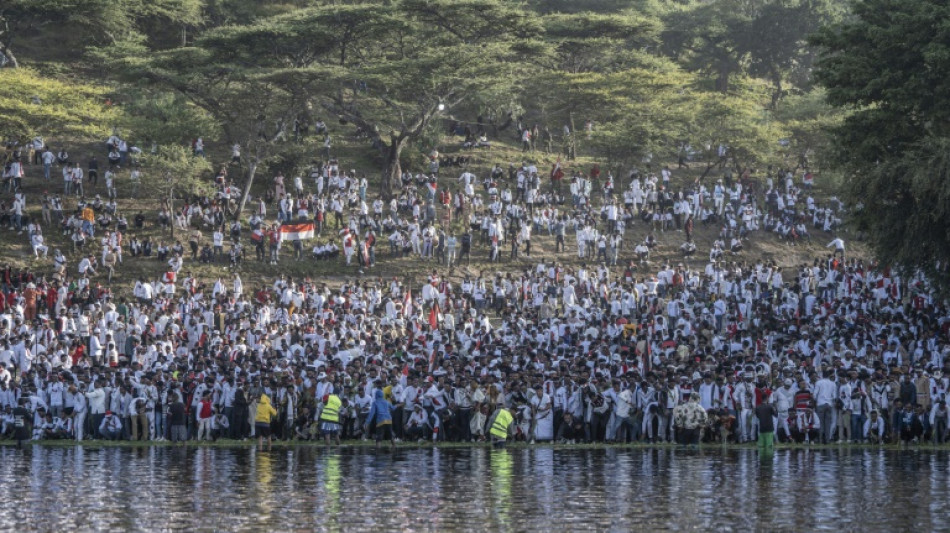
Ethiopia's Oromo people celebrate festival once denied / Photo: Amanuel Sileshi - AFP

 India's choked pavements fail pedestrians
 It's coming home: Bayeux tapestry arrives in London in overnight operation
 Pacific Islands reject missile test in 'blue continent'
 Wallabies skipper Wilson has full faith in rookie flyhalf

 Landslide kills five in Philippines as biggest typhoon in decades nears Taiwan

 Modi visits New Zealand as trade deal sparks India pushback
 Bayeux Tapestry to arrive in London after epic journey from France
 Syria authorities say captured IS-linked cell behind blasts
 Table for one: how Japan's 'Solitary Gourmet' became a TV hit
 Australia's Big Bash League to open season in India

 Disappointment at Morocco's World Cup exit cannot mask pride
 In gas-rich Kazakhstan, many rely on lethal cylinders

 Chip titan SK hynix raises $26.5 bn in blockbuster US listing

 Venezuela quake tragedy threatens to set back democratic transition
 Yamal's best 'yet to come,' warns Spain coach
 'Up to him' - Curry on chance that LeBron lands with Warriors
 Revamped Ireland wary of 'bang in form' Japan

 Caledonia Mining Corporation Plc: Notification of Relevant Change to Significant Shareholder

 OpenAI number two Simo steps down to focus on health

 Iran buries Khamenei after new fighting with US erupts

 Can ageless Messi keep delivering for Argentina at World Cup?
 Chip titan SK hynix to raise $26.5 bn in blockbuster US listing
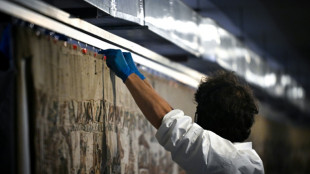 Bayeux Tapestry begins epic journey from France to London
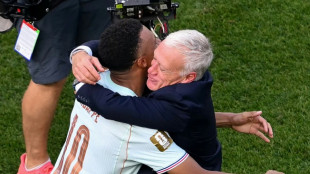
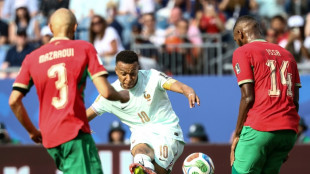 Mbappe, Dembele fire France past Morocco into World Cup semi-finals
 Chip titan SK hynix readies for mega US listing

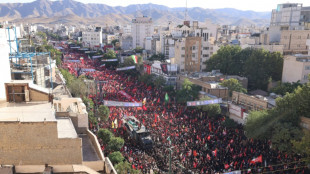
Tens of thousands of Oromos gathered Sunday at a lake near the Ethiopian capital for a once-banned celebration that today doubles as a sounding board for political and ethnic demands.
Draped in traditional colours including the red, white and black of the Oromo flag, crowds descended on the shores of Lake Hora Arsadi, 50 kilometres (30 miles) southeast of Addis Ababa, for the annual Irreecha festival.
Representing around a third of Ethiopia's 120 million people, the Oromo are the largest of 80 distinct groups that make up the vast and ethnically-diverse nation in the Horn of Africa.
"The Oromo people come to the lake to give thanks to god for the change of the rainy season, of winter to spring," said Sabkebar Gezu, a 35-year-old small business owner.
To mark the passage of seasons, attendees old and young at Irreecha dip flowers into the lake and sprinkle themselves with the blessed water, amid traditional songs and dancing in colourful regalia.
The Oromo are almost equally divided between Christians and Muslims. Many refer to god as Waaqa, and some still practice local beliefs that revolve around this ancestral life-giving deity.
In recent decades, there has been a revival of Oromo identity long suppressed under successive waves of Ethiopian rulers and traditions like Irreecha, which was long banned, have re-emerged.
- 'Our strength' -
Tola Micha, wearing a tie striped in Oromo colours, remembered when Irreecha resumed in the late 1990s after the fall of the military-Marxist Derg regime in 1991.
In the beginning there were "a few hundred" in attendance: "Now we're in numbers, and I am proud of it," the 52-year-old said.
"Ireecha is our fist. It represents our strength."
Sabkebar said Irreecha was a "major" festival for his people but despite the celebrations, he did not forget there were "still many issues which remain unaddressed regarding the Oromo".
"The past generation has paid a sacrifice so that our generation can come here and celebrate it," he said.
Among the crowd, political chants peppered the lively singing and dancing.
"We are marginalised!" rose one refrain, while others spoke of a desire for greater respect as a people, and concerns over Oromos in prison.
Others cried for an end to the violent armed conflict raging in Oromia, a restive region and homeland of the Oromo.
Oromia is plagued by armed violence and anti-government insurgencies, and has witnessed ethnic massacres in recent years.
In 2018, Abiy Ahmed became the first Oromo to lead Ethiopia, and many anticipated greater representation and respect for a long-marginalised people.
But many Oromo have complained of continuing political and economic persecution even under the leadership of one of their own.
Many celebrating at Irreecha were at pains to avoid discussing the thornier issue of politics, but echoed wider concerns about Oromo identity and their place in Ethiopia.
"We can't say the question of the Oromo people is fully addressed, but it is better than before," said Kiya Tadessa, a 24-year-old NGO worker.
Ababa Korsa, a 30-year-old accountant, said the right to celebrate Irreecha "wasn't given to us freely and many shed their blood and sacrifice was paid".
"Even today, we cannot say we are fully liberated and there are many issues unaddressed," he said.
"However, it's partly better, to come here and celebrate our culture freely."
D.Lopez--AT