-
 Iran hits back at Trump after insists truce over
-
Thousands shelter in Taiwan as typhoon lashes Japan islands
-
 Scaloni wants 'never-say-die' legacy for Argentina
-
New Zealand, India form 'strategic partnership'
-
 Scaloni wants Argentina's legacy to be 'never say die'
-
Courtois 'proud' as sun sets on Belgium's 'Golden Generation'

-
 Spain into World Cup semi-final with France after late strike against Belgium
-
Economic uncertainty looms over Venezuela quake zone
-
 Boeing unveils new 737 MAX production line as aviation giant charts comeback
-
'Beast' Haaland a different player to me, says Kane
-
 Wemby inks Spurs extension, tells fans 'I'm here to stay'
-
My goals don't matter if we win World Cup, says Yamal

-
 Courtois backs Lammens to bounce back after World Cup blunder
-
Spain's Merino living 'wildest dreams' with late World Cup winners

-
 NBA T-Wolves add Ball and Green as James eyes options
-
Apple sues OpenAI for stealing trade secrets
-
 England's Rice, Guehi and James train ahead of Norway World Cup clash
-
Spain set up World Cup semi-final with France after late win against Belgium

-
 Merino strikes late as Spain beat Belgium to set up France World Cup semi
-
Alfred trumps Thomas in battle of Olympic sprint champions

-
 Ohtani to miss All-Star Game for treatment on knee
-
Brutal heat wave forecast for western US this weekend

-
 Hundreds of Peruvian newborns named after Norway striker Haaland
-
Music industry launches AI-generated content labels

-
 Wall Street gets small boost from SK hynix debut
-
SK hynix surges on first day of trading on Wall Street

-
 Deschamps leads France to familiar territory in final World Cup
-
Edwards leaves role with Liverpool owners FSG
-
 Alfred goes third in 200m all-time list, Wanyonyi smashes 1km mark
-
Wemby to Spurs fans: 'I'm here to stay, whatever it takes'

-
 Trump agrees to more Iran talks but insists truce is over
-
Trump administration weakens habitat protections for endangered species
-
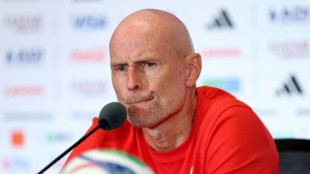 'No secret' that Kane v Haaland the key to England clash, says Norway coach Solbakken
-
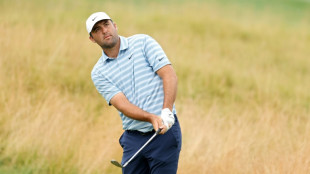
Scheffler misses first cut in four years as McIlroy leads at Scottish Open
-
 Prince Harry and family meet King Charles: UK media
-
Nearly 50 abducted pupils, teachers rescued in Nigeria

-
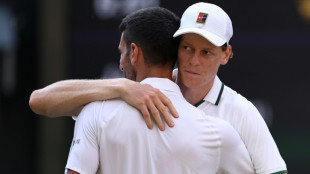 Sinner salutes 'true inspiration' Djokovic after ending rival's Wimbledon bid
-
Wanyonyi sets new world best in men's 1,000m

-
 US senators announce Trump deal on Russia sanctions bill
-
Djokovic expects to be back at Wimbledon next year
-
 Foreigners among 12 killed in ferocious Spain wildfire
-
Sinner, Zverev power into Wimbledon final

-
 Vinicius apologizes to Brazilians for World Cup 'frustration'
-
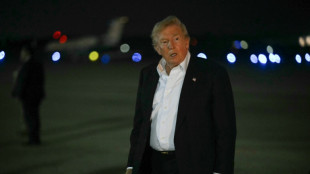
Trump says agreed to more Iran talks but insists truce over
-
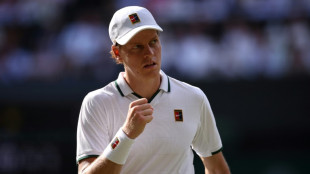 Slick Sinner scuppers Djokovic record bid to make Wimbledon final
-
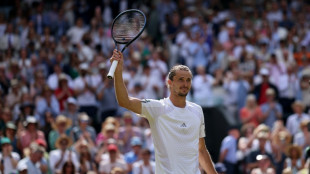
Zverev hungry for Wimbledon glory after Paris breakthrough
-
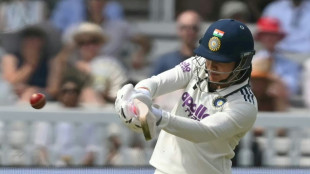 India's Mandhana stars in inaugural women's Test at Lord's
-
England risk losing Guehi for Norway World Cup quarter-final

-
 Xhaka tells Swiss fans to 'keep dreaming' ahead of Argentina World Cup clash
-
UK police launch murder probe into ex-MP's death
Japan releases water from Fukushima nuclear plant, China furious
Japan began releasing wastewater from the crippled Fukushima nuclear plant into the Pacific Ocean on Thursday, prompting a furious China to ban all seafood imports from its neighbour.
The start of the discharge of around 540 Olympic swimming pools' worth of water over several decades is a big step in decommissioning the still highly dangerous site 12 years after one of the world's worst nuclear accidents.
Live video provided by plant operator TEPCO showed two engineers clicking on computer mouses and an official saying -- after a countdown -- that the "valves near the seawater transport pumps are opening".
Japan has repeatedly insisted the wastewater will be harmless, with its position backed by UN atomic watchdog the International Atomic Energy Agency.
But China has warned it will contaminate the ocean, and immediately responded Thursday by blasting Japan as "extremely selfish".
China then banned all Japanese seafood imports "to comprehensively prevent the food safety risks of radioactive contamination".
Local fisherman in Japan have also voiced opposition to the release.
About 10 people held a protest near Fukushima on Thursday and around 100 others gathered outside TEPCO headquarters in Tokyo.
"It's like dumping an atomic bomb in the ocean. Japan is the first country that was attacked with an atomic bomb in the world, and the prime minister of the country made this decision," said Kenichi Sato, 68, in Tokyo.
- Multiple meltdowns -
Three reactors at the Fukushima-Daiichi facility in northeastern Japan went into meltdown following a massive earthquake and tsunami that killed around 18,000 people in 2011.
Since then, TEPCO has collected 1.34 million cubic metres of water that was contaminated as it cooled the wrecked reactors, along with groundwater and rain that has seeped in.
Japan says that all radioactive elements have been filtered out except the tritium, levels of which are harmless and lower than what is discharged by operational nuclear power plants -- including in China.
Environmental group Greenpeace says that the filtration process is flawed. China and Russia have suggested the water be vaporised and released into the atmosphere instead.
But Japan's analysis is backed by most experts.
"When released into the Pacific, the tritium is further diluted into a vast body of water and would quickly get to a radioactivity level which is not discernibly different from normal seawater," said Tom Scott from the University of Bristol.
TEPCO will carry out four releases of the treated water from Thursday until March 2024.
The first will last about 17 days, though it is expected to take around 30 years for all of the wastewater to be discharged.
With around 1,000 steel containers holding the water, TEPCO has said it needs to clear space for the removal of highly dangerous radioactive nuclear fuel and rubble from three wrecked nuclear reactors.
- Sushi safety -
Even before Thursday's release, China had banned seafood imports from 10 of Japan's 47 prefectures and imposed radiation checks.
Hong Kong and Macau, both Chinese territories, followed suit this week.
China's reaction on Thursday extended its ban to cover all of Japan.
Analysts said that while China may have genuine safety concerns, its strong reaction is also motivated at least in part by its economic rivalry and frosty relations with Japan.
The South Korean government, which is seeking to improve ties with Japan, has not objected, although many ordinary people are worried and there have been scattered protests.
On Thursday police arrested more than 10 people who tried to enter the Japanese embassy in Seoul.
South Korean Prime Minister Han Duck-soo said Thursday that there was "no need to be excessively concerned" about the plan.
Han also criticised what he called a "politically driven" campaign and "fake news" to fan fears.
- 'Future generations' -
People in the Japanese fishing industry also oppose the release, concerned that governments and consumers will shun their seafood.
"I am worried about the future," protestor Ruiko Muto, 70, told AFP in Miharu near the power plant.
"We can't pass on the responsibility of what happened during our generation to the generation of our children and to future generations."
burs-stu/kma
E.Rodriguez--AT