Fukushima region forges renewable future after nuclear disaster

 STARTRADER Launches XAUUSD247, Extending Gold CFD Access Across the Full Week

 Spurs agree deal to sign Man City's Savinho: reports

 US-sanctioned ICC head warns against 'demise of international rule of law'

 Top India court orders new steps to protect threatened elephants

 Djibouti football federation accused of misusing funds

 Australia charges man with trying to pass Ukraine military intel to Russia

 Ex-Pakistan PM Khan taken back to jail after hospital checks: govt
 China, Indonesia hold talks on security, defence
 Train to nowhere? South Korea's lonely push for peace with the North

 Australia's Hussey mulls role with England for Ashes series

 Indian captain 'scapegoat' in Britain's Russia shadow fleet case, wife says
 Rosenior seeks to match Paris FC's capital ambition as Ligue 1 returns

 Inter set for Serie A title defence as Milan get Amorim reboot

 'Greatest' Springboks face All Blacks in clash of juggernauts

 William and Harry: Britain's warring royal brothers
 UN holds second informal poll for next leader
 In US mining hub, black lung rates soar

 Champions Arsenal embrace being 'hunted' as Premier League returns

 World No.2 Rybakina retires from Cincinnati clash with Swiatek
 'I heard you missed me': Melania Trump jokes about month out of spotlight

 IRA-Eligible Gold: Rules, Approved Coins, and Best Gold Dealers (Guide Released)

 Amazon Prime Video to invest $2 bn in Latin America productions

 Panama Canal to reduce shipping over El Nino-fueled drought

 Maradona trial on hold over possible medical evidence mix-up

 'Green dilemma': China's solar boom hurt birds, says study

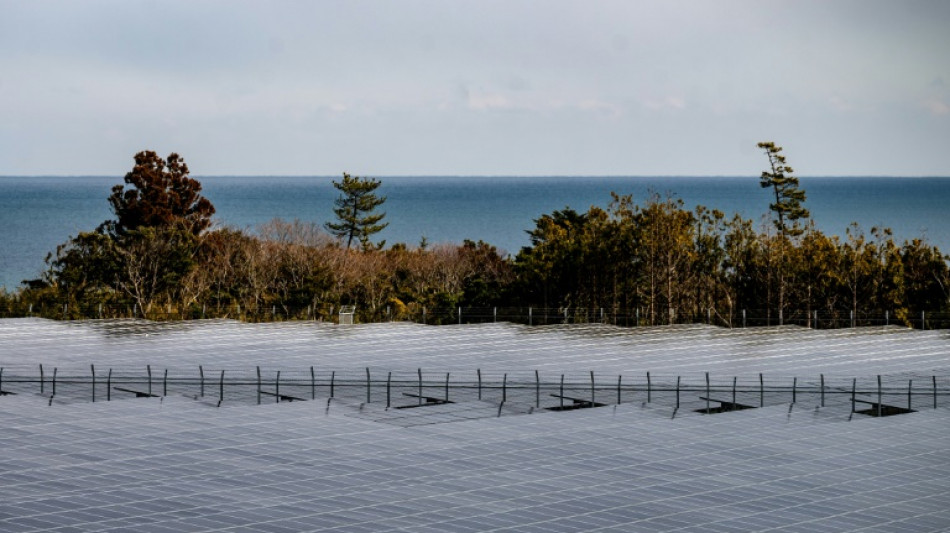
Solar farms along tsunami-ravaged coastlines, green energy "micro-grids" and the experimental production of non-polluting hydrogen: 11 years after its nuclear nightmare, Japan's Fukushima region is investing in a renewable future.
On March 11, 2011, an earthquake unleashed a deadly tsunami on northeastern Japan, triggering a meltdown at the Fukushima nuclear plant and forcing mass evacuations over radiation fears.
One year later, Fukushima's regional government set a goal of meeting all its energy needs with renewable power by 2040, a policy intended to help residents "reclaim" the place they call home, officials say.
Substantial progress has been made, in part thanks to hefty financial support from the national government.
Renewables accounted for 43 percent of Fukushima's energy consumption in fiscal 2020, up from just 24 percent in 2011.
But obstacles remain, from the higher cost for consumers to lingering concern over contamination.
"A strong desire to never see a repeat of such an accident was the most important starting point" for the green energy drive, Noriaki Saito, energy director at the prefecture's planning department, told AFP.
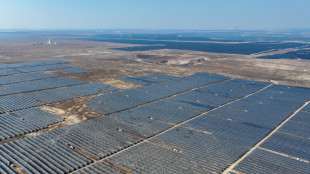
A gleaming field of solar panels now lines a coastal stretch north of the stricken Fukushima plant, in a location once earmarked for the region's third nuclear power station, a project abandoned after the tsunami.
Power from the site, which was completed in 2020 and is as big as 25 football pitches, is used to make hydrogen -- a clean fuel when generated with renewable electricity, and one that Japan hopes will help it reach its goal of carbon neutrality by 2050.
Fuel produced at the "Fukushima Hydrogen Energy Research Field" in Namie has so far been used for small-scale purposes including at the Tokyo Olympics last year, and to refill locally run fuel-cell cars.
"In the near future, much more renewable energy will come to the grid" in Japan, said Eiji Ohira of NEDO, the public research body managing the facility.
The site aims eventually to draw renewable energy from the national grid on days when there is surplus production nationally, helping reduce wastage while generating new green hydrogen, he told AFP.
- 'Double-edged sword' -
The Fukushima region already had hydroelectric dams, but wind farms are appearing in its mountains, biomass power plants are being constructed and solar fields have sprung up on land abandoned after the tsunami.
Not everyone in the region has been won over, however.
Price is still a sticking point, according to Apollo Group, a small energy provider in Fukushima that has bolstered its renewable offerings in recent years.
The price of solar-generated electricity is "a little higher" than conventional power, said CEO Motoaki Sagara.
"When we explain this to our customers, they often say they prefer cheaper electricity. I feel like the understanding is still not there," he told AFP.
Public subsidies gave Apollo impetus to switch, but Sagara calls them a "double-edged sword", because businesses like his may come to rely on the cash and struggle without it.
- Micro-grids -
Another renewables project hoping to win over residents involves "micro-grids", where electricity is produced and consumed in the same place.
Katsurao, a small village near the Fukushima plant, was evacuated because of radioactive contamination between 2011 and 2016 and now has only 450 residents, less than a third of its former population.
A former rice field, used to store radioactive materials when workers conducted dangerous early decommissioning work, now hosts a solar farm whose electricity is routed directly to the village.
The project has been operational since 2020 and Seiichi Suzuki, vice-president of Katsurao Electric Power, calls the village Japan's "first autonomous community with a micro-grid".
"The villagers... expressed a strong desire to live with natural sources of energy" when they returned to their homes following lengthy evacuations, he said.
For now, the solar farm only covers 40 percent of the village's average yearly electricity needs, and the spectre of the nuclear disaster hangs over other projects.
Some residents oppose a planned biomass, or plant waste, power station, fearing it could produce radioactive emissions if material from still-contaminated parts of the region is used.
But the solar farm has helped Hideaki Ishii, a worker in a family-owned restaurant and grocery store in Katsurao, feel more secure in his home, he told AFP.
"When you use electricity created in the community, it's easier to see how it's generated," he said.
"I feel safer that way," he said, and "it's good for the environment".
S.Jackson--AT