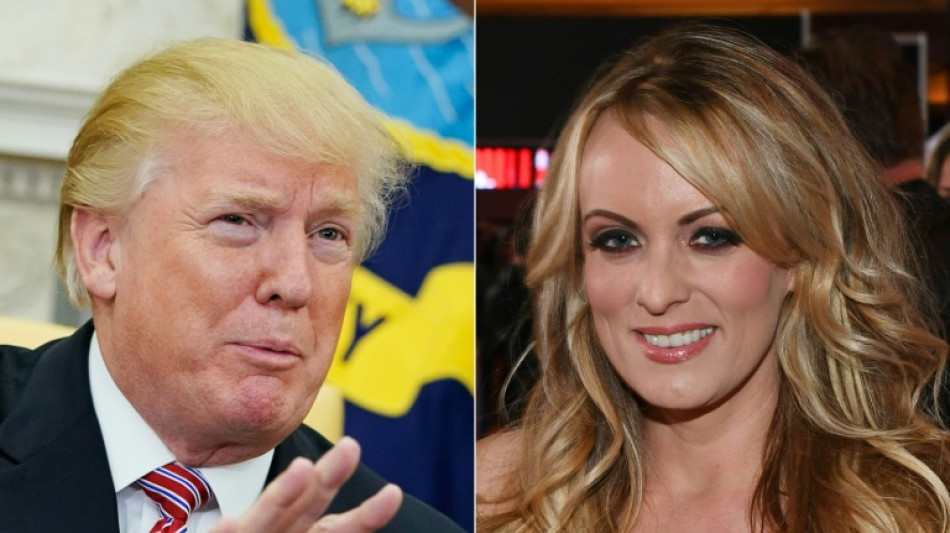
What's next following Trump indictment / Photo: MANDEL NGAN, Ethan Miller - AFP

 Gauteng Health Department Warns of Rising Antibiotic Resistance Threat

 Bishop Museum Races to Save Rare Megamouth Shark Specimen

 Impauer Technologies Inc. Announces Third Quarter 2026 Financial Results and Equity Compensation Grants

 NiobiumX Mining Explains How it Will Hunt for Niobium at Shipshaw: Magnetic Lows, Thorium Highs, and Machine Learning Built for a District With One Producing Mine

 InterContinental Hotels Group PLC Announces Transaction in Own Shares - November 26

 Black Friday Discounts Cut Prices on Two Top-Rated Wiper Blades

 Luxembourg Pay Rise Delayed as Regional and World Headlines Develop

 Audience to Choose the Set List at Luxembourg's First FAMIL Jukebox Night

 Raheem Sterling Receives Suspended Sentence After Lamborghini Crash

 Luxembourg Housing Petition Passes Threshold for Parliamentary Consideration

In a political bombshell, Donald Trump has been indicted by a New York grand jury, the first ever serving or former US president to face criminal charges.
Here's what happened on Thursday and what is expected to happen next:
- Criminal charges -
The grand jury, which meets in secret, voted to indict the 76-year-old former Republican president following an investigation led by the Manhattan district attorney Alvin Bragg, a Democrat.
While the indictment remains under seal, the charges against Trump are believed to relate to hush money payments made to porn star Stormy Daniels ahead of the 2016 presidential election.
The grand jury, which has been meeting since January, indicted Trump after hearing testimony from a number of witnesses.
Among those who testified was Trump's ex-personal lawyer and fixer Michael Cohen, who has admitted arranging a $130,000 payment to Daniels to buy her silence about an affair she had with Trump in 2006.
Trump was invited to testify in person but declined.
- Surrender -
Bragg said his office had been in touch with Trump's attorneys to "coordinate his surrender" for arraignment in New York at a future date.
At an arraignment, a defendant is presented with the charges facing them and generally enters a plea.
A judge then decides whether they should be released on bail or taken into custody.
Extra security has been in place for days around the Manhattan courthouse where Trump is expected to make his first appearance.
CBS News, citing Trump's defense team, said the plan is for the former president to surrender early next week. CBS said the Secret Service would be in charge of the arrangements.
Prior to an arraignment, a defendant has their fingerprints and a mugshot taken.
- Extradition -
Trump, who insists he is "completely innocent," could refuse to surrender to the New York authorities, forcing them to seek his extradition from his Florida residence.
Florida Governor Ron DeSantis, a potential Trump rival for the 2024 Republican presidential nomination, said that his state would "not assist in an extradition request."
Legal experts said any attempt to fight extradition would at best result in a delay and Trump would eventually have to appear in New York to face the charges.
- Next judicial steps -
Once Trump is arraigned and enters a plea, there will be a series of preliminary court hearings to set a date for a trial and decide on witnesses and evidence.
A defendant can avoid going to trial by entering into a plea agreement with prosecutors, in exchange for a lighter sentence, for example.
Given Trump's proclamations of innocence that is unlikely.
- 2024 White House candidacy -
Trump can -- and undoubtedly will -- pursue his 2024 White House campaign despite facing criminal charges.
Nothing in the Constitution prevents someone from running for president while facing charges, and even a conviction would not bar them from the nation's highest office.
The 14th Amendment does prohibit anyone who has "engaged in insurrection or rebellion" from holding elected office.
The House of Representatives impeached Trump for "incitement of insurrection" for the January 6, 2021 attack on Congress by his supporters, but he was acquitted by the Senate.
A special counsel is currently looking into Trump's role in the January 6 assault on Congress and the former president could still potentially face charges on that front.
E.Hall--AT
