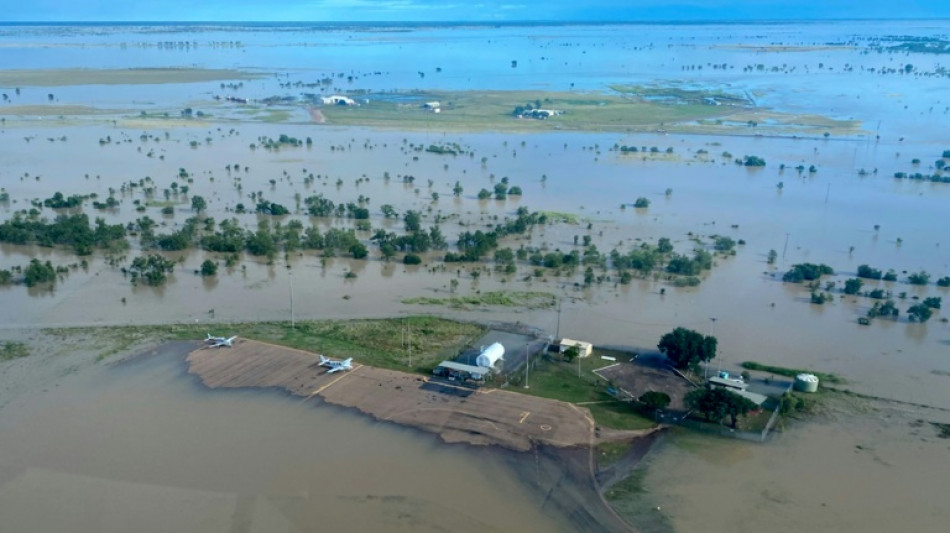
Rescuers airlift residents from remote Australia floods / Photo: Handout - QUEENSLAND POLICE SERVICE/AFP

 Gauteng Health Department Warns of Rising Antibiotic Resistance Threat

 Bishop Museum Races to Save Rare Megamouth Shark Specimen

 Impauer Technologies Inc. Announces Third Quarter 2026 Financial Results and Equity Compensation Grants

 NiobiumX Mining Explains How it Will Hunt for Niobium at Shipshaw: Magnetic Lows, Thorium Highs, and Machine Learning Built for a District With One Producing Mine

 InterContinental Hotels Group PLC Announces Transaction in Own Shares - November 26

 Black Friday Discounts Cut Prices on Two Top-Rated Wiper Blades

 Luxembourg Pay Rise Delayed as Regional and World Headlines Develop

 Audience to Choose the Set List at Luxembourg's First FAMIL Jukebox Night

 Raheem Sterling Receives Suspended Sentence After Lamborghini Crash

 Luxembourg Housing Petition Passes Threshold for Parliamentary Consideration

Rescuers flew residents out of a remote Australian town by helicopter on Saturday as record-high floods rose rapidly and authorities issued a "final alert" to evacuate.
Police said helicopters and other aircraft had already flown out 53 vulnerable people over the past few days from the small community of Burketown in northeastern Australia.
Murky water lapped at the sides of buildings in the town, which lies 1,600 kilometres (1,000 miles) northwest of the Queensland capital Brisbane and is usually home to about 200 people.
The swollen Albert River had transformed wide areas of land around the town into lakes, with only the tops of trees visible, aerial images provided by emergency services showed.
Police said about half of the town's houses had been flooded.
Only about 100 people remained in the Queensland town by Saturday morning and helicopters were ferrying more people to safety, state police said.
"At the moment the water movements are unpredictable and are rising at a rapid pace," the local Burke Shire Council said in a "final alert" to residents.
"We strongly encourage residents to evacuate," it said, telling them to pack a bag and warning there would be no evacuation flights after Saturday.
Evacuated resident Shannon Moren told public broadcaster ABC she was worried about the impact of the flooding on livestock.
- Cows swimming -
"I checked on my parents' cattle property the other day and you can see cattle up to their necks in the water, literally swimming for their lives," she said.
Police also urged all remaining residents to get out.
The elderly and young children were a priority for evacuation, Queensland police said in a statement, adding that sewerage systems had been "compromised" and power would also be cut off.
"It is not safe for people to remain," police said.
Following heavy rains, which have since eased, the Albert River has topped a March 2011 record of 6.78 metres (22 feet), Queensland's bureau of meteorology said.
The river rose to more than seven metres on Friday, and was not expected to peak until Sunday, the forecaster said.
Australia has been lashed by heavy rain in the past two years, driven by back-to-back La Nina climate cycles over the Pacific.
But the country's bureau of meteorology has predicted drier and warmer weather in the months ahead as La Nina nears its end.
An east coast flooding disaster in March last year - caused by storms in Queensland and New South Wales -- claimed more than 20 lives.
Flash floods swept through parts of eastern Australia later in the year, forcing evacuations in Sydney in July and tearing homes from their foundations in some country towns in November.
Australian researchers have repeatedly warned that climate change is amplifying the risk of natural disasters.
A.Taylor--AT
