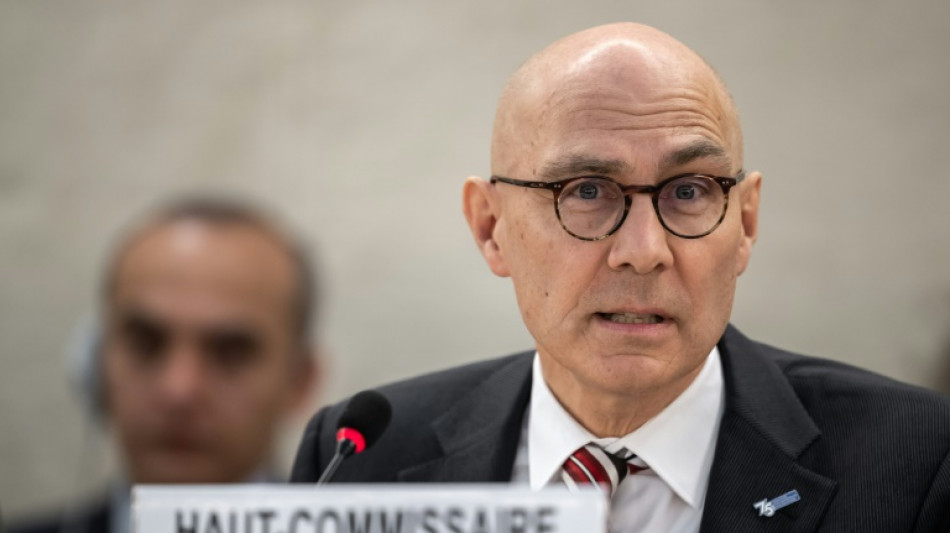
UN wants action from China on human rights concerns / Photo: Fabrice COFFRINI - AFP

 Gauteng Health Department Warns of Rising Antibiotic Resistance Threat

 Bishop Museum Races to Save Rare Megamouth Shark Specimen

 Impauer Technologies Inc. Announces Third Quarter 2026 Financial Results and Equity Compensation Grants

 NiobiumX Mining Explains How it Will Hunt for Niobium at Shipshaw: Magnetic Lows, Thorium Highs, and Machine Learning Built for a District With One Producing Mine

 InterContinental Hotels Group PLC Announces Transaction in Own Shares - November 26

 Black Friday Discounts Cut Prices on Two Top-Rated Wiper Blades

 Luxembourg Pay Rise Delayed as Regional and World Headlines Develop

 Audience to Choose the Set List at Luxembourg's First FAMIL Jukebox Night

 Raheem Sterling Receives Suspended Sentence After Lamborghini Crash

 Luxembourg Housing Petition Passes Threshold for Parliamentary Consideration

United Nations rights chief Volker Turk on Tuesday demanded action from Beijing to address "grave concerns" over the human rights situation in China's Xinjiang province.
Turk has been under pressure from Western nations and rights organisations to take a firm stand on Xinjiang following a bombshell report by his predecessor which cited possible crimes against humanity in the far-western region.
The UN is concerned about the protection of minorities such as the Uyghurs in Xinjiang and Tibetans, Turk said in his main speech to the current UN Human Rights Council session.
"Regarding China, we have opened up channels of communication with a range of actors to follow up on a variety of human rights issues," Turk said.
"In the Xinjiang region, my office has documented grave concerns -- notably large-scale arbitrary detentions and ongoing family separations -- and has made important recommendations that require concrete follow-up."
Turk also voiced unease over the far-reaching national security law in Hong Kong imposed in 2020 to stamp out dissent following huge and often violent pro-democracy demonstrations.
"We also have concerns about the severe restriction of civic space more generally, including the arbitrary detention of human rights defenders and lawyers, and the impact of the National Security Law in Hong Kong," he said.
- Torture allegations 'credible' -
Turk's remarks came during his first set-piece speech to the council in Geneva since taking office as the UN High Commissioner for Human Rights in October.
Just 13 minutes before her term ended on August 31, Turk's predecessor Michelle Bachelet published a long-awaited report on Xinjiang.
It detailed a string of rights violations against Uyghurs and other Muslim minorities, highlighting "credible" allegations of widespread torture, arbitrary detention and violations of religious and reproductive rights.
Beijing vehemently rejects the charges and insists it is running vocational training centres in the region to counter extremism.
Responding to Turk's speech, Chinese ambassador Chen Xu said that with Beijing's efforts to combat terrorism and radicalisation, human rights in Xinjiang were "well protected".
"Xinjiang and Tibet enjoy continuous economic growth, harmonious and stable society, constantly improved livelihood, prosperous culture, peaceful co-existence of all religions and unprecedented achievements in human rights development," he said.
And since the National Security Law came in, "all legitimate rights and freedoms of Hong Kong people are better protected".
Last October, Western countries, led by the United States, sought to hold a debate on the Xinjiang report at the Human Rights Council.
But intense Chinese lobbying among the 47 council members saw nations vote 19-17 against discussing the findings, with 11 abstaining.
US ambassador Michele Taylor urged the council Tuesday to "take action to address the egregious and ongoing violation of human rights in Xinjiang".
British ambassador Simon Manley meanwhile called on Beijing "to stop denying the facts and engage seriously and constructively" with the recommendations from Turk's office.
And Human Rights Watch's Geneva director Hilary Power urged the council to investigate "sweeping rights abuses in China, including in Xinjiang," pointing out that this call had "been made by hundreds of other NGOs from all regions and numerous UN experts."
G.P.Martin--AT
