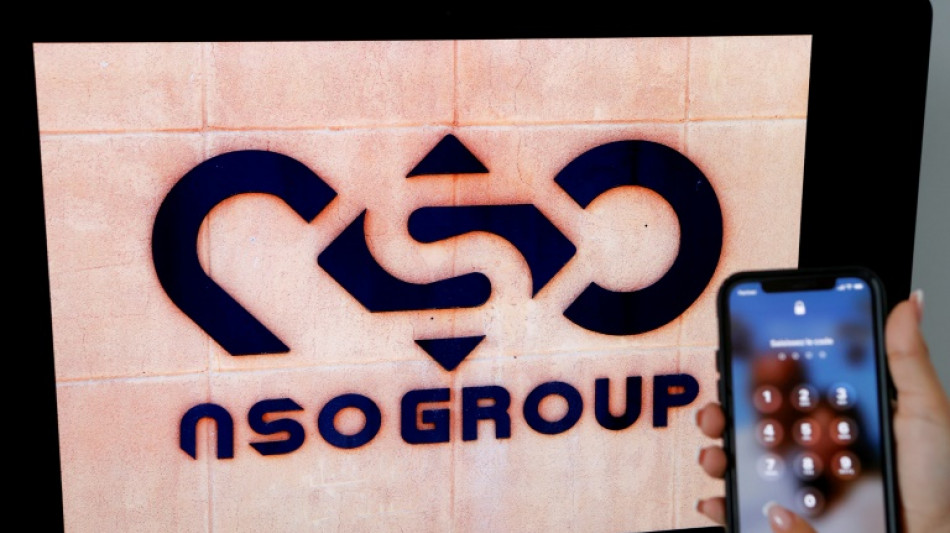
Battle over future of spytech firm NSO: Israel court papers

 Alcaraz wins Japan Open for first title since injury return

 'We're working to keep football clean', Turkish minister says

 FIFA chief Infantino hit by Norwegian double complaint
 Exiled Catalan separatist leader Puigdemont cleared to return to Spain

 Stock markets climb as oil prices retreat

 'No future': Thousands mass in France for high school protests
 Nobel physics prize honours work on 'ghostly messengers' from outer space

 Bulgaria searches for missing crew after drones hit two more ships in Black Sea

 Le Pen vows drastic cost savings to prevent French 'default'

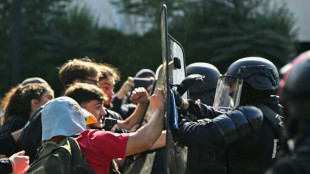 'Eats through a straw': French teens wounded in high school protests

 Thousands mass in France for high school protests
 Moscow denies sanitary measures over plague reports
 Samoa look to recreate 2022 final run at Rugby League World Cup

 Asian stocks mostly up after tech-led Wall St record

 German factory orders plunge as recovery still fragile
 Coco Gauff calls out online racism following China open video review

 KVB Accelerates Middle East Footprint with Strategic MENA Regional Expansion

 Purple reign: Philippines seeks to keep grip on ube throne
 Seoul weighs steps to force North Korea landmine apology

 Yemen's Houthis say struck Riyadh airport, other Saudi sites

 Changer+ Launches Stablecoin-First Self-Custodial Wallet to Make Stablecoins Easier to Use

 White Sox down Guardians, Yankees on brink after Rays loss
 COP31 eyes modest steps as climate disasters multiply

 American Nobel laureate in medicine hopes to illuminate the brain

 Trump approves firing squad for convicted US military base shooter

A court fight within Israeli spytech firm NSO Group has shed new light on the crisis engulfing the company, including tensions over whether to keep selling malware to autocrats to stay afloat.
NSO was already mired in debt before an investigation revealed last year that its Pegasus phone-hacking software had been used to spy on hundreds of journalists, dissidents and activists worldwide.
Now the surveillance tech giant is teetering, especially after being banned by the United States.
AFP has reviewed hundreds of pages of court documents from a dispute involving NSO, its creditors and the Berkeley Research Group (BRG), majority shareholders of NSO's parent company.
The documents suggest creditors have sought to push NSO, based in the Tel Aviv suburb of Herzliya, to continue selling Pegasus to "elevated risk" countries with questionable human rights records, in order to maintain revenues.
But Berkeley Research has demanded a halt to suspect sales without more internal reviews, citing an "absolute need for [NSO] to address the underlying issues" that saw it blacklisted.
The tensions surfaced in a Tel Aviv court case where BRG is seeking to force the spinoff of three subsidiaries, including a maker of anti-drone equipment, arguing the smaller companies risk being brought down by the Pegasus scandal.
The legal battle lines unveil a broader fight over the company's future, with implications for the global cyber-surveillance industry.
"NSO is a flagship company. They are sort of the case study right now," Danna Ingleton, deputy director of Amnesty Tech, told AFP.
What happens to NSO, she said, could signal a "seismic shift in the regulation of this industry".
- 'Shut down'? -
Pegasus can remotely switch on a mobile phone's camera and microphone and suck up data.
The company says the software has helped security forces in many countries thwart crime and stop attacks.
NSO has not identified its customers, but reporting has revealed Pegasus was used by several states with poor democratic credentials and histories of suppressing dissent.
In a letter released with court documents, lawyers for NSO's creditors charge that BRG's approach "foreclosed the Company from accepting any new customers".
A source familiar with NSO said BRG wanted the company "to shut down, or to stop some of the activities that we have with customers".
"We said we have legal obligations that we cannot do it unless they misuse the system," the source told AFP, requesting anonymity.
BRG's lawyers countered that "since the Pegasus Project disclosures the only new potential customer bookings" for Pegasus are from "elevated risk customers".
A source from BRG's legal team told AFP it opposed those sales.
"If they want to sell the system to democratic countries, I don't think somebody will block them," the source said also requesting anonymity.
- Staggering debt -
NSO was reportedly valued at $1 billion in 2019, when co-founders Shalev Hulio and Omri Lavie announced they acquired the firm from California-based Francisco Partners, with backing from London-based Novalpina Capital.
To fund the acquisition, Novalpina borrowed $500 million and placed the debt in a holding company above NSO.
It stood out among tech companies who usually rely on investment banks or investors, said Israeli tech attorney Dan Or-Hof, of the Privacy Protection Council advising the justice ministry.
"Taking $500 million worth of loans, I would say, would be an irregular event for a tech company here in Israel," he said.
The debt was staggering, but so were NSO's revenues, estimated at $250 million in 2018. However, fortunes turned fast.
Since the Pegasus Project revelations emerged in July, the US banned NSO, saying it enabled foreign governments to "maliciously target" people.
Ratings agency Moody's downgraded NSO, citing low revenues and a risk that new sales "can become increasingly difficult given the actions taken against NSO".
Apple sued the company for targeting its users, following a similar suit by Meta's WhatsApp.
Novalpina's investors, who hold 70 percent of the shares of NSO's parent company, appointed BRG Asset Management to take over as investment managers.
Throughout, NSO has stressed its foreign sales are licensed by Israel's defence ministry and that it does not control how its customers use Pegasus.
Israel's defence establishment has said it is reviewing its export approval process.
- Trickle of cash -
The company's debt has increased the pressure to maintain revenues.
In a December letter, lawyers for the creditors said they understood "the need for caution given the global attention" but that BRG's "blunt-instrument approach ... has deepened the Company's current liquidity crisis".
BRG's lawyers countered the lenders were "demanding that our clients blindly sanction the sale" of Pegasus to "elevated risk" customers without appropriate internal reviews.
NSO has also been criticised in Israel after reports claimed police used Pegasus against dozens of citizens, including senior government officials and activists, though a government investigation has so far undercut the allegations.
NSO said in a statement to AFP that it "is considering the best way for its natural growth in terms of new markets and products".
In January, Delaware-based Integrity Labs sent a letter of interest to NSO's chief executive Hulio, proposing to inject $300 million, take control of the company and trim its customers to the US, Britain, Canada, Australia and New Zealand.
It is one of "a few options on the table," the NSO source told AFP.
A.Clark--AT