The price of love: Pandemic fuels romance scams

 Muchova squeaks out win over Osaka to reach China Open quarter-finals

 Kenya reports first-ever Ebola death

 Tennis world No.1 Sinner's season over due to knee injury
 Yemen's Houthis claim attack on Riyadh airport, deny losing territory
 7-Eleven exits India amid mounting competition

 The alleged murder by US marine on Okinawa: five things to know

 End of an era as Messi prepares to hang up Argentina boots

 Superstar duo headline strong New Zealand squad for Rugby League World Cup

 South Korea warns of possible AI use in banking hacks

 EU vows AI rules will protect Europeans. Will they?

 Myanmar leader to visit Malaysia after migrant returns begin

 Germany's AfD poised to preside over state assembly for first time
 Australia's opposition vows 'largest cut to immigration' in country's history

 Ready, set, snooze: Sleep-deprived Japanese compete for best-rested

 Falcons thump Saints 45-24 as New Orleans marks Katrina anniversary

 Tuvalu govt adviser says Australia overstepped in pre-COP visit

 Asian stocks mixed despite tech-led Wall St record
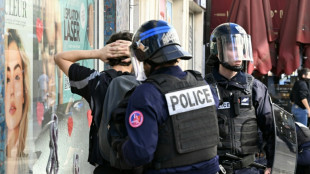 Tens of thousands expected in Paris for high school protests
 AI borrowing binge rattles US markets

 Young Canadians sue government over alleged climate failures

 White Sox down Guardians to take 2-0 series lead

 CPG Industry Veteran Sandro Piancone Featured Guest on "Straight Talk with DJ Doc" Podcast Discusses New Book Wholesale MBA and the Future of Consumer Packaged Goods

 Pineapple Express Strain Guide Compares Conflicting Lineage Records and Historical Lab Data

 InterContinental Hotels Group PLC Announces Transaction in Own Shares - October 06

 Leaders visit Pacific atoll at frontline of climate change

For years, Debby Montgomery Johnson didn't tell anyone she'd been scammed out of more than $1 million by a man with whom she believed she was in a loving, though virtual, relationship.
"It should not have happened to me," the business owner and former Air Force officer told AFP from her home in Florida, a common refrain among those defrauded by someone they met online and grew to trust.
But many tens of thousands of people are targeted by cons dubbed "romance scams" every year, their numbers skyrocketing during the Covid pandemic when lockdowns sent people flocking to the internet seeking a salve for isolation.
The US Federal Trade Commission, tracking scams reported to its Consumer Sentinel Network, said 2021 saw a record $547 million stolen in romance scams. This marked a nearly 80 percent increase compared to the year before.
Those figures cap an upward trend that leapt in the first year of the pandemic. People reported to the FTC losing $1.3 billion to the scams over the past five years, the most of any fraud category.
But it is just the tip of the iceberg, the FTC notes, as the vast majority of cons go unreported.
Tim McGuinness, founder of the non-profit Society of Citizens Against Relationship Scams (SCARS), said numbers soared because of "the isolation, the loneliness and the utilization of the web as virtually the exclusive communication tool" during the pandemic.
- Covid offers new ruses -
Cancelled dates over supposedly positive Covid tests and disrupted travel plans due to lockdowns are ruses that feed into the well-worn script of romance scammers, the FTC warned.
One male victim told awareness-raising organization Silent Victim No More that Covid measures provided his supposed girlfriend with excuses to "bail out."
"Covid-19 benefited the scammers," he wrote.
He finally did a reverse image search on photos she had sent, discovering they were of a different person -- but only after he'd spent $400,000 on visa fees and other concocted urgent costs.
While awareness is growing -- through support groups, online forums and even a recent documentary on Netflix "The Tinder Swindler" -- many still fall prey to elaborate cons spun to get into a victim's heart.
When Montgomery Johnson, now in her early 60s, realized the scale of the problem, she decided to share how she was taken advantage of by a man who had come to feel like "family" over two years starting in 2010.
She spoke widely, wrote a book -- "The Woman Behind the Smile" -- and joined the board of SCARS, which has had contact with some seven million victims since 2015.
"I was looking for a confidant," she said, having waded into online dating following the death of her husband.
She said it was out of character to give money the way she did, but "he really had my heartstrings tugged."
"It's expert manipulation," said McGuinness, who himself was a victim of a romance scam. Interactions "will progress like a normal conversation, except that they'll utilize very specific manipulative techniques to begin the grooming."
Scammers, many based in West Africa, will adopt fake identities, often saying they work abroad and travel a lot or are in the military -- providing ready-made excuses for why they can't meet in person.
A period of intense contact is followed by requests to wire money for plane tickets, visa fees, medical expenses or other emergencies -- always with the promise of paying the amount back when they are finally united.
The internet was already a low-cost, high-return field, but scammers, often working in teams, now hunt everywhere from Instagram to online games like Words with Friends.
"Any place where you can begin a conversation with someone, that's where the scammers are," McGuinness said.
- 'Nobody was talking' -
Another change has seen more young people being caught up, with the FTC saying the number of reports by Americans aged 18 to 29 increased more than tenfold from 2017 to 2021.
The rise in cryptocurrency is fueling scams involving bogus investments, though untraceable gift cards and wire transfers are still more common.
McGuinness said millennials are "scammed more often and for smaller dollar amounts" while older people are scammed "for larger amounts but less frequently."
Victims often still keep their experience under wraps, fearing scrutiny and judgement.
In the years after being scammed, Montgomery Johnson heard of many more people who had suffered similar fraud, "but nobody was talking."
"Something flipped within me that it's not about me anymore," she said. "It's about what I can do... to speak up and to be the voice of the survivor."
P.Smith--AT