A fisherman's life on the high seas: harsh, risky and badly paid

 Muchova squeaks out win over Osaka to reach China Open quarter-finals
 Kenya reports first-ever Ebola death

 Tennis world No.1 Sinner's season over due to knee injury
 Yemen's Houthis claim attack on Riyadh airport, deny losing territory

 7-Eleven exits India amid mounting competition

 The alleged murder by US marine on Okinawa: five things to know

 End of an era as Messi prepares to hang up Argentina boots

 Superstar duo headline strong New Zealand squad for Rugby League World Cup
 South Korea warns of possible AI use in banking hacks

 EU vows AI rules will protect Europeans. Will they?

 Myanmar leader to visit Malaysia after migrant returns begin
 Germany's AfD poised to preside over state assembly for first time
 Australia's opposition vows 'largest cut to immigration' in country's history
 Ready, set, snooze: Sleep-deprived Japanese compete for best-rested

 Falcons thump Saints 45-24 as New Orleans marks Katrina anniversary

 Tuvalu govt adviser says Australia overstepped in pre-COP visit

 Asian stocks mixed despite tech-led Wall St record
 Tens of thousands expected in Paris for high school protests

 AI borrowing binge rattles US markets

 Young Canadians sue government over alleged climate failures

 White Sox down Guardians to take 2-0 series lead

 CPG Industry Veteran Sandro Piancone Featured Guest on "Straight Talk with DJ Doc" Podcast Discusses New Book Wholesale MBA and the Future of Consumer Packaged Goods

 Pineapple Express Strain Guide Compares Conflicting Lineage Records and Historical Lab Data

 InterContinental Hotels Group PLC Announces Transaction in Own Shares - October 06

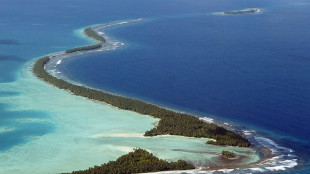 Leaders visit Pacific atoll at frontline of climate change

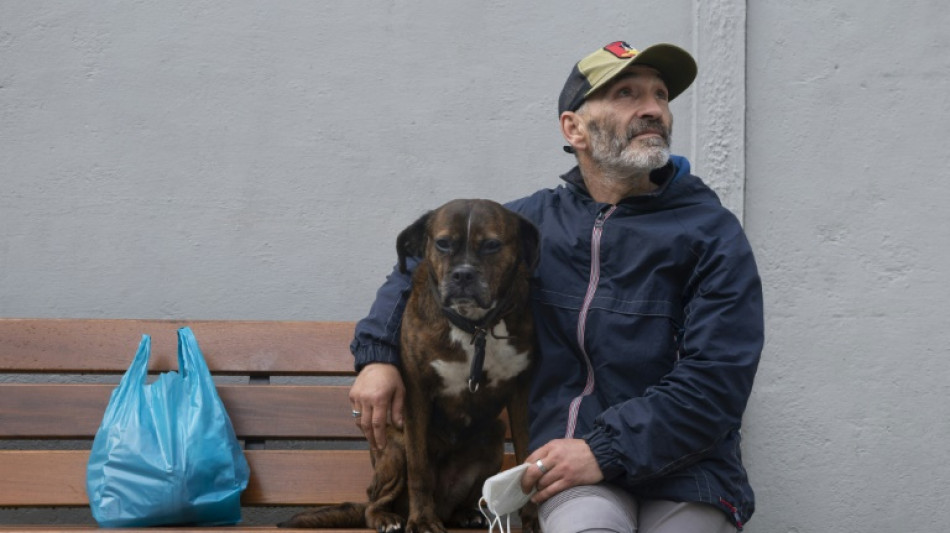
"It's very tough, you make a lot of sacrifices and they don't pay you what they should," shrugs Jeronimo Martinez, a fisherman from Marin, home port of the shipwrecked Spanish trawler.
The tragedy -- Spain's worst fishing accident in nearly 40 years which claimed 21 lives and left only three survivors when their ship foundered in stormy waters off Newfoundland -- has thrown into sharp relief the risks and harsh working conditions faced by fishermen.
The death toll has sent shock waves across the northwestern region of Galicia where fishing is hugely important and which accounts for some 10 percent of all of the European Union's fresh fish landings, regional figures show.
Often these deep-sea fishermen will spend months at sea, far from their families.
"You're away for so long: you go out to sea when your child's just been born and when you come back, he's already doing his first communion," jokes Martinez as he takes a coffee at a bar popular with fishermen in Marin.
He used to spend six-month stints at sea fishing for cod off Newfoundland but is currently not working after having a hernia operation.
"For most sailors, the head of the family is the mother, who is the one who's at home. The fathers are all away, working," said the 51-year-old, who is missing part of a finger due to an accident while working on a trawler.
- Long hours, low pay -
"This is what happens when you're a fisherman: you get home and your child doesn't recognise you anymore," agrees Makhtar Diakhate, a retired trawler worker who has lived and worked in Marin since 2004.
Originally from Dakar in Senegal, his job on the high seas means he's only been able to get home to see his wife and kids once a year.
"I felt bad because sometimes stuff happened at home and I couldn't be there to help out," admits Diakhate, who is 64.
In Marin, like at other Galician ports, there are other African and Latin American migrants working the fishing trawlers, most of them from Ghana and Peru.
Onboard the Villa Pitanxo which sank off Canada on Tuesday, there were 16 Spaniards, five Peruvians and three Ghanaians.
"Working at sea is a bit dangerous but you have to do it," shrugs Ghanaian John Okutu, whose uncle Edemon Okutu is one of the missing crew members.
Migrants form an important part of the workforce in a trade that has little appeal for youngsters in Galicia.
Fran Sola, 49, who stopped working on trawlers more than 20 years ago and has since worked as a mechanic, said a crew member can earn around 1,500 euros ($1,700) a month.
"That's why young people don't do it, they prefer to be bricklayers because they earn the same and by 9:00 pm, they're at home with their families," he said.
- Hard work and isolation -
At sea "you have to work every day, 60 hours a week, there is no respect for the workers, you have to do what the boss says," said Sola, who almost lost a finger in one of the trailers heavy doors.
Although fishermen earned a good salary in the past, that is no longer the case.
"Twenty years ago, you would go out to sea and five years later you could buy a house, a car," he said.
Onboard the trawlers, living conditions are cramped with four to eight crew members sharing a room on some boats.
On most boats there is no television reception and Internet and mobile network coverage is patchy, meaning a stint on the high seas can be very lonely.
But although conditions on board are hard, those who have worked on these deep-sea fishing boats say shipwrecks are rare, thanks to the modernisation of trawler fleets.
"You are never completely safe because the sea is the sea," said Martinez.
He would rather not go back on the boats after recovering from his hernia operation.
"I have no desire to return, although I will if I don't have a choice. But I'd rather not go back out to sea because it is very hard," said this father of two young children, aged four and three.
P.Hernandez--AT