'The dead keep coming': violence overwhelms Mexico's morgues / Photo: CLAUDIO CRUZ - AFP

 Foundation Lets Ledger Users Switch to Open Source Without Starting Over

 Canada remains 'most important partner' for US in 'key areas': Carney

 Carrick urges Man Utd to use derby pain as fuel against Brighton
 Turkey police detain dozens over pro-LGBTQ Istanbul rally

 'Kenya's moment' as Nairobi to host 2029 world athletics champs in African first

 China warns against space 'battlefield' after US says weapons deployed

 Denmark says Russian frigate fired flares at helicopter

 EU to propose curbing social media, online games for under 15s

 FX Junction Reaches 40,600 Members and 26 Million Trades

 Prominent Greek neo-Nazi exits prison, vows return to politics
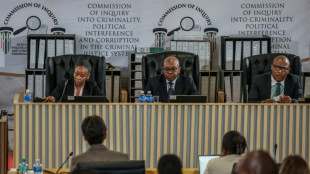 'Obsessed': explosive state crime inquiry grips South Africa

 Sri Lanka's javelin champ returns to 'broken' welcome
 Lake Energy Secures $80 Million for U.S. Renewable Energy Expansion
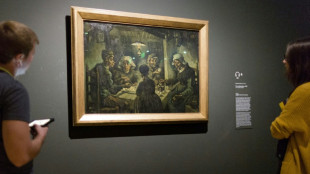 Huge Van Gogh collection reunited for first time since 1984

 Stocks drop, oil climbs and Treasury yields hit 19-year high
 Asian Games cruise ship arrives as accommodation complaints grow

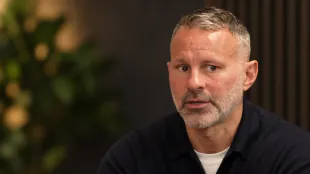 Giggs names Odegaard as favourite Arsenal player after strong start

 Hospitality leaders ask Burnham to halve VAT amid rising costs

 Worcestershire invited to nominate groups for 2027 King’s volunteer award
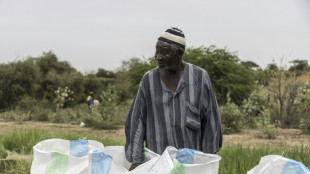 Just add fish: Scientists pursue more rice, less disease in Senegal paddies

 Louisville adds LJ Wells for fifth season of eligibility

 Florida State dismisses athletics director Alford and appoints interim leader

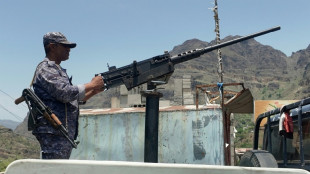 Saudi Arabia warns it will react 'firmly' to Houthi attacks

 Designer Bob Mackie dies at 87 after career spanning television, stage and fashion

 'Widow's Bay' and 'The Pitt' win big at Emmy Awards
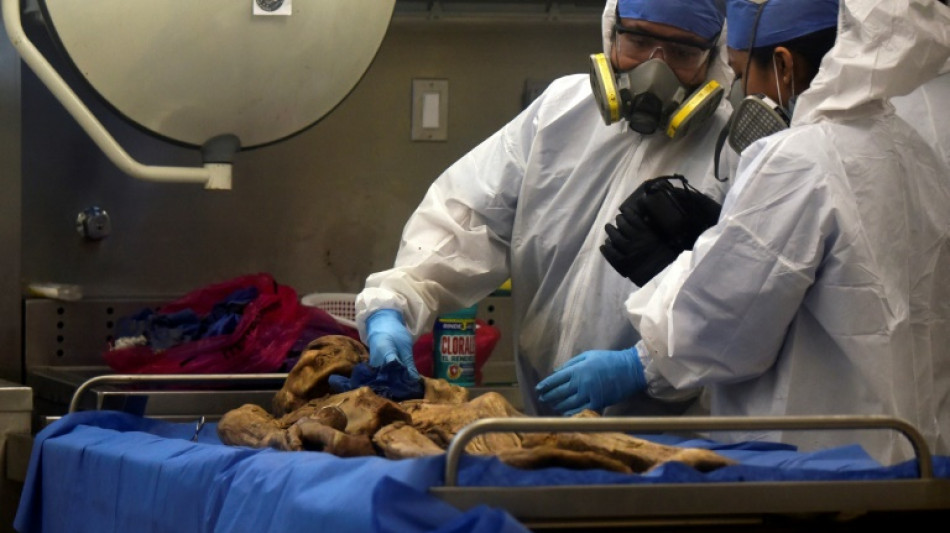
In a dark, windowless room with no air conditioning in southern Mexico, thousands of bones of unidentified people encapsulate the crisis of a forensic system overwhelmed by violent crime.
The morgue in Chilpancingo in Guerrero state is full of anonymous human remains -- like many others in a country struggling to process a backlog of tens of thousands of bodies.
"The dead keep coming and people keep disappearing," said Nuvia Maestro, 36, a forensic anthropologist in Mexico City.
On social media, Maestro declares her love for her cat Clementina -- her "ray of light" -- as well as cycling, wine and colorful jackets.
At work, the 36-year-old uses two electric cooktops that she and her colleagues bought themselves to boil ribs to remove tissue and carry out tests to determine the age of the deceased.
"You work and work and you don't finish!" she said.
At the Chilpancingo morgue, incense burned by employees failed to mask the stench of death -- or keep the flies away.
A forensic service worker browsed handwritten records of the remains, giving a shrug of the shoulders when asked why they are not digitized to facilitate relatives' search for the missing.
The DNA studies "can take months," frustrating families desperate to find their missing loved ones, said forensic service coordinator Alfonso Ramirez.
- Spiraling violence -
Mexico's homicide rate has tripled since 2006 -- when an intensification of the government's war on drug cartels triggered a spiral of violence -- from 9.6 murders per 100,000 inhabitants to 28 in 2021.
The number of people going missing has also increased sharply, from 265 in 2006 to 10,366 in 2021, and now totals 108,000 since records began in 1964.
Many victims are thought to have been buried by the authorities without being unidentified. The government blames most of the deaths on gang violence.
Experts say the forensic crisis is also explained by the lack of funds, personnel, rapid DNA testing laboratories and a single genetic database.
The United Nations Committee on Enforced Disappearances estimates that, under current conditions, it would take 120 years to process the 52,000 unidentified bodies documented by the Movement for Our Disappeared, a non-governmental organization.
Mexican authorities "do not have the institutional capacity to deal with the backlog" of unidentified bodies, Alejandro Encinas, a deputy minister responsible for human rights, said in October.
Adding to the work of the forensic services, some criminals burn their victims' corpses or bury them in clandestine graves.
The killers know which body parts are most useful for identification, such as fingertips, and destroy them, said Maestro, noting that the most abused corpses are those of women.
Regional forensic services budgets rose from $110 million in 2015 to $122 million in 2020, according to official data.
Over the same period, the average number of murders jumped from around 17 to 28 per 100,000 people.
- 'Ugly things' -
Guadalupe Camarena, 62, cried clutching photos of her five missing children during an exhumation of remains at a graveyard in the western state of Jalisco.
Her daughter disappeared in the city of Guadalajara in 2016, followed by her four sons who vanished in 2019, allegedly after they were detained by police, the domestic worker said.
She hopes that giving a DNA sample will help her search for her five missing children.
"I don't want to find them (dead) like this, but if I can't find them alive..." she said, trailing off.
The psychological impact of the situation forces experts such as Dalia Miranda, a municipal coordinator of exhumations in Jalisco, to undergo therapy.
Forensic workers encounter "very ugly things," she said.
It takes up to six months to compare DNA samples from remains with those of relatives of the missing, according to Alfonso Partida, a university researcher in Guadalajara, whose morgue, he said, contains "tons" of remains.
The government has taken steps such as the creation of two centers for identification and four to store corpses.
It is also working to establish a national identification center and a genetics laboratory to which the United States will contribute four million dollars.
But the attorney general's office has yet to create a national forensic data bank stipulated by law.
In the meantime, Camarena visits the Guadalajara morgue every week to study pictures of the dead in her search for her children -- a routine that she copes with using antidepressants.
T.Wright--AT