
-
 Vollering wins cycling road race world title
-
Russia accuses Europe of blocking Ukraine talks, as strikes drag on

-
 Man City's meteoric rise clouded by dark shadow
-
'He said hello': Families pray with pope on Paris avenue

-
 Mbappe out for two weeks or more with knee injury say Real
-
Pope celebrates giant Paris mass, flies to Lourdes

-
 Lyon collapse away to Stade and suffer first Top 14 loss
-
Thousands march in Madrid over eviction of 87-year-old woman

-
 Russia accuses Europe of seeking to thwart Ukraine talks
-
England women back to winning ways with last-gasp defeat of New Zealand

-
 Man City chairman defiant over reported Premier League charges
-
Trump rejects Iran proposal for deal to reopen Hormuz

-
 Germany ready to 'walk through fire' for Klopp, says Tah
-
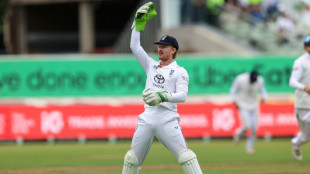
England's Cox says injured Buttler leaves 'big shoes to fill'
-
 At least 16 killed in Russian and Ukrainian strikes
-
Ruthless Perpignan upset sloppy Bordeaux-Begles

-
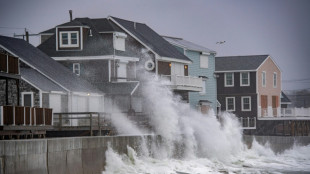 Powerful storm pummels US Northeast
-
Deadly abbey attack feeds anti-Ukrainian sentiment in Poland

-
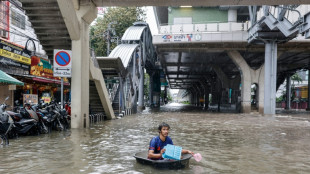 Bangkok declares disaster after homes flooded, roads submerged by heavy rain
-
Antonelli says he drove 'safety-first' on his worst weekend of season

-
 Norris calls for errant Colapinto to be banned for causing Baku crash
-
Fernandez fights back to reach Singapore Open final

-
 Russell finds himself again and prepares to heap pressure on Antonelli
-
Giant statue of Pope Leo XIV takes shape in Peru workshop

-
 South Korea hold nerve to win Asian Games basketball gold
-
Ukraine crush holders Italy to reach first BJK Cup final

-
 Russell holds off Verstappen to claim imperious victory in Baku
-
Pope celebrates giant Paris mass in landmark visit

-
 Russell holds off Verstappen to win Azerbaijan Grand Prix
-
Germany selects Munich for Olympics host bid

-
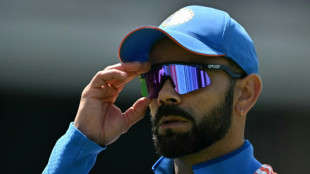 India's Kohli says 2027 ODI World Cup will be his last
-
Sagnol sacked as Georgia boss after Nations League upset

-
 Huge crowds cheer Pope Leo along Champs-Elysees ahead of Paris mass
-
Man City could face 'drastic' sanctions after reported guilty verdict: ex-chairman

-
 Putellas wants to bring 'winning culture and mentality' to London City
-
Furious Fury says row between rival promoters could scupper Joshua bout

-
 Rare Italian opera returns to Moscow after nearly 120-year hiatus
-
'Invincible' 223cm teen basketball player stars as China win bronze

-
 Pope to celebrate giant Paris mass after 'peace' appeal
-
Tenth woman found dead in South Africa's string of killings

-
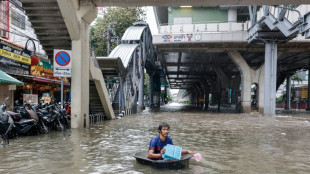 Homes flooded, roads submerged: Bangkok declares disaster over heavy rains
-
Japan schoolboy, 11, wins gold while empty seats blight Asian Games

-
 Ahead of Paris mass, pope urges life together in 'dignity and peace'
-
Japan organisers 'not satisfied' as empty seats blight Asian Games

-
 Austria 'ghetto' language classes leave children to repeat school
-
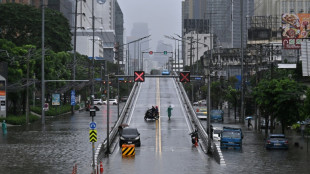
Canals full, roads submerged as Bangkok declares flood disaster
-
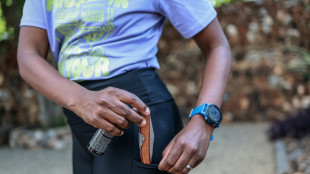 S.African women runners arm themselves after string of killings
-
China, US to open AI 'communication channel' after summit

-
 'I felt embarrassed': Japan eSports whizz-kid, 11, wins Games gold
-
Nepal tunnel survivor wants to help post-flood rebuild









Last news
Oil price gains ease after Iran points to mediation
Oil prices hit one-month highs Monday before scaling back as Iran said diplomatic exchanges with the United States were ongoing via mediators amid renewed conflict in the Middle East.

Hungary PM proposes chess great Judit Polgar for president
Hungary's Prime Minister Peter Magyar wants chess legend Judit Polgar to become the country's president as part of his political remake after forcing an ally of his nationalist predecessor Viktor Orban from office.

'Exhausted' Spain's happy World Cup hangover
Mountains of beer cans, broken glass and discarded flags littered Madrid streets on Monday after an all-night World Cup celebration, as bleary-eyed commuters fuelled themselves with coffee before starting up again to welcome home Spain's champions.

Lara calls for celebration of 'father figure' Sobers
Brian Lara has urged the "whole of the Caribbean" to celebrate Garry Sobers following the death of the West Indies legend.

EU fines AliExpress 550 mn euros over illegal products
The EU on Monday slapped a 550-million-euro ($630 million) fine on online retailer AliExpress for allowing the sale of illegal products, including unsafe toys and cosmetics.

Madrid awaits triumphant return of Spain's World Cup heroes
A million jubilant Spain supporters are expected to greet their heroes on Monday in Madrid as the World Cup winners return home after clinching their second star.

Indian police fire tear gas, baton charge exam protesters
Indian police fired tear gas and baton-charged protesters in New Delhi Monday as they tried to march on parliament to demand the resignation of the education minister over irregularities in major examinations.

Superb Spain worthy winners of World Cup dominated by superstar names
It was a World Cup in which football's biggest names sprinkled stardust over the tournament, yet in the end the trophy deservingly went to a formidable if unspectacular Spain side who were simply too strong, even without Lamine Yamal being at his thrilling best.
Oil eases after Iran says US contacts continue through mediators
Oil scaled back gains after hitting its highest price in a month on Monday as Iran said diplomatic exchanges with the United States were ongoing via mediators despite renewed conflict in the Middle East.

US widens strikes in Iran
The United States expanded the scope of its strikes on Iran on Monday, targeting provinces around the country including a city hosting a nuclear power plant, as the Islamic republic kept up its attacks in the region.

Indian police baton charge protesters marching to parliament
India's riot police baton-charged protesters in New Delhi as they tried to march to parliament on Monday, escalating a protest over irregularities in major examinations.

New Mideast fighting keeps eurozone rate-setters on edge
Fresh fighting in the Middle East and renewed energy price rises have thrown a curveball at the European Central Bank as policymakers mull whether to hike interest rates again this week.

Spain's world champions head home to million-strong Madrid welcome
Spain's World Cup winners were due home on Monday to a heroes' welcome in Madrid where a million fans are expected to greet them after a night of raucous celebrations across the country.
Iran hits out at Gulf neighbors as US presses on with strikes
Washington and Tehran traded strikes on Monday as US deaths in the renewed fighting climbed to three and more ships came under attack in the strategic Strait of Hormuz.

Ferry capsizes off Guyana coast, 67 rescued as search continues
An aging ferry carrying more than 100 people capsized off the coast of Guyana, with rescue teams saving 67 people, officials said, as the search continues into Monday.

Andy Burnham set to take over as new British PM
Andy Burnham will on Monday become Britain's seventh prime minister in a decade, with an in-tray overflowing with challenges that have trounced his predecessors and little time to make his mark.
Oil hits one-month high as Mideast war keeps investors on edge
Brent crude hit on Monday its highest price since June due to renewed fighting between the United States and Iran, while Asian equities were mixed as investors weighed the fallout of a prolonged Middle East war.
Survivors warn of loopholes in Hong Kong sexual offence reforms
Hong Kong NGO worker Jessie recalled freezing in panic when she said she was sexually assaulted by an acquaintance one summer, unable to resist while he proceeded without her consent.

Ivory Coast eyes 'national champion' firms to lead economy
From natural cosmetics to oil and gas distribution, Ivory Coast is betting on champion firms that emerged from 15 years of economic growth to carry its development plan forward to 2030.

Ferry capsizes off Guyana, authorities still searching for 66
An aging ferry carrying more than 100 people capsized off the coast of Guyana, with 67 saved and rescue teams searching for the rest, officials said Sunday.

Ecstatic celebrations as Spaniards fete World Cup triumph
Thousands of ecstatic Spanish fans in Madrid bellowed out the Queen song "We are the Champions" following Spain's victory in the World Cup final on Sunday.

Spain win World Cup after Messi's Argentina fall flat
Spain won their second World Cup on Sunday, collecting the trophy from US President Donald Trump after Ferran Torres' extra-time strike broke the stubborn resistance of Lionel Messi's Argentina.




US launches ninth night of strikes on Iran as it hits out at Gulf neighbors
New violence shook the Middle East early Monday as the United States announced another wave of attacks on Iran, Kuwait said it was intercepting drones and Tehran's Revolutionary Guards claimed to have hit an "enemy command centre" in Syria.

'The last of Messi': Argentines mourn loss and end of an era
Nervous excitement and rowdy cheers turned into anguished groans, nailbiting tension and tears, as Argentines' hope of yet another epic comeback led by Lionel Messi in the World Cup fizzled out against Spain.
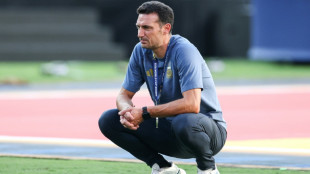
Spain deserved to win World Cup: Argentina's Scaloni
Argentina coach Lionel Scaloni admitted Spain were the better team following his team's 1-0 extra-time defeat in the 2026 World Cup final on Sunday.

AC Not Cooling During Seattle Heat Wave? 4 Things to Check Before Calling for Emergency Repair
SEATTLE, WA / ACCESS Newswire / July 20, 2026 / As temperatures climb across the Seattle area, many homeowners are discovering that their air conditioner is running but not cooling the home effectively. While a sudden loss of cooling can be concerning during a heat wave, HVAC professionals say many common issues can be identified through a few simple checks before scheduling emergency service.

Response to Dr. Bryan Watts: Repeating Misinformation Should Not Happen - Including in the Menhaden Debate
REEDVILLE, VA / ACCESS Newswire / July 20, 2026 / We thank The Virginian-Pilot and Daily Press for respectfully providing the opportunity for both sides of an Atlantic menhaden debate to appear in their pages. In a June 30 guest column, Ocean Harvesters CEO Monty Deihl questioned whether an academic paper recently published with Dr. Bryan Watts as the lead author is appropriate to use in arguments against menhaden fishing in the Chesapeake Bay. On July 6, Dr.Watts responded.We wholeheartedly agree, as Dr. Watts said in his response, that repeating misinformation should not happen. But repeating misinformation is precisely what Dr. Watts and others have done. In the interest of producing the fairest and most open response, we are including a bibliography of all scientific, regulatory, and other sources referenced.1. Dr. Watts has now publicly confirmed the central point: his paper does not link poor osprey reproduction to menhaden harvest.Dr. Watts writes: "Deihl is incorrect in suggesting that our paper attempts to link poor osprey reproduction to menhaden harvest. We do not."But Mr. Deihl did not say the paper itself makes that link. What he said was that the paper "will almost certainly be used to argue for harsh restrictions on this well-regulated fishery."The Chesapeake Bay Foundation has already issued a press release explicitly using Dr. Watts' study under the headline "New Study Links Starving Chesapeake Bay Osprey to Menhaden Woes." In that release, CBF stated that the report "adds urgency for pausing menhaden reduction fishery in the Bay" and quoted Forage Campaign Manager Will Poston as saying: "Ultimately, decision makers must pause reduction fishing inside the Bay until menhaden research is completed." That is exactly what Mr. Deihl warned would happen. The paper is being used to argue for harsh restrictions on the well-regulated Chesapeake Bay menhaden fishery. And given Dr. Watts' own public statement that his paper does not link poor osprey reproduction to menhaden harvest, CBF and Mr. Poston are wrong to use his paper as the basis for pausing reduction fishing in the Bay.An academic paper may raise important ecological questions. It may identify food stress in osprey nests and support further research into prey availability, environmental conditions, and other factors. But unless it demonstrates a causal connection to menhaden harvest, it cannot be presented to the public or regulators as though that causal connection has been established.When a paper that expressly does not link osprey reproduction to harvest is nevertheless used to demand fishery-specific restrictions, the public is no longer being given science. It is being given advocacy dressed in scientific language.2. The "intercept fishery" or "gauntlet" theory is not supported by the available evidence.Dr. Watts repeats the claim that Ocean Harvesters is operating an "intercept fishery," catching menhaden at the mouth of the Bay and preventing fish from reaching the rest of the Chesapeake. That theory is contradicted by the analyses now before managers.The theory ignores basic menhaden life history. Menhaden are not a static Bay-resident population. NOAA Fisheries explains that mature menhaden spawn in coastal waters, and juveniles remain in estuaries such as the Chesapeake Bay for about a year before joining adult schools. Many menhaden are migratory, and others remain resident in their area. NOAA also notes that menhaden are common in all Chesapeake Bay salinities and swim in large surface schools during spring, summer, and fall. That life history is hard to square with a simple "intercept" story that assumes one lower-Bay fishery is blocking a single, predictable flow of fish to the rest of the Bay. Equally important, Virginia law does not allow the menhaden reduction fishery to begin before the first Monday in May, and actual fishing activity often starts later.A January 2026 analysis conducted by Georgetown Economic Services of Washington, D.C. and submitted to the Atlantic States Marine Fisheries Commission directly addressed the so-called "gauntlet" theory. It explained that if the purse seine fleet were preventing menhaden from traveling into the upper Bay, pound-net catch rates should show a corresponding steep decline during the relevant weeks. Instead, the submitted analysis found that pound-net catch rates remained on a relatively steady increase through the season. The same submission reported that, in months when Virginia reduction purse-seine net sets exceeded their 10-year average, Maryland pound-net harvest also tended to be above its 10-year average; the converse was also true. The submission concluded that the relationship did not support the "gauntlet" claim.A second analysis by estuarine scientist Dr. Arnoldo Valle-Levinson focused on Chesapeake Bay physics and environmental conditions. Rather than assuming an "intercept" mechanism, it examined how summer Bay conditions can compress livable habitat and affect where fish concentrate and how catchable they are. The same public summary reports that Maryland catches and trips both declined together, while catch per unit effort did not show the steady collapse one would expect if the upper Bay were being systematically starved of fish. Dr. Watts compares the issue to water withdrawals on the Rio Grande affecting downstream farmers, but fish are not water. Water flows downstream in one direction; menhaden are migratory schooling fish whose movement and availability depend on season, age, salinity, temperature, dissolved oxygen, plankton, predator pressure, and other Bay conditions. The analogy assumes a simple one-way flow that does not exist in a dynamic fishery. That is why the "intercept" or "gauntlet" theory must be tested against actual fishery data, timing, catch rates, effort, and Bay conditions.3. Food stress in osprey nests is not proof that one fishery caused reduced prey availability.We do not dismiss osprey observations. We do not dismiss food stress. We do not dismiss the ecological importance of menhaden. Menhaden are an important forage fish, and ospreys are important indicators of aquatic ecosystem conditions.But an indicator is not a cause.Earlier Chesapeake Bay osprey diet studies show why food stress cannot be evaluated through menhaden alone. Glass & Watts reported that Atlantic menhaden and seatrouts/weakfish were dominant prey in lower-estuarine nests - meaning nests in the saltier lower Bay, closer to where the Chesapeake meets the Atlantic Ocean and freshwater mixes with seawater - while gizzard shad and catfish dominated upper-estuarine diets (Glass & Watts 2009). Their Table 1 shows that spotted seatrout were more frequent than menhaden by number in lower-estuarine nests, 28.8% versus 24.2% (Glass & Watts 2009, Table 1). Lazarus et al. later reported that Poplar Island ospreys fed predominantly on striped bass, 47.8% of diet, and Atlantic menhaden, 44.3% of diet, while ospreys on the Susquehanna, Anacostia/middle Potomac, and James Rivers fed predominantly on catfish and gizzard shad (Lazarus et al. 2016).That broader prey-base context matters because one of those prey species, striped bass, remains overfished. ASMFC says Atlantic striped bass was declared overfished in 2019 and remains overfished under the 2024 stock assessment update (ASMFC 2024 Atlantic Striped Bass Stock Assessment Update; ASMFC Atlantic Striped Bass Species Page). ASMFC also reports that in 2024 the recreational sector accounted for about 85% of total striped bass removals by number of fish, and that from 2022-2023 recreational harvest and recreational release mortality together accounted for roughly 89% of total removals (ASMFC Atlantic Striped Bass Species Page; ASMFC 2024 Atlantic Striped Bass Stock Assessment Update). Watts' own research shows that deliveries of other prey species declined at a steeper rate than menhaden between 2006-07 and 2021 (Watts et al. 2024, Table 2). If osprey food delivery is now insufficient, the more relevant question is whether availability of the full prey base - including striped bass, seatrout/weakfish, gizzard shad, catfish, and menhaden - has changed, and why.In his response, Watts states that "[w]hile it is true that ospreys have a varied diet, all fish are not the same," claiming that menhaden are more nutritious because they are "rich in oils." Dr. Watts is correct that menhaden are generally an oily forage fish, but "oily" is not a fixed condition throughout the year. A NOAA/NMFS study of Atlantic menhaden from the Chesapeake Bay area found strong seasonal variation in oil content, with early-season fish averaging roughly 8-10% lipid content, compared with about 20% at the October peak (Dubrow et al. 1976). Resident forage species also matter: Maryland DNR describes gizzard shad as present across Maryland's Chesapeake river systems and spawning during the same spring period when osprey nesting begins, which reinforces the need to evaluate the full prey base rather than assume menhaden alone explain spring food stress. Because osprey breeding begins in spring, before menhaden reach peak oil content, the question is not whether menhaden are nutritious in general. The question is whether spring menhaden are uniquely more valuable than other prey actually available to nesting ospreys at that time, including resident forage species such as gizzard shad.Timing is important. The Watts et al. paper states that Chesapeake Bay osprey pairs return to breeding territories from late February through late March and lay clutches in early April. Virginia law identifies the relevant menhaden purse-net season in certain waters as running from the first Monday in May through the third Friday in November. If nest initiation, egg-laying, or non-laying behavior is already being set before the reduction fishery is active, those early reproductive outcomes cannot be attributed to harvest later in the season.USGS describes the Chesapeake osprey question as one involving menhaden and other fish prey, while stating that ongoing work is intended to help determine whether prey delivery or other environmental factors are affecting reproductive success. The 2026 Watts et al. paper itself lists multiple factors that may influence menhaden abundance in the Chesapeake Bay, including commercial harvest, predation, competition, recruitment, plankton availability, larval transport, temperature, salinity, water quality, and other environmental conditions. The 1980s comparison also needs context. Dr. Watts points to a period when menhaden made up a higher percentage of osprey deliveries, but Chesapeake striped bass were then at historic lows. The University of Maryland Center for Environmental Science reports that by the mid-1980s striped bass had fallen to the lowest numbers in decades. A peer-reviewed study of Chesapeake Bay striped bass management likewise reported that commercial landings reached a record high in 1973 and then declined by almost 90 percent during the following decade, with depressed juvenile production during the 1970s. A period when a major menhaden predator was severely depleted is not a neutral baseline for judging today's osprey diet composition. Furthermore, there were only 3,500 osprey breeding pairs in the mid-1990s (fewer in the 1980s). There are10,000 breeding pairs today (Watts et al. 2026).The timeline also undercuts the blame-the-fishery narrative. Chesapeake ospreys rebounded during decades when Bay menhaden harvests were much higher than they are today. The Bay reduction fishery is now capped at 51,000 metric tons - roughly one-third of levels seen during portions of the osprey rebound from the 1970s through the early 2000s. Ospreys recovered while the Bay menhaden fishery was far larger.It is also important to understand why this debate exists in the first place. While Dr. Watts now says his 2026 paper does not link poor osprey reproduction to menhaden harvest, prior work by Dr. Watts and colleagues went much further. In their 2023 Mobjack Bay osprey food-supplementation study, Academia & Watts acknowledged that "local levels of menhaden abundance were not available," but nevertheless concluded that "the menhaden population within Mobjack Bay is not currently adequate to sustain the osprey breeding population" and recommended that "industrial purse seine fishing occur outside Chesapeake Bay" (Academia & Watts 2023). A later Watts et al. paper likewise acknowledged that "no menhaden stock index has been developed that is specific to the Mobjack Bay study area," yet argued that osprey viability required menhaden to be restored to 1980s levels (Watts et al. 2024). That is the leap at the heart of the dispute: food limitation may be real, and menhaden may be important prey, but those facts do not prove that the menhaden fishery caused the condition observed in Mobjack Bay.A Frontiers in Marine Science commentary on the Mobjack Bay osprey paper raised related scientific concerns. The commentary noted that Watts et al. relied on coastwide juvenile menhaden abundance indices as a proxy for menhaden availability to ospreys in Mobjack Bay. Those indices are model-based estimates drawn from surveys spanning a large portion of the Atlantic coast, from Rhode Island to South Carolina. The concern is straightforward: a coastwide juvenile index is not the same thing as measuring the local abundance, size, timing, and availability of menhaden to nesting ospreys in one Chesapeake Bay sub-estuary. As the commentary explained, the analysis assumed that those broad indices represented the menhaden actually available to ospreys in Mobjack Bay - an assumption that had not been directly tested (Latour, Gartland, and Ralph, 2024). That distinction matters because a study may show that ospreys benefit from more menhaden without proving that the menhaden fishery caused the local prey conditions observed at those nests.That is why Latour et al. concluded that Watts et al.'s analyses "do not establish a clear relationship with menhaden abundance and availability" and encouraged concurrent osprey nest and menhaden sampling to directly assess the ecological linkage (Latour et al. 2024). That is also why Ocean Harvesters has supported new Bay-specific menhaden research rather than policy decisions based on inference, proxy indices, or advocacy claims that go beyond the available data.The relevant question is not simply whether some osprey nests show food stress. The relevant question is what caused the food stress, whether it is connected to adult menhaden abundance, whether adult menhaden abundance is connected to harvest, and whether any proposed fishery restriction would actually address the cause.Those links have not been demonstrated.4. Coastwide stock science is not a distraction; it is the official management foundation.Dr. Watts argues that Ocean Harvesters has used the Atlantic States Marine Fisheries Commission's coastwide stock assessment to suggest, "without evidence," that Chesapeake Bay menhaden conditions remain healthy. That framing is misleading.No one should pretend that coastwide stock status answers every Bay-specific question. Bay-specific abundance, movement, predator availability, and localized ecological conditions are legitimate research questions. But it is equally wrong to dismiss the official coastwide assessment as irrelevant. Atlantic menhaden are a migratory species managed through a coastwide interstate process because the stock moves across state boundaries and in and out of estuarine systems.The ASMFC's 2025 stock assessment update states that, using the current ecological reference point benchmarks, "the Atlantic menhaden population is not overfished and overfishing is not occurring." Coastwide science does not prove every Bay-specific claim, but it does provide the official management baseline. Meanwhile, Bay-specific claims require Bay-specific evidence. The absence of a validated Bay-specific adult abundance index does not license advocates to substitute osprey diet observations, bait landings, or anecdotes for proof of fishery-caused depletion. It means the Bay-specific science needs to be done.And that is exactly the work the industry has supported. Through the Science Center for Marine Fisheries, industry members have supported a Chesapeake Bay menhaden research roadmap to identify the data and methods needed to develop a scientifically defensible and ecologically meaningful Bay harvest cap. That project brings together researchers from the Chesapeake Biological Laboratory, the Virginia Institute of Marine Science, and NOAA to evaluate the research needed to answer Bay-specific management questions. More recently, with support from Ocean Harvesters and Omega Protein, Virginia approved $2 million for menhaden research in the Chesapeake Bay. The funding will go to William & Mary's Virginia Institute of Marine Science for research over the next two years, in collaboration with the Virginia Marine Resources Commission. That is the proper path forward: identify the data gaps, fund the science, and let the results guide management - rather than using a paper that does not link osprey reproduction to harvest as a justification for fishery-specific restrictions.5. Certification and independent review also matter.The U.S. Atlantic menhaden purse-seine fishery has been certified by the Marine Stewardship Council since 2019.MSC certification is an independent third-party assessment process that represents a global gold standard for sustainability. Reasonable people can debate management choices, but the public should know that this fishery has passed rigorous sustainability review beyond being managed by the ASMFC.6. Bait landings are not adult menhaden abundance indices.Dr. Watts points to bait fishermen and homeowners watching osprey nests as evidence that menhaden abundance has changed. These observations may be worth investigating, but they are not substitutes for a validated adult abundance index.Bait landings can change because fish are less abundant. They can also change because effort changes, markets change, labor availability changes, gear use changes, weather changes, fish distribution changes, or environmental conditions affect catchability. That is why the "gauntlet" analyses matter: they look at catch rates, effort, timing, and environmental conditions rather than assuming that lower landings equal fishery-caused depletion.The right path is Bay-specific science, not Bay-specific blame.Ocean Harvesters and the broader menhaden industry support better Chesapeake Bay science. We support research that can answer the questions regulators actually need answered: adult menhaden abundance in the Bay, movement between coastal and Bay waters, local availability to predators, fishery interactions, environmental drivers, and the real effects of any proposed management measure.The wrong approach is to begin with blame and then look for facts to support it.Dr. Watts' column asks the public to view Ocean Harvesters as the source of misinformation. But the public record shows a different story.

Namibia Critical Metals Launches Next Phase of Lofdal Definitive Feasibility Study Including Further Value Addition in Namibia
Joint Management Committee approves approximately C$11 million in additional funding as Lofdal enters major metallurgical execution phase supporting downstream rare earth processing in Namibia.

Southern Cross Acquisition I Corp. Announces Pricing of $100 Million Initial Public Offering
NEW YORK CITY, NY / ACCESS Newswire / July 20, 2026 / Southern Cross Acquisition I Corp. (NASDAQ:NCOOU) ("NCO") announced the pricing of its initial public offering (the "IPO") of 10,000,000 units at $10.00 per unit. The units are expected to trade on the Nasdaq Global Market ("Nasdaq") under "NCOOU" beginning July 21, 2026. Each unit consists of one ordinary share, one redeemable warrant, and one right to receive one-fourth of one ordinary share upon consummation of an initial business combination. Each whole redeemable warrant entitles the holder thereof to purchase one ordinary share at an exercise price of $11.50 per share. Once the securities comprising the units begin separate trading, the ordinary shares, warrants and rights are expected to be listed on Nasdaq under "NCO," "NCOOW," and "NCOOR," respectively.

The Eastern Company Declares 344th Consecutive Quarterly Cash Dividend
SHELTON, CT / ACCESS Newswire / July 20, 2026 / The Eastern Company (NASDAQ:EML) today announced the declaration of its regular quarterly cash dividend of eleven cents ($0.11) per share, payable September 15, 2026, to common shareholders of record as of August 14, 2026. This dividend represents the Company's 344th consecutive quarterly dividend.

How to Start a Functional Beverage Brand: Free FMCG Webinar
Fast Moving Consumer Goods, Inc. Launches the CPG Brand Builder Series on July 23, 2026, a Free 12-Week Program for Beverage Founders, Investors, and Brand Managers Nationwide

Champions Oncology to Announce Fourth Quarter and Year-End Financial Results on Monday, July 27, 2026
HACKENSACK, NJ / ACCESS Newswire / July 20, 2026 / Champions Oncology, Inc. (NASDAQ:CSBR), a global leader in clinically relevant oncology research models and translational solutions, will report its financial and operational results for the quarter and year ended April 30, 2026, on Monday, July 27, 2026, after market close. The company will host a conference call to discuss the results that day at 4:30 P.M. ET (1:30 P.M. PT). To join the call dial 888-506-0062 (Domestic) or 973-528-0011 (International) and enter the access code 347142. A replay of the call will be available by dialing 877-481-4010 (Domestic) or 919-882-2331 (International) and entering passcode: 54320, or by accessing the investors section of the company's website within 72 hours.