
-
 Nick Reiner seeks trust fund money for parent murder defense
-
Spain, France qualify for 2027 Women's World Cup as England wait
-
 Protesters torch building and vehicles, block roads over Belfast stabbing
-
A woman in charge of the UN? Candidates feel it's about time

-
 US tech shares resume sell-off while oil prices retreat
-
Protesters block road to Mexican World Cup stadium
-
 White House World Cup chief defends visa ban for Somali referee, Iranians
-
Serena back in the groove on triumphant return to tennis
-
 'It doesn't matter': US star Reyna looks past World Cup scandal
-
Somali referee says World Cup 'dream' ruined
-
 Knicks ready to 'throw the first punch' in NBA Finals
-
'Beaten to death': the grim toll of Ecuador's security crackdown
-
 Anthropic opens most powerful AI model to public with safeguards
-
Serena Williams makes winning return in Queen's Club doubles
-
 Trump vows response after Iran shoots down US helicopter
-
Real Madrid's 150 mn euros bid for Atletico's Alvarez rejected

-
 Spurs handling physicality of Knicks and New York hostility
-
Peru election chief tells AFP count could take two weeks
-
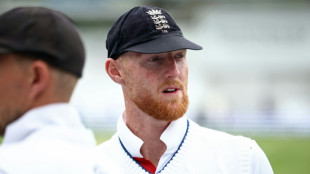
 Stokes considering England captaincy future after nightclub incident
-
Atalanta sack coach Palladino with Sarri set to arrive
-
 Italian Luca Parmitano to be first European to join an Artemis mission: NASA
-
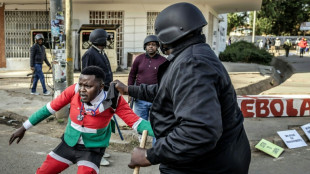
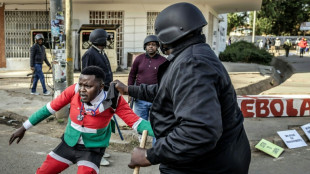
One killed as Kenyan protests at US Ebola centre turn violent
-
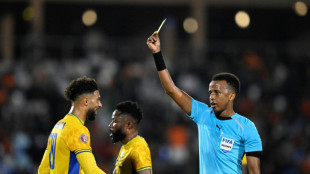 Somali government deeply regrets axing of referee from World Cup
-
Scotland First Minister vows to help fans refused entry for World Cup in US

-
 Stocks slump as US tech rebound falters, oil dips below $90
-
Somalia backs referee after he is denied entry to US
-
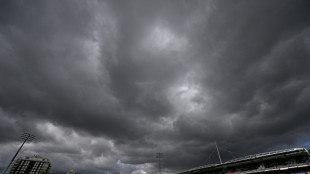 Lord's pitch rated 'unsatisfactory' by ICC
-
Pope Leo XIV met Bad Bunny in Madrid on Monday: Vatican
-
 Stocks turn lower as US tech rebound falters
-
EU orders Meta to open WhatsApp to rival AI chatbots for free

-
 Visma win Auvergne team time-trial but Baudin keeps yellow
-
Nintendo to remake classic 'Zelda' game 'Ocarina of Time'
-
 Bangladesh thrash Australia in rain-hit first ODI
-
Woolly mammoth among trove of ancient DNA found in squirrel poo

-
 Appeals for calm after 'sickening' Belfast stabbing spurs protest calls
-
Afghan police disperse women's rights rally in Herat
-
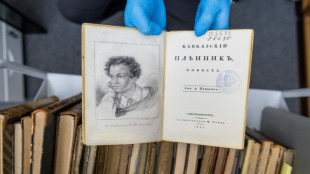 Six Georgians tried in France over theft of rare Russian books
-
US trade gap narrows in April on oil exports boost

-
 Stocks rise, oil eases after Trump evokes Iran deal
-
One shot as Kenyan protests at US Ebola centre turn violent
-
 Townsend says Dempsey still part of Scotland set-up despite Japan move
-
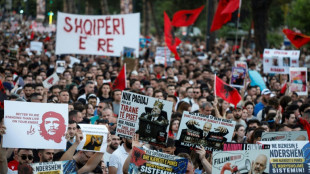
Trump-linked resort plan ignites Albanian discontent
-
 Itoje out of latest England training squad
-
Acid attack on woman doctor sparks fear, protests in Pakistan

-
 'No fairytale ending' as winger Lowe announces Ireland exit
-
Gower warns Stokes' England captaincy in 'severe doubt' after nightclub incident
-
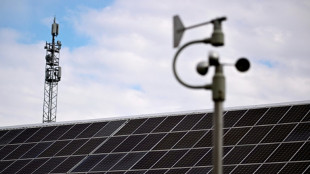 COP31 hosts unveil 'electrification' priority for climate talks
-
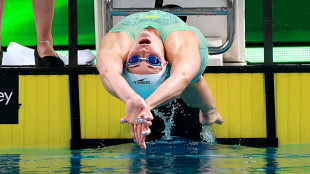
McKeown battles illness to surge home in 100m backstroke at Australian trials
-
 Oil prices drop, stocks rise on Mideast hopes
-
German chemical giant BASF urges overhaul of EU carbon scheme

Beijing Olympics closes after golden moments and doping storm
The Beijing Winter Olympics have closed with IOC chief Thomas Bach hailing a smoothly run event and a "safe Games" in the midst of the Covid pandemic, but the gold medals were overshadowed by a doping controversy.
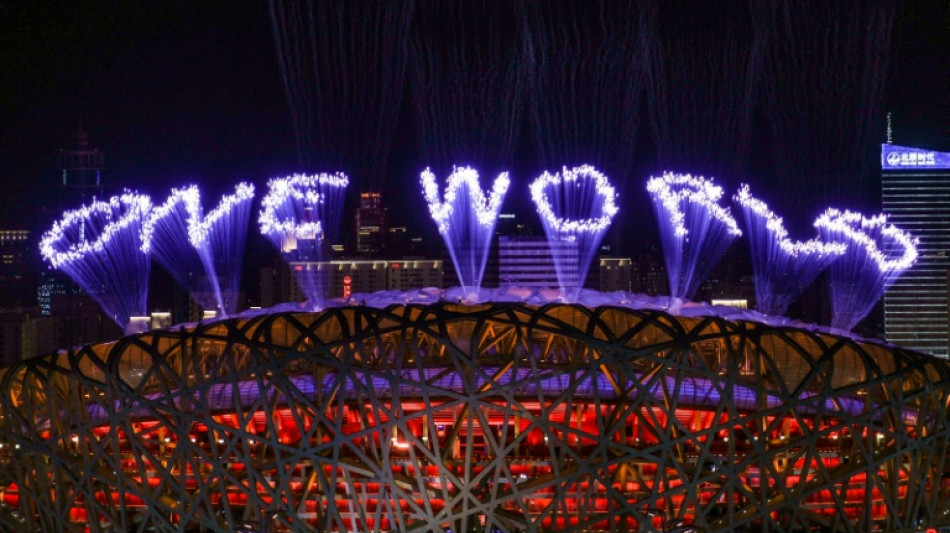
The Games ended on Sunday in the "Bird's Nest" stadium, just as they had when the Chinese capital hosted the 2008 Summer Olympics, in a snowflake-themed closing ceremony attended by President Xi Jinping and a socially-distanced crowd.
As he declared the Games over and handed over to 2026 hosts Milano-Cortina, the International Olympic Committee president Bach hailed an "unforgettable Olympic experience".
The Games produced bright new stars including China's Californian-born freestyle skier Eileen Gu, who won two gold medals to cement her huge popularity in the host nation.
The future of 15-year-old Russian figure skating prodigy Kamila Valieva is less certain after she failed a drugs test but was allowed to continue competing.
Then, after a week of intense pressure, she fell apart in an error-strewn performance that will go down as one of the saddest in Olympic history.
Chinese organisers will be quick to hail the success of the vast Covid-secure "bubble" that enveloped the Games, with up to 70,000 people sealed off.
There was no mass outbreak of Covid at the Games or in the wider Chinese capital, but Bach said: "If we want to finally overcome this pandemic, we must be faster, we must aim higher, we must be stronger -- we must stand together.
"In this Olympic spirit of solidarity, we call on the international community: give equal access to vaccines for everybody around the world."
With tensions rising between Russia and Ukraine, Bach said the athletes had "given peace a chance".
"May the political leaders around the world be inspired by your example of solidarity and peace," he said.
China and its ruling Communist Party will look back on a soft-power success.
The Global Times, a Chinese nationalist state-run tabloid, said on Monday the Olympics had shown the 'true nature' of China.
"The unexpected global popularity of the Beijing Winter Olympic Games declared the complete failure of the so-called diplomatic boycott, smashed the malicious slander of some Western media, and demonstrated the enduring charm of human resilience and unity," it said.
Echoing that theme, fireworks lit up the night sky at the ceremony, spelling out "ONE WORLD".
- Valieva's case dominated -
Gu, the 18-year-old who was born in California but switched to China in 2019, gave the hosts a significant medal bump, helping them finish third in the medals table with nine golds.
That was easily China's best performance at a Winter Games, a place ahead of chief geopolitical rival the United States, who claimed eight golds.
For the second Games in a row, Norway topped the medals table, with 16 golds, mainly thanks to their peerless cross-country skiers. Germany were second on 12.
A new men's figure skating champion emerged in 22-year-old Nathan Chen of the United States, who dethroned two-time Olympic champion Yuzuru Hanyu, in what could be the Japanese legend's final Games appearance.
Shaun White, the American who has defined snowboarding, bowed out after finishing without a medal. The 35-year-old three-time Olympic champion called the sport "the love of my life".
There was bitter disappointment for his fellow American and one of the biggest names of the Games, the alpine skier Mikaela Shiffrin, who also went home empty-handed.
But it was Valieva's story that dominated the Games, catapulting the teenage skater to the forefront of yet another Russian doping controversy to mar an Olympics.
After becoming the first woman in history to land a quadruple jump in Olympic competition to help Russia win the team event, it was revealed Valieva had tested positive for trimetazidine, a drug used to treat angina but which is banned for athletes because it can boost endurance.
To fury from the US team and others, the Court of Arbitration for Sport allowed her to continue competing at the Games, citing her young age, though without clearing her of doping.
In the final, Valieva fell several times, to audible gasps from the crowd, and was given a cold reception from her coach Eteri Tutberidze as she left the rink.
Bach called that reaction "chilling" and ordered the young skater's coaches and advisors be investigated.
Valieva's doping case looks certain to drag on for months.
For the first time in Olympic history, the IOC ruled that the skating team medals cannot be awarded until her case is settled.
Ice skating's governing body meanwhile said it would consider a proposal to raise the minimum competition age to 17.
- Rights protests muted -
While a Covid outbreak never materialised, some athletes did have the Olympics ruined by the virus and the pandemic was never far away -- Russia and Canada's women ice hockey teams played each other wearing medical masks after the results of their PCR tests failed to arrive in time.
Concerns about human rights had dominated the build-up, with the United States leading a diplomatic boycott by its closest allies over China's rights record, especially the fate of the Muslim Uyghur minority in Xinjiang.
China warned in the fraught lead-up that foreign athletes criticising the authorities could face consequences, but any protests against the hosts were extremely muted.
H.Gonzales--AT